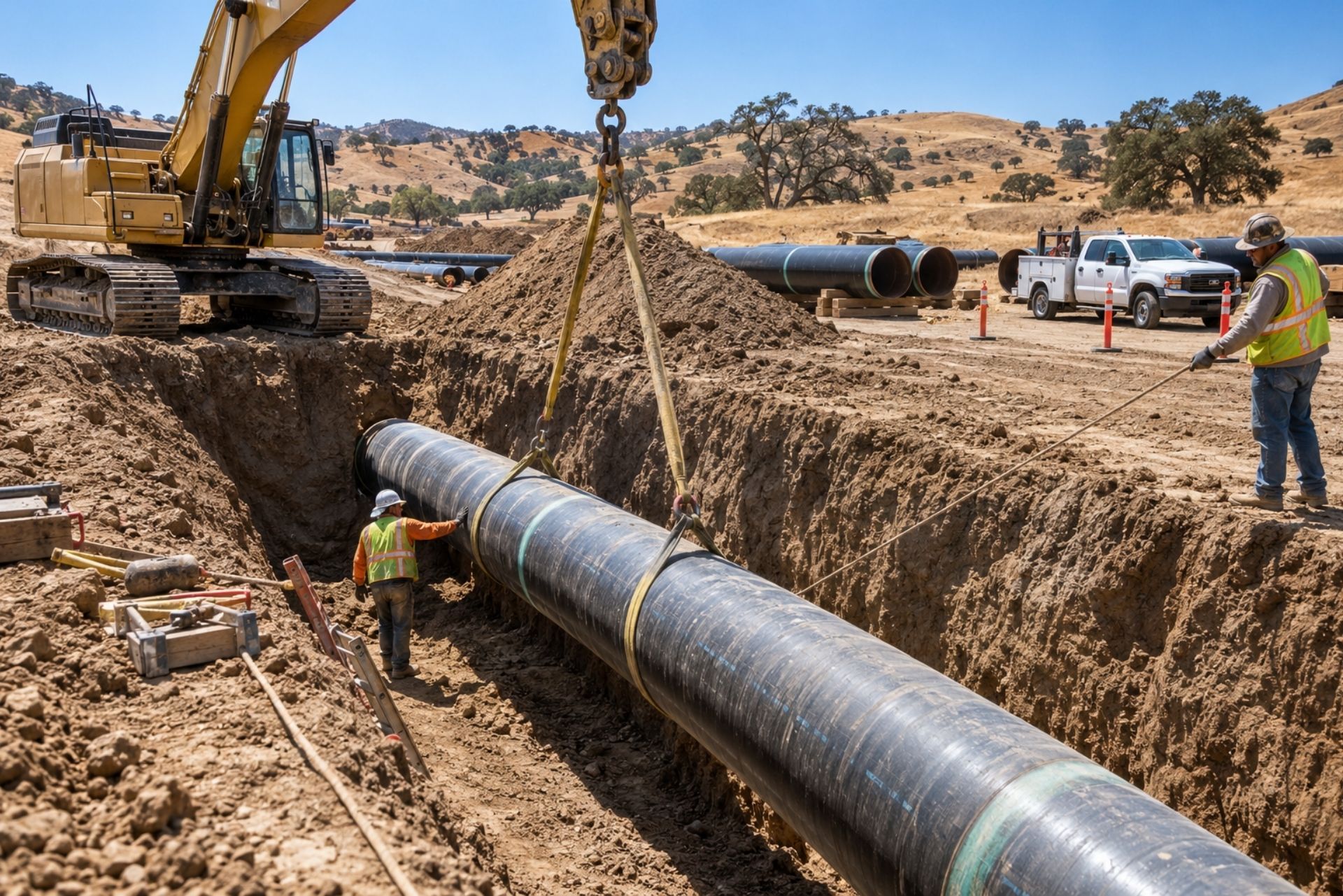
A single cut fiber line can cost more than the job that caused it. In California, pipeline crews work inside one of the most crowded subsurfaces in the country, under some of the strictest environmental and labor rules anywhere. That combination makes insurance more than a box to check before bidding. It decides whether one bad afternoon in a trench becomes a bad quarter or the end of the company.
This guide covers
pipeline contractor insurance in California in plain terms: what each policy does, where the gaps tend to hide, and how to price your risk honestly. Expect specific scenarios and dollar figures. The figures are illustrations rather than market quotes, because your actual premiums depend on payroll, loss history, and the type of work you do. The goal is to help you sit across from an underwriter or broker and know exactly what you're buying, and what you're still exposed to after the check clears.
The California Pipeline Risk Landscape
California pipeline contractors, usually licensed under the CSLB's C-34 Pipeline classification or working under an A General Engineering license, face risks that stack on each other. The ground itself is the first problem. Older cities like Los Angeles, Oakland, and San Francisco have century-old water mains, abandoned gas lines, and poorly mapped conduit sitting next to modern high-pressure transmission pipe.
Then there's the regulatory weight. The state's excavation law, Government Code 4216, requires you to contact the regional one-call center (DigAlert in Southern California, USA North 811 in the north) at least two working days before digging. You also have to delineate the excavation area in white paint and hand-expose within the tolerance zone. Skipping any step can shift liability squarely onto you, even when the utility's markings were wrong.
Natural hazards add another layer:
- Seismic activity can shift buried lines and complicate post-job claims about who caused a leak.
- Wildfire zones restrict hot work and equipment use during red flag conditions.
- Expansive and saturated soils in the Delta and coastal areas raise collapse risk.
Insurers price all of this. Carriers that don't understand underground work often decline it or exclude what matters most.
By: Peter Plew
Commercial Insurance Agent at Caruso Insurance Services
General Liability and Underground Utility Strike Protection
Commercial general liability (CGL) is the foundation of any pipeline contractor's program, but a standard CGL form isn't built for people who dig for a living. The policy pays for third-party bodily injury and property damage. For a pipeline crew, that third party is often a utility owner whose line you just hit.
Read your policy for the "XCU" exclusions: explosion, collapse, and underground property damage. Many contractor forms exclude underground damage unless you buy it back by endorsement. If your policy carries an XCU exclusion and your excavator punctures a gas service line, you could be paying the repair, the gas loss, and any evacuation costs yourself.
When reviewing a quote, confirm these items:
- No XCU exclusion, or a specific buy-back that covers underground resources
- Products-completed operations coverage, since leaks often appear months after backfill
- Per-project aggregate endorsements, so one large claim doesn't drain coverage for every other job
- Adequate limits, typically $1 million per occurrence and $2 million aggregate as a baseline, with umbrella coverage stacked above
Managing Dig-In Damages and Repair Costs
Utility strike claims are often more expensive than contractors expect. Here's a realistic illustration. Your crew nicks a 12-inch fiber trunk line during a sewer lateral replacement. Splicing and repair might run $40,000. The carrier then bills for service outage, emergency crew overtime, and lost revenue, which can push the total past $150,000.
Now run the break-even. Say removing an XCU exclusion adds $3,500 a year to your premium. A single strike of that size would cover twenty years of that extra cost. For most excavation contractors, that endorsement pays for itself the first time someone misreads a paint mark.
Your own documentation is the cheapest protection you have. Photograph every locate mark before excavation, save the 811 ticket number, and log the time of each hand-exposure. When a utility sends a damage claim, timestamped photos can shift fault back to an inaccurate locate and keep the loss off your record.
Contractual Requirements for Public and Private Works
Caltrans, water districts, and municipal agencies routinely require additional insured status on a primary and non-contributory basis, plus a waiver of subrogation. Large private developers and utilities often go further, asking for $5 million or $10 million in combined limits.
Before signing, compare the contract's insurance section against your actual policy endorsements. A missing blanket additional insured endorsement can mean breach of contract, withheld payments, or a defense bill you thought the owner's carrier would cover. Ask your broker for a certificate review on every significant contract, not just the first one with a new client.
Pollution Liability and Environmental Remediation
Most CGL policies contain a broad pollution exclusion, and pipeline work creates pollution exposure constantly. Ruptured sewer lines, hydraulic fluid leaks from equipment, contaminated soil disturbed during trenching, and drilling mud released during horizontal directional drilling (a "frac-out") all qualify.
Contractor's pollution liability (CPL) fills this gap. It typically covers cleanup costs, third-party bodily injury and property damage from pollutants, and defense costs. California's Regional Water Quality Control Boards take sediment and fluid discharges into waterways seriously, and penalties for runoff violations can add up per day of discharge.
Consider a frac-out during a bore under a creek in Sonoma County. Bentonite mud surfaces in the waterway, triggering emergency containment, agency notifications, biological monitoring, and possible fines. Cleanup and consulting fees alone can reach six figures. A CPL policy with a $2 million limit might cost a mid-sized contractor somewhere in the range of a few thousand dollars a year, a small price against a single release.
When comparing pollution policies, pay attention to whether coverage is written on an occurrence or claims-made basis. Contamination often surfaces years later, and a claims-made policy that lapses can leave old jobs uninsured. Also confirm the policy covers mold, which is relevant for crews doing water and sewer work near structures, and that it includes transportation pollution if you haul contaminated spoils.
Inland Marine and Heavy Equipment Coverage
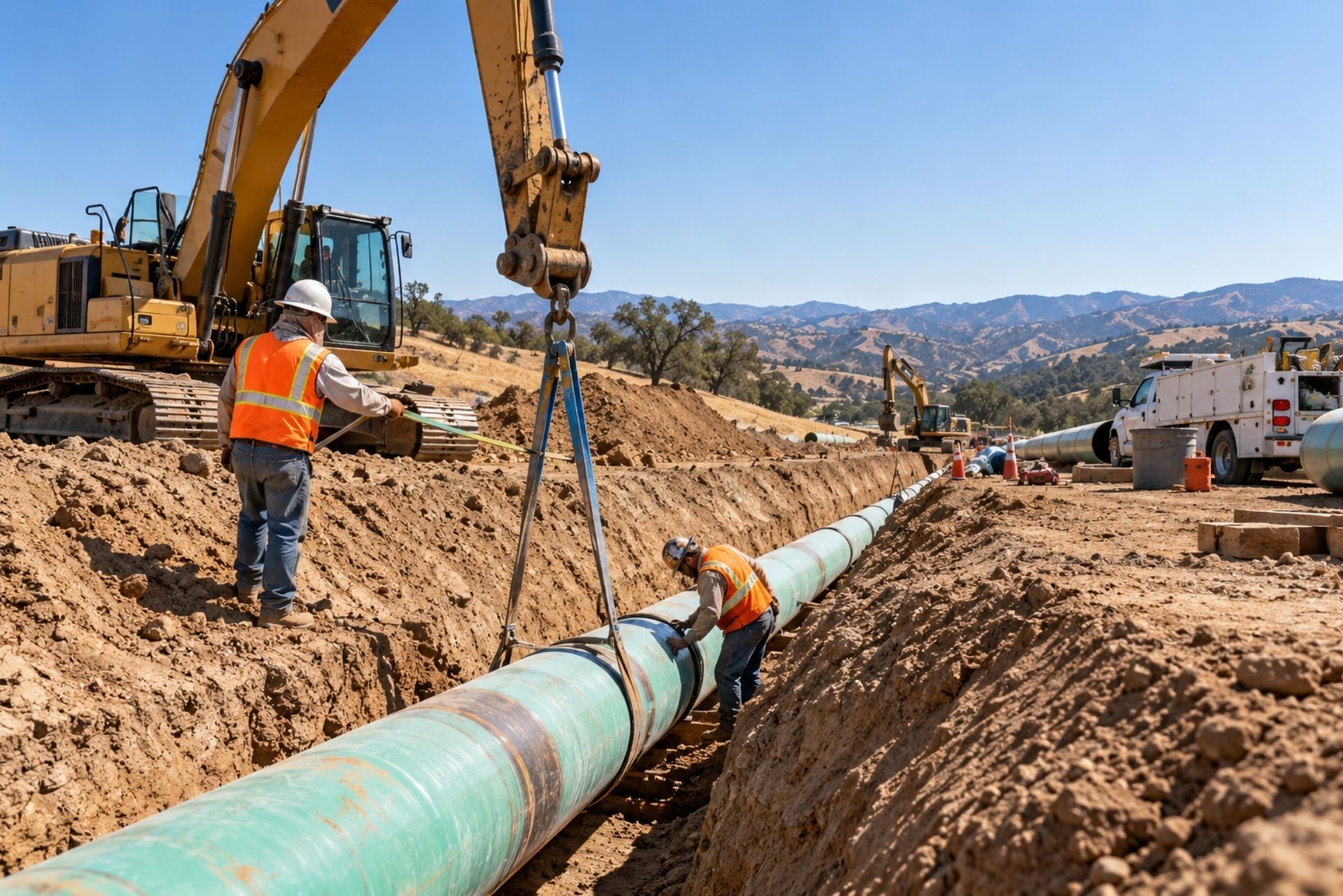
Your excavators, trenchers, vacuum trucks, and drill rigs spend their lives moving between job sites, which is why they belong on an inland marine policy (usually called contractor's equipment coverage) rather than standard property insurance. Commercial auto covers your registered road vehicles. Inland marine covers mobile equipment against theft, fire, vandalism, overturn, and collision.
Equipment theft is a persistent problem on unsecured California job sites, especially for compact excavators and attachments that can be loaded onto a trailer in minutes. Fencing, GPS trackers, and immobilizers can earn premium credits with some carriers and make recovery far more likely.
Don't overlook these coverage extensions:
- Rented and leased equipment, which rental agreements often make your responsibility
- Rental reimbursement, to pay for a replacement machine while yours is repaired
- Tools and small equipment floaters for locators, saws, and pumps
- Installation floaters covering pipe and materials before the owner accepts the work
Valuing Directional Drills and Excavation Fleets
Valuation choices quietly decide how much you get paid after a loss. Actual cash value (ACV) policies subtract depreciation. Replacement cost policies pay to buy a comparable new machine, usually at a higher premium.
Here's how the gap plays out. A five-year-old HDD rig that cost $450,000 new might carry an ACV of $250,000. If it burns, an ACV policy leaves you roughly $200,000 short of a replacement. On high-value, hard-to-source equipment like directional drills, replacement cost or agreed value coverage usually makes sense. For older backhoes you'd replace with used units anyway, ACV can be a reasonable way to save premium. Update your equipment schedule every year, since out-of-date values can trigger coinsurance penalties.
Workers' Compensation and High-Hazard Safety
California requires every employer with employees to carry workers' compensation, and the CSLB won't issue or renew a license without a certificate of coverage or a valid exemption. Operating without it is a crime, and the penalties, stop orders, and uninsured claim liability can be devastating.
Pipeline work sits in some of the higher-rated classifications because the injuries are serious: trench collapses, struck-by incidents from equipment, crush injuries, and heat illness during summer work in the Central Valley and Inland Empire. Cal/OSHA's heat illness prevention standard requires water, shade, rest breaks, and a written plan, and inspectors cite violations regularly.
Payroll classification deserves real attention. Misclassifying field employees into a lower-rated code may look cheaper until a premium audit reclassifies them and sends a large bill. Keep accurate payroll records by job duties, especially for workers who split time between office and field.
Trenching Safety and Experience Modification Factors
Trenches 5 feet or deeper require protective systems such as shoring, sloping, or trench boxes. California also requires a Cal/OSHA permit before starting a trench or excavation 5 feet or deeper that employees will enter. A competent person must inspect excavations daily.
Your safety record shows up directly in your experience modification (X-Mod), calculated by the Workers' Compensation Insurance Rating Bureau of California (WCIRB). A 1.0 is average. Assume a base premium of $200,000. At a 0.80 X-Mod you pay $160,000. At 1.30, you pay $260,000. That $100,000 spread comes almost entirely from claims history, and it lingers because the calculation draws on several prior years of losses.
The X-Mod also affects bidding. Many public agencies and large general contractors screen out subs above 1.0 or 1.2. Investing in a written trench program, regular toolbox talks, and return-to-work options for injured employees pays off in both premium and eligibility for work.
Securing Comprehensive Coverage in the California Market
Building a strong pipeline insurance program starts with choosing a broker who understands underground construction. Ask any prospective broker how many excavation or utility contractors they place, which carriers write C-34 work, and how they handle XCU and pollution gaps. Vague answers are a warning sign.
Prepare a clean submission before renewal:
- Five years of loss runs from every carrier, since underwriters will request them and your claims history follows you
- A current equipment schedule with serial numbers and values
- Your written safety program, including trenching and heat illness plans
- Revenue breakdown by work type, such as directional boring, open-cut, and sewer rehab
- Sample contracts showing typical insurance requirements
Treat insurance as an ongoing management task. Review policies when you add a new service line, buy major equipment, or sign a contract with tougher requirements. A bundled program that combines general liability, pollution, equipment, auto, umbrella, and workers' comp often reduces gaps between policies and can lower total cost.
The contractors who fare best treat their coverage the way they treat a locate ticket: confirmed, documented, and checked before the first bucket hits the dirt. Remove the XCU exclusion, close the pollution gap, value your rigs realistically, and protect your X-Mod as if your bidding depends on it, because it does. Sit down with your broker before the next renewal and walk through every exclusion line by line. An hour of review now costs far less than discovering a gap after a strike.
ABOUT THE AUTHOR:
PETER PLEW
Hi my name is Peter Plew and I am a commercial insurance professional. I listen to and strategize with business owners about their visions of the future and assist in getting there as quickly as possible. I help identify unique exposure and risk’s that business owners have and the reasons why they need to be insured against them. My goal is to make sure my clients are always taken care of on a daily basis with any service needs, questions, or concerns they may have. I love to golf and spend time with my family in my spare time.
Contact Us

Service that stays with you.
Our team helps simplify insurance decisions for families and businesses. We focus on clear explanations, fast responses, and dependable service. You can count on us for help with coverage questions, updates, and long-term support.
Coverage that keeps you secure
Reliable Protection for Everyday Life
Home insurance helps protect your house, personal belongings, and liability risks. We explain coverage options clearly so you know what your policy includes.
Auto insurance provides protection for accidents, liability, and vehicle damage. We help you compare options so you can choose coverage that fits your driving needs.
Motorcycle insurance provides coverage for riders and their bikes. We help you select options that match how and where you ride.
RV insurance supports protection for motorhomes and recreational vehicles. Coverage applies during travel and while parked.
Coverage Built for Contractors and Trades
Support that keeps your work moving.

General Liability Insurance
General liability insurance helps protect contractors from injury and property damage claims. It supports jobsite requirements and contracts.

Workers Compensation
Workers compensation insurance helps protect employees injured while working. It also supports compliance with state requirements.

Commercial Auto Insurance
Commercial auto insurance provides coverage for work vehicles used on jobsites. It helps protect drivers and company vehicles.
Contractor Insurance
Contractor insurance supports trades and service professionals across Southern California. It helps protect tools, equipment, and daily operations.

Cyber Liability Insurance
Cyber liability insurance helps protect business data and customer information. It supports recovery from digital incidents.

Commercial Property Insurance
Commercial property insurance helps protect offices, shops, and equipment. It supports recovery after covered damage.
Coverage Built for Specialized Work
Support for high-risk and service-driven industries.
Simple Steps Supported by Steady Guidance
A Clear Path to Coverage
Trusted by Clients Across Southern California
Clear service backed by real experiences.
Answers to Common Questions.
Clear explanations to guide your decisions.
How do I know which insurance policy is right for me?
We compare coverage options from multiple carriers to help you see differences in protection and price. You can review clear details and ask questions so you understand what each policy covers. Our team guides you step by step so you feel sure about your decision.
What factors affect my auto insurance premium?
Auto insurance premiums are influenced by your driving history, age, location, vehicle type, and coverage choices. A clean driving record and good safety features can help lower costs. We review these factors with you and help find coverage that fits your budget and needs.
Does homeowners insurance cover all types of damage?
Standard homeowners insurance protects your structure, personal belongings, liability, and additional living expenses in many cases. However, it usually does not include flood or earthquake damage without separate policies. We help you decide if extra coverage is right for your home and location.
Can I update my policy or get certificates online?
Yes. You can submit requests for policy changes and certificates through our online service form at any time. Our team processes those requests quickly and confirms updates once complete so you have the documents you need.
Do I need separate insurance for business risks like EPLI or E&O?
Yes. General liability and workers compensation cover many business risks but do not protect against all exposures. For example, Employment Practices Liability Insurance (EPLI) covers claims like wrongful termination or discrimination, and Errors & Omissions (E&O) covers claims based on mistakes in professional services. We help you identify which extra policies your business may need.
What happens if I need to file a claim?
If you need to file a claim, we guide you through the process and help you contact the insurance carrier. We explain what information you should provide, answer your questions, and stay available while the carrier reviews your claim. This support helps you move forward with confidence.
Contact Us