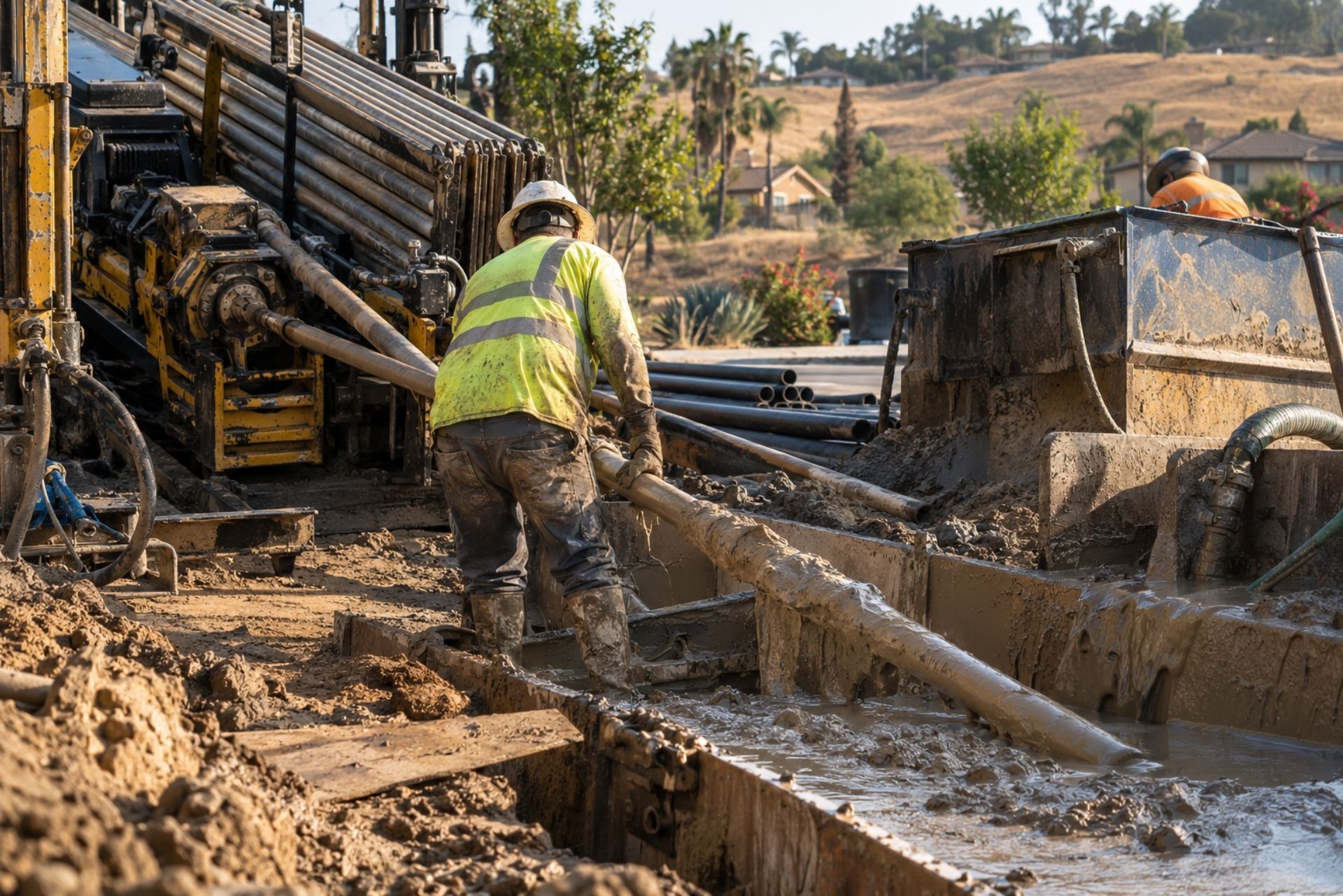
Running a directional drilling operation in California means dealing with a unique combination of underground risks that most contractors in other states never face. Between the state's dense utility networks, seismic instability, contaminated urban soils, and some of the strictest environmental regulations in the country, a single bad bore can generate six-figure claims before lunch. If you're a contractor handling horizontal directional drilling (HDD) in this state, your
insurance program isn't just a line item: it's the difference between surviving a claim and shutting down. This guide to directional drilling contractor insurance in California covers the major coverage areas you need to understand, from utility strike claims and
pollution liability to
workers' comp and subcontractor risk, with real numbers and California-specific context that actually matters for your business.
Risk Landscape for California Directional Drilling Contractors
California's geology, regulatory environment, and sheer density of underground infrastructure create a risk profile that's fundamentally different from drilling in Texas or the Midwest. Understanding these risks is the first step toward building an insurance program that won't leave you exposed.
Subsurface Utility Strikes and Property Damage
Hitting an unmarked gas line or fiber optic cable during a horizontal bore is every driller's nightmare, and in California, the odds are higher than most states. Urban corridors in Los Angeles, the Bay Area, and Sacramento have layers of utilities stacked on top of each other, sometimes installed decades apart with inconsistent records.
California Government Code 4216 requires contractors to call 811 before excavation, but even with proper locate requests, mismarked or abandoned utilities create constant exposure. Negligent violations of underground excavation laws carry fines up to $10,000, while knowing and willful violations can reach $50,000. That's just the regulatory penalty: the actual repair and consequential damage claims from a severed telecom trunk line or gas main can run well into six figures.
Property damage claims from utility strikes are typically covered under your commercial general liability (CGL) policy, but only if your policy includes proper underground resources and equipment (URE) coverage. Standard CGL policies often exclude damage to underground utilities, which is exactly the kind of gap that destroys contractors.
California-Specific Environmental and Soil Hazards
California's geology throws curveballs that affect both drilling operations and insurance exposure. Liquefaction-prone soils in coastal areas, expansive clay in the Central Valley, and seismically active fault zones all increase the likelihood of bore path deviation, surface heave, or unintended drilling fluid migration.
The state also has an enormous number of brownfield sites, particularly in older industrial corridors. Drilling through contaminated soil that you didn't know was there can trigger cleanup obligations under both state and federal environmental law. Your liability doesn't disappear just because the contamination predates your work.
Regulatory Compliance and Licensing Requirements
California requires a C-57 Well Drilling license or appropriate specialty classification for directional drilling work. Operating without proper licensing doesn't just invite fines: it can void your insurance coverage entirely, since most policies contain compliance warranties.
The state's retention rules also changed recently. Effective January 1, 2026, California now
caps retention at 5% for most private construction projects, replacing the traditional 10% holdback. For drilling subcontractors, this means less financial cushion if a GC disputes your work. The reduced retention makes carrying adequate professional liability coverage even more critical, since that 5% holdback
may be too slim to ensure good-faith participation from all parties on a project.
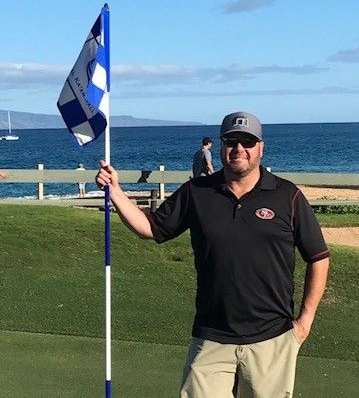
By: Patrick Caruso
President of Caruso Insurance Services
Essential General Liability and Professional Coverages
Your CGL policy is the foundation, but for directional drilling, the standard form is riddled with exclusions that can leave you uncovered for your most common claims.
Underground Resources and Equipment Coverage
Most standard CGL policies exclude damage to underground utilities, pipes, and cables. You need a specific endorsement, often called Underground Resources and Equipment (URE) coverage, that removes this exclusion. Without it, the single most likely claim type for an HDD contractor isn't covered.
When purchasing URE coverage, pay attention to the sublimits. A $500,000 sublimit sounds adequate until you sever a high-pressure gas main in a residential neighborhood and face evacuation costs, emergency response, and repair bills that blow past that number in days. Most experienced California HDD contractors carry at least $1 million in URE coverage, with $2 million being common for operators working in dense urban areas.
Errors and Omissions for Trenchless Engineering
If your company designs bore paths, performs utility engineering, or provides any professional consulting alongside drilling services, you need errors and omissions (E&O) coverage. A bore path design that fails to account for existing utilities or soil conditions can generate claims that your CGL policy won't touch, since CGL covers property damage and bodily injury, not professional mistakes.
E&O is especially important when you're signing off on engineering plans or providing as-built documentation. A mislocated bore path on your as-builts that causes a future contractor to strike a utility can circle back to you years later.
Pollution Liability and Environmental Protection
Standard CGL policies exclude pollution events, and for directional drilling, pollution is not a theoretical risk: it's a regular operational hazard. You need a dedicated contractor's pollution liability (CPL) policy.
Drilling Fluid Spills and 'Frac-Out' Incidents
Frac-outs, where drilling fluid (bentonite slurry) escapes the bore hole and surfaces in unintended locations, happen regularly in HDD operations. When that slurry surfaces in a creek, wetland, or someone's backyard swimming pool, you're looking at cleanup costs and potential regulatory enforcement.
In California, frac-outs near waterways can trigger involvement from the Regional Water Quality Control Board, and the resulting cleanup orders can be expensive. A CPL policy covers the cost of cleanup, third-party bodily injury, and property damage arising from pollution conditions caused by your operations. Make sure your policy covers both sudden and gradual pollution events, since frac-outs can develop slowly over the course of a bore.
Contaminated Soil Disposal and Remediation
Directional drilling generates spoils, and in California, those spoils may contain contaminants you didn't put there. If your drilling operation encounters contaminated groundwater or soil, you may be responsible for proper characterization, handling, transportation, and disposal under California's hazardous waste regulations.
Your CPL policy should cover first-party cleanup costs for contamination your operations disturb or spread, not just third-party claims. Check whether your policy includes transportation pollution liability as well, since hauling contaminated spoils to a disposal facility creates its own chain of exposure.
Inland Marine Insurance for Specialized Drilling Rigs
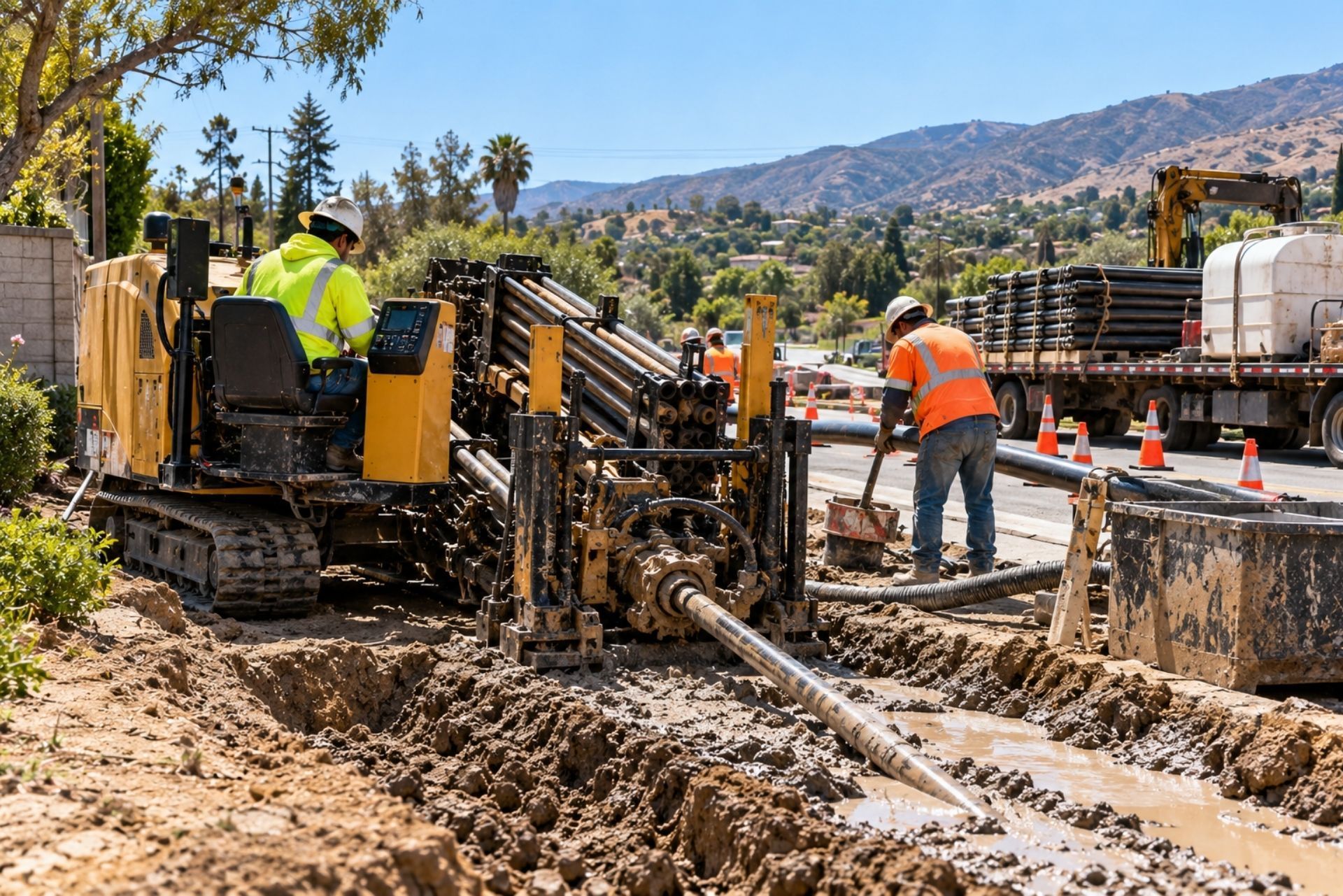
HDD rigs are expensive, mobile, and constantly exposed to damage. A Vermeer D100x140 or Ditch Witch JT100 represents a capital investment of several hundred thousand dollars or more, and these machines travel between job sites on trailers, sit in unsecured staging areas, and operate in conditions that are tough on equipment.
Standard commercial property insurance doesn't adequately cover mobile equipment. Inland marine insurance is designed specifically for property that moves between locations, and it's the right vehicle for covering your drill rigs, locating equipment, mud mixing systems, and downhole tooling.
Key considerations for your inland marine policy include whether it covers equipment during transit, whether it uses actual cash value or replacement cost valuation, and whether downhole tools lost during a bore are included. Lost tooling is a common and expensive occurrence in HDD, and some policies exclude it or impose low sublimits. A single lost drill head and housing assembly can cost $15,000 to $30,000 to replace, and if you're losing tooling in difficult California geology several times a year, those costs add up fast.
Statutory Requirements for California Workers' Compensation
California mandates workers' compensation for all employers with one or more employees, with no exceptions for the construction industry. Operating without coverage is a criminal offense that can result in fines and a stop-work order.
The California advisory pure premium rate increased by 6.6% effective September 1, 2026, setting the benchmark at $1.65 per $100 of payroll. For directional drilling, which falls under high-hazard classification codes, your actual rate will be significantly higher than that benchmark after experience modification and carrier surcharges are applied.
Your experience modification rate (EMR) is the single biggest lever you have for controlling workers' comp costs. An EMR above 1.0 means you're paying a surcharge based on your claims history; below 1.0, you're getting a credit. A serious lost-time injury, like a drill rod striking a worker's hand or a trench collapse during pit excavation, can push your EMR up for three years. That increase compounds across every dollar of payroll. The financial argument for investing in safety programs is straightforward: one bad claim can cost you far more in premium increases than the claim itself.
Also keep in mind that U.S. commercial liability losses reached $143 billion in the year prior to April 2026, driven partly by large jury verdicts. This trend affects the entire insurance market, including workers' comp, and means carriers are scrutinizing construction risks more carefully than ever.
Insurance for California directional drilling contractors is expensive, but the contractors who pay the least per dollar of revenue are the ones who invest in loss prevention rather than just shopping for cheaper carriers.
Implementing Robust Dig-Safe Protocols
Going beyond the minimum 811 requirements is both a safety measure and an insurance strategy. Carriers look favorably on contractors who use private utility locating services in addition to public 811 locates, maintain potholing protocols to physically verify utility locations before boring, document pre-bore site conditions with photos and video, and keep detailed bore logs for every project.
This documentation does double duty. It reduces the likelihood of a utility strike, and if a strike does occur, it demonstrates that you exercised reasonable care, which strengthens your defense and can reduce claim payouts.
Impact of Safety Certifications on Insurance Rates
Holding industry certifications signals to underwriters that your operation takes risk management seriously. Certifications from organizations like the Distribution Contractors Association (DCA) or completion of OSHA 30-hour training for supervisory staff can directly influence your premium.
California insurers use schedule rating to offer
premium credits of 5% to 15% for contractors who document safety programs, such as toolbox talks, documented equipment inspections, and annual third-party safety audits. The math works in your favor: if your annual premium is $80,000 and you earn a 10% credit through a formalized safety program, that $8,000 annual savings more than covers the cost of maintaining the program. Over a three-year policy cycle, the savings compound further as your EMR improves from fewer claims.
Protecting Your Drilling Business for the Long Term
The insurance needs of a California HDD contractor are more complex than most construction trades. Between underground utility exposure, pollution risk, expensive mobile equipment, strict workers' comp requirements, and the liability you inherit through subcontractors, there's no single policy that covers everything. You need a coordinated program where CGL with URE endorsement, CPL, inland marine, E&O, and workers' comp all work together without coverage gaps.
Review your program annually, not just at renewal. Every time you add a new rig, enter a new geographic market within California, or take on a subcontractor, your risk profile changes. Keep your broker informed, maintain your safety documentation, and treat your claims history like the financial asset it is. The contractors who thrive in this state aren't necessarily the ones with the lowest bids: they're the ones who understand their risk and insure it properly.
ABOUT THE AUTHOR:
PATRICK CARUSO
I’m Patrick Caruso, founder of Caruso Insurance, and I have spent more than 25 years helping families, contractors, and small businesses across Southern California make confident insurance decisions. I focus on explaining coverage in clear terms, comparing multiple carriers, and supporting clients with steady communication so they feel secure with each step. My goal is to provide dependable guidance, simple answers, and a smooth process for anyone who needs personal or business insurance.
Contact Us

Service that stays with you.
Our team helps simplify insurance decisions for families and businesses. We focus on clear explanations, fast responses, and dependable service. You can count on us for help with coverage questions, updates, and long-term support.
Coverage that keeps you secure
Reliable Protection for Everyday Life
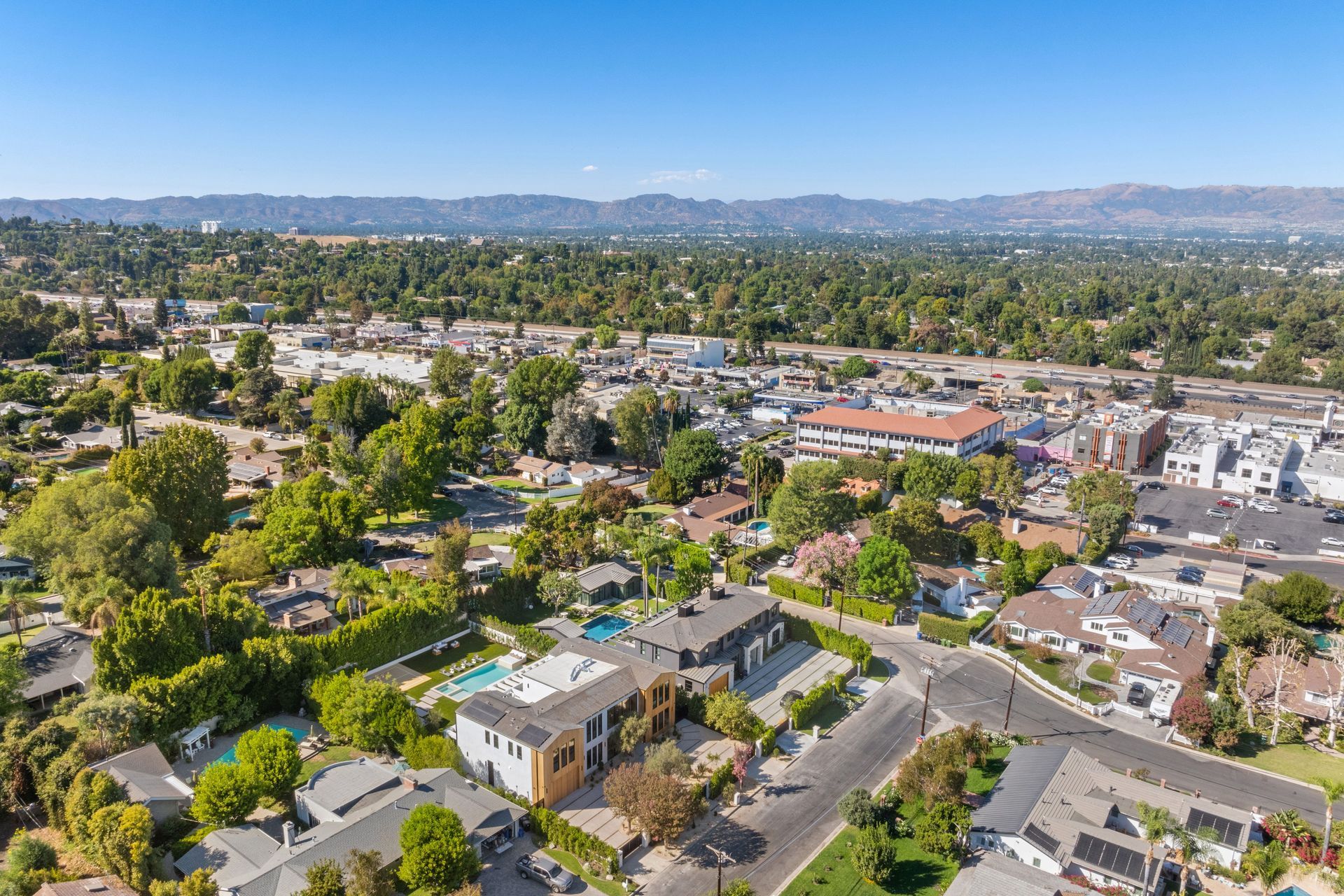
Home insurance helps protect your house, personal belongings, and liability risks. We explain coverage options clearly so you know what your policy includes.
Auto insurance provides protection for accidents, liability, and vehicle damage. We help you compare options so you can choose coverage that fits your driving needs.
Motorcycle insurance provides coverage for riders and their bikes. We help you select options that match how and where you ride.
RV insurance supports protection for motorhomes and recreational vehicles. Coverage applies during travel and while parked.
Coverage Built for Contractors and Trades
Support that keeps your work moving.

General Liability Insurance
General liability insurance helps protect contractors from injury and property damage claims. It supports jobsite requirements and contracts.

Workers Compensation
Workers compensation insurance helps protect employees injured while working. It also supports compliance with state requirements.

Commercial Auto Insurance
Commercial auto insurance provides coverage for work vehicles used on jobsites. It helps protect drivers and company vehicles.
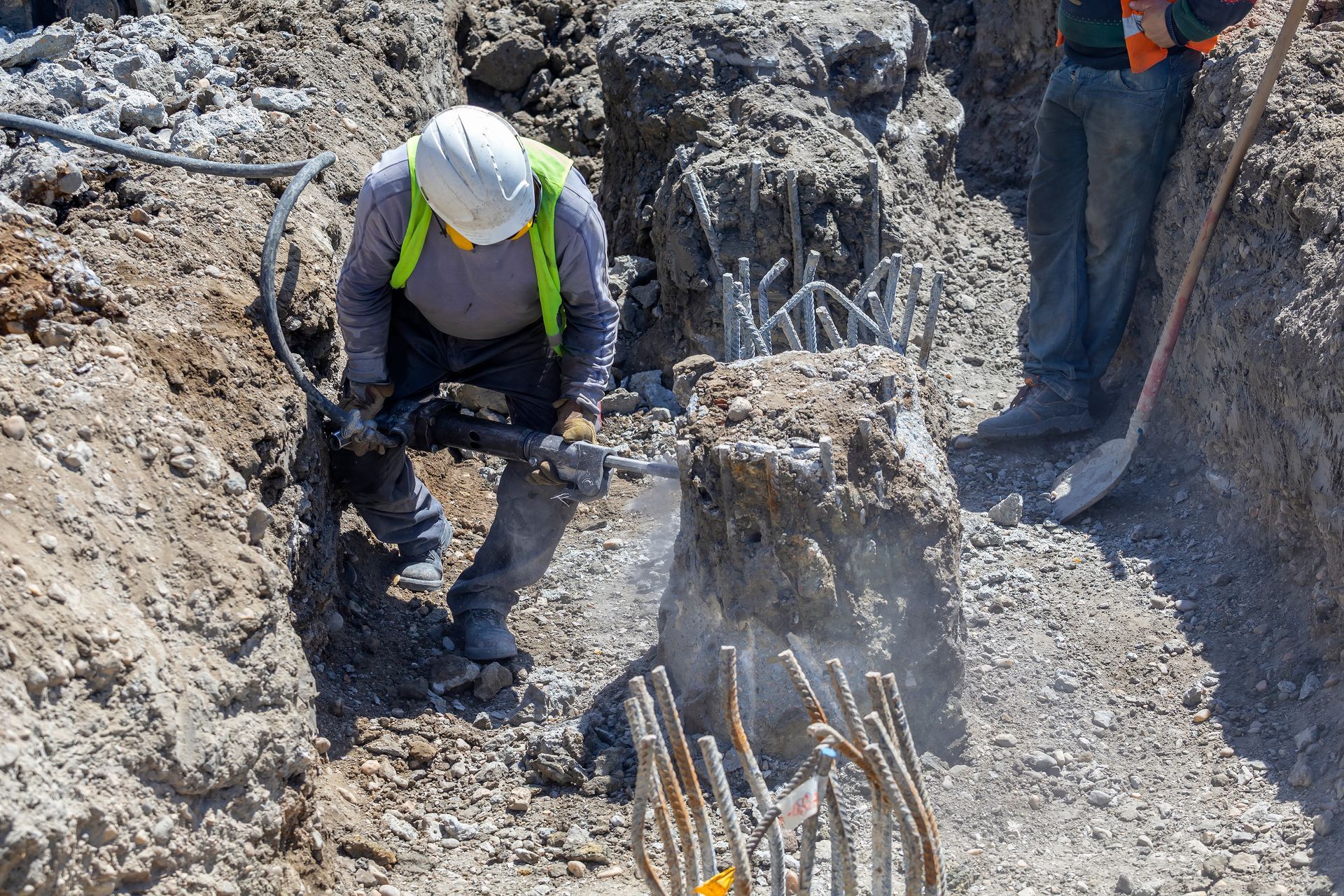
Contractor Insurance
Contractor insurance supports trades and service professionals across Southern California. It helps protect tools, equipment, and daily operations.

Cyber Liability Insurance
Cyber liability insurance helps protect business data and customer information. It supports recovery from digital incidents.

Commercial Property Insurance
Commercial property insurance helps protect offices, shops, and equipment. It supports recovery after covered damage.
Coverage Built for Specialized Work
Support for high-risk and service-driven industries.
Simple Steps Supported by Steady Guidance
A Clear Path to Coverage
Trusted by Clients Across Southern California
Clear service backed by real experiences.
Answers to Common Questions.
Clear explanations to guide your decisions.
How do I know which insurance policy is right for me?
We compare coverage options from multiple carriers to help you see differences in protection and price. You can review clear details and ask questions so you understand what each policy covers. Our team guides you step by step so you feel sure about your decision.
What factors affect my auto insurance premium?
Auto insurance premiums are influenced by your driving history, age, location, vehicle type, and coverage choices. A clean driving record and good safety features can help lower costs. We review these factors with you and help find coverage that fits your budget and needs.
Does homeowners insurance cover all types of damage?
Standard homeowners insurance protects your structure, personal belongings, liability, and additional living expenses in many cases. However, it usually does not include flood or earthquake damage without separate policies. We help you decide if extra coverage is right for your home and location.
Can I update my policy or get certificates online?
Yes. You can submit requests for policy changes and certificates through our online service form at any time. Our team processes those requests quickly and confirms updates once complete so you have the documents you need.
Do I need separate insurance for business risks like EPLI or E&O?
Yes. General liability and workers compensation cover many business risks but do not protect against all exposures. For example, Employment Practices Liability Insurance (EPLI) covers claims like wrongful termination or discrimination, and Errors & Omissions (E&O) covers claims based on mistakes in professional services. We help you identify which extra policies your business may need.
What happens if I need to file a claim?
If you need to file a claim, we guide you through the process and help you contact the insurance carrier. We explain what information you should provide, answer your questions, and stay available while the carrier reviews your claim. This support helps you move forward with confidence.
Contact Us