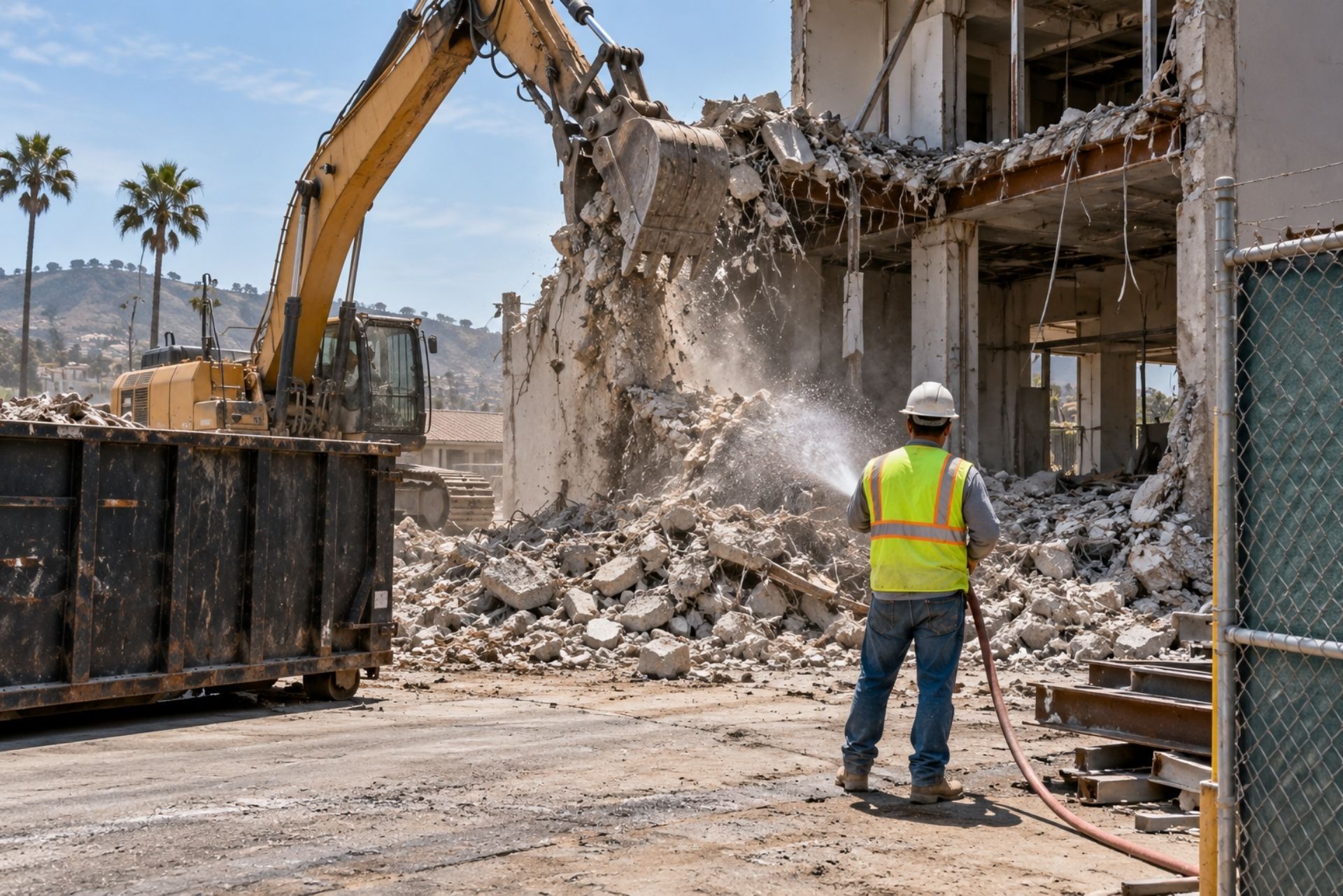
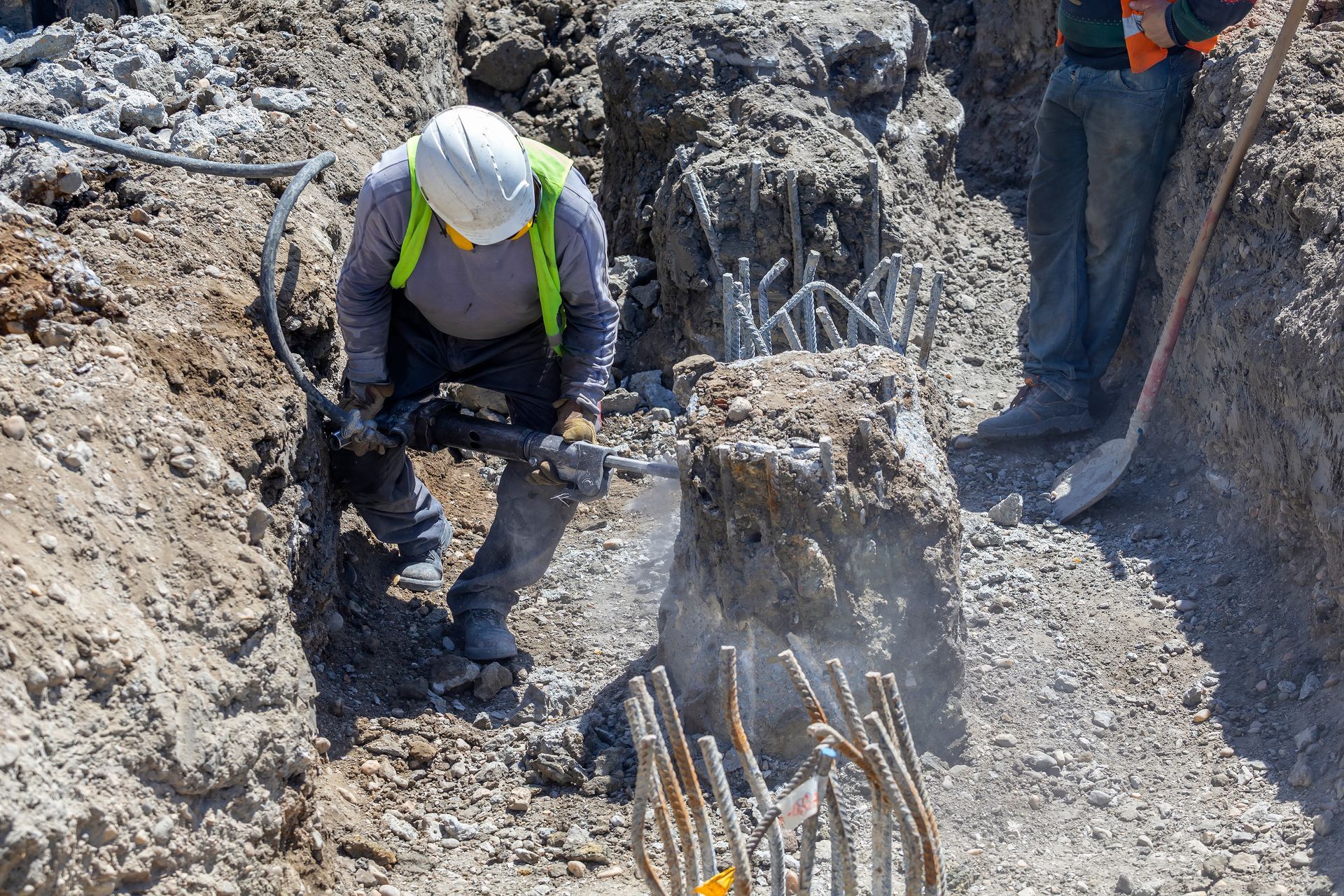
California demolition contractors face a uniquely brutal insurance environment. Between the state's dense urban corridors, aging infrastructure, and aggressive regulatory framework, a single misstep on a teardown project can generate six- or seven-figure claims before the dust settles. The combination of XCU exposures, collapse risks, pollution liability, heavy equipment values, fleet operations, and some of the highest workers' compensation rates in the country makes assembling the right coverage program a genuine puzzle. Most standard commercial policies explicitly exclude demolition work, which means contractors are often pushed into specialty markets where premiums are steep and
coverage gaps are easy to miss. Understanding how each piece fits together - from general liability endorsements to Cal/OSHA compliance requirements - is the difference between a business that survives a bad day on the job and one that doesn't. This guide breaks down the core insurance components California demolition contractors need, with specifics on policy structures, pricing realities, and the compliance details that actually matter.
California's regulatory and legal environment makes demolition one of the hardest trades to insure anywhere in the United States. The state operates under a comparative fault system, and its courts are historically plaintiff-friendly, meaning liability claims from neighboring property owners, pedestrians, or subcontractors tend to result in larger settlements than in most other states. A 2025 analysis by the Insurance Information Institute flagged demolition as one of the top five highest-risk contractor classifications in the state.
The physical risks are compounded by California-specific hazards. Many structures slated for demolition in cities like Los Angeles, San Francisco, and Oakland were built before modern asbestos and lead paint regulations. Disturbing those materials without proper abatement triggers environmental liability that standard general liability policies won't cover. Seismic vulnerabilities add another layer: buildings weakened by partial demolition can behave unpredictably during even minor tremors.
Insurers pricing demolition risks in California also factor in the state's high
litigation costs, elevated medical expenses for
injured workers, and strict regulatory penalties from agencies like Cal/OSHA and the Department of Toxic Substances Control. The result is that a demolition contractor in Sacramento might pay two to three times what a comparable operation in Texas or Florida pays for the same coverage limits. Getting the right policies in place isn't optional - it's the cost of doing business.

By: Larry Scott
Personal Insurance Agent at Caruso Insurance Services
Essential General Liability and Specialized XCU Endorsements
A standard commercial general liability (CGL) policy is the foundation, but for demolition contractors, the standard form is almost always insufficient without specific endorsements. Most CGL policies issued on ISO forms contain exclusions that strip out the exact risks demolition work creates. The three biggest gaps involve explosion, collapse, and underground hazards - collectively known as XCU.
Explosion, Collapse, and Underground (XCU) Hazards
XCU coverage addresses the three categories of loss that standard CGL policies most commonly exclude for contractors performing demolition, excavation, or blasting work. Explosion coverage responds when demolition activities cause a blast, pressure wave, or concussive event that damages nearby property or injures third parties. Underground hazard coverage applies when work disturbs utilities, gas lines, or subsurface structures. In California's older urban areas, where utility maps are often incomplete or inaccurate, this exposure is very real. Contractors should confirm that XCU exclusions have been removed by endorsement and that the coverage applies on an occurrence basis rather than claims-made, which provides broader long-term protection.
Structural Collapse and Adjoining Property Protection
Collapse claims are among the most expensive in demolition insurance. When a wall, floor, or roof section fails in an uncontrolled manner and damages an adjacent building, the resulting property damage and business interruption claims can easily exceed $1 million. California's dense commercial and residential zones mean that most demolition sites have structures within feet of the work area. Policies should include coverage for damage to adjoining structures, and contractors should verify that "collapse" is not defined so narrowly that it only covers total structural failure. Partial collapses and progressive structural movement need to be covered as well. Some insurers offer project-specific collapse endorsements for high-value teardowns, which can be worth the additional premium.
Debris Removal and Pollution Liability
Debris removal coverage is frequently overlooked until a contractor realizes their CGL policy caps debris cleanup at a sublimit far below actual costs. In California, where disposal fees for construction and demolition waste run $50 to $150 per ton depending on material type and landfill location, a large commercial teardown can generate debris removal costs of $200,000 or more. Pollution liability is a separate but related concern. Demolition of pre-1980 structures almost always involves potential exposure to asbestos, lead, PCBs, or other regulated materials. A contractor pollution liability (CPL) policy covers third-party bodily injury and property damage from pollution events, including the cost of government-mandated cleanup. Given California's aggressive enforcement posture through the DTSC, carrying CPL coverage with limits of at least $1 million per occurrence is a practical minimum.
Protecting Physical Assets: Inland Marine and Equipment Floaters
Demolition contractors depend on expensive, mobile equipment that moves from site to site. Standard commercial property policies are designed for assets kept at a fixed location, which makes them a poor fit for excavators, concrete crushers, and hydraulic shears that travel across the state.
Heavy Machinery and Specialized Tool Coverage
An inland marine policy, often structured as an equipment floater, covers owned machinery on an agreed-value or replacement-cost basis regardless of where it's located. For a demolition contractor running a fleet that might include a CAT 349 excavator (replacement value around $450,000), a concrete pulverizer attachment ($80,000), and various smaller tools, the total insured value can easily reach $1 million or more. Policies should cover theft, vandalism, fire, collision during transport, and overturn. Pay attention to whether the policy covers equipment during active use on the job site, as some floaters exclude damage that occurs while the machine is operating - a critical gap for demolition work.
Rented, Leased, or Borrowed Equipment Provisions
Many demolition contractors rent specialized equipment for specific projects rather than purchasing it outright. A wrecking ball crane needed for a single job or a specialized abatement vacuum system might be rented for a few weeks. Rental agreements almost always require the contractor to carry insurance on the rented equipment, and the rental company's damage waiver is typically expensive and limited. Adding rented or leased equipment to an inland marine policy is usually cheaper and provides broader coverage. Contractors should confirm that their policy covers the full replacement value specified in the rental agreement and that the rental company is listed as a loss payee.
Commercial Auto Insurance for Demolition Fleets
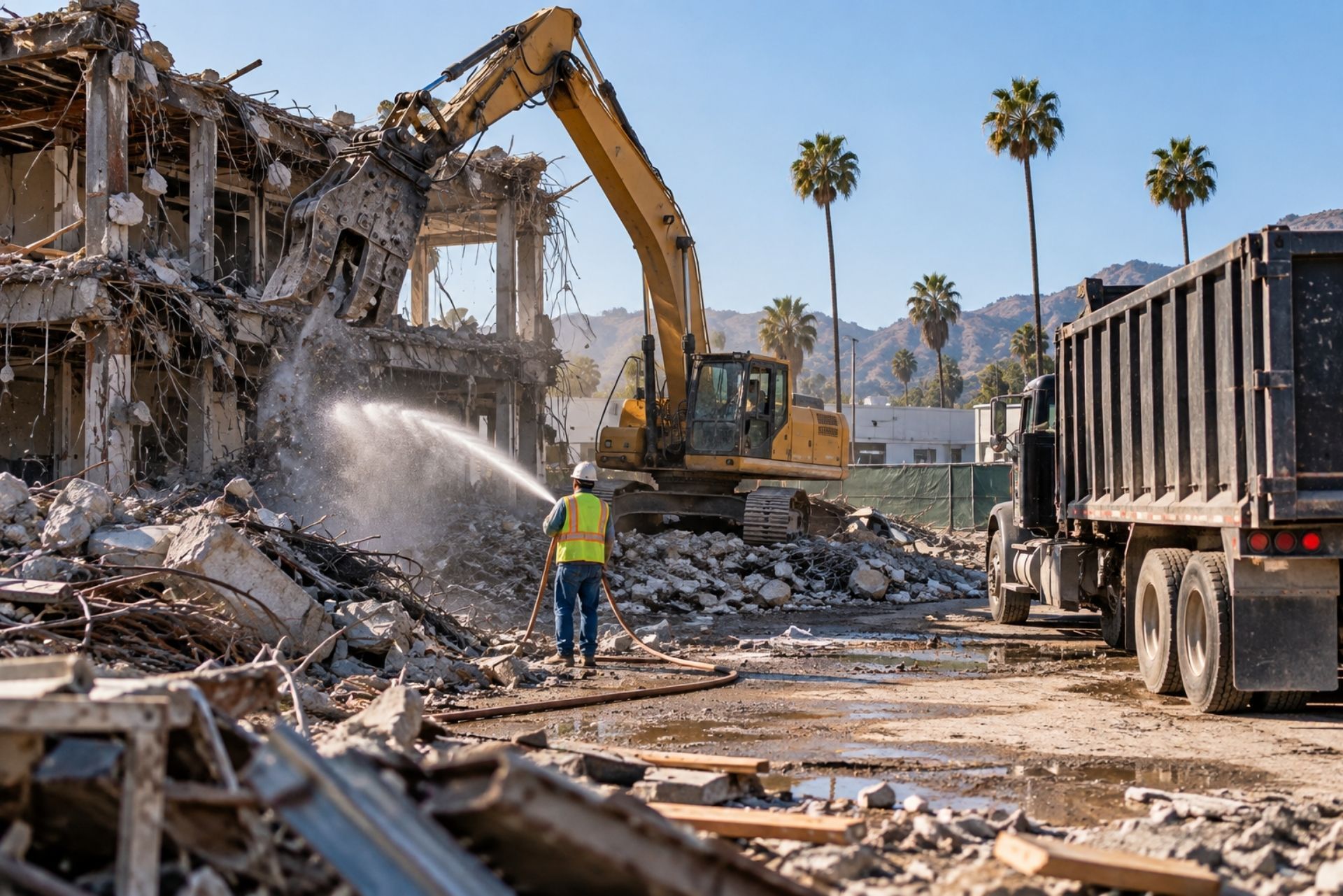
Moving heavy materials, equipment, and crews across California's highways creates significant auto liability exposure. Demolition fleets typically include dump trucks, flatbed trailers, crew vans, and sometimes oversize load vehicles that require special permits.
Liability for Heavy Haulers and Dump Trucks
California requires minimum commercial auto liability limits, but the state minimums are far too low for demolition operations. A loaded dump truck involved in a highway accident can cause catastrophic injuries, and jury verdicts in California for serious truck accidents regularly exceed $5 million. Most demolition contractors should carry combined single limits of at least $1 million, with umbrella or excess liability extending coverage to $5 million or more. Hired and non-owned auto coverage is also essential for situations where employees drive personal vehicles for work purposes or the company rents additional trucks during peak periods.
CA-Specific Compliance and Loading/Unloading Risks
California's Department of Motor Vehicles and the California Highway Patrol enforce strict requirements for commercial vehicles, including weight limits, brake inspection standards, and hours-of-service rules. Violations can result in vehicle impoundment and fines that insurance won't cover, but the bigger risk is that non-compliance can void your auto policy's coverage in the event of an accident. Loading and unloading operations present their own hazard: injuries that occur while loading debris onto a truck or unloading equipment at a job site can fall into a gray area between general liability and auto liability. Make sure your policies coordinate so there's no gap. A well-structured insurance program will have the CGL and commercial auto policies dovetail, with loading and unloading covered under at least one of them.
California Workers' Compensation and Safety Compliance
Workers' compensation is mandatory in California for any employer, with no exceptions for small businesses. For demolition contractors, it's also one of the single largest insurance expenses, often exceeding the cost of general liability.
High-Risk Classification Codes for Demolition Labor
California uses the Workers' Compensation Insurance Rating Bureau (WCIRB) classification system. Demolition work generally falls under Class Code 5213 (Concrete Construction - NOC) or Class Code 6218 (Excavation), depending on the specific operations. These codes carry base rates that can run $15 to $30 or more per $100 of payroll. For a demolition crew with an annual payroll of $500,000, that translates to workers' comp premiums of $75,000 to $150,000 before any experience modification adjustments. The classification code assigned to your operations has an enormous impact on your premium, so it's worth having your broker audit your code assignments annually to ensure they accurately reflect the work being performed.
Cal/OSHA Standards and Experience Modification Factors
Cal/OSHA enforces safety standards that are often stricter than federal OSHA requirements. Demolition contractors must comply with Title 8, Section 1734 through 1736 of the California Code of Regulations, which cover demolition-specific requirements like engineering surveys, utility disconnection, and protective measures for adjacent structures. Violations can result in penalties exceeding $25,000 per instance for serious citations, and repeated violations can trigger willful citation penalties above $150,000.
Your experience modification rate (EMR or e-mod) directly reflects your claims history and has a multiplier effect on your workers' comp premium. An EMR of 1.0 is average. A contractor with a strong safety record might achieve a 0.75 EMR, reducing premiums by 25%. A contractor with frequent claims might carry a 1.4 EMR, inflating premiums by 40%. Over a five-year period, the difference between a 0.75 and 1.4 EMR on a $500,000 payroll can exceed $300,000 in cumulative premium costs. Investing in safety programs, proper training, and return-to-work protocols pays for itself many times over.
Strategic Risk Management and Policy Procurement
Building the right insurance program for a California demolition operation isn't something you do once and forget. It requires annual review, active risk management, and a broker who genuinely understands contractor insurance in this state.
Start by working with a broker or agent who specializes in construction and demolition risks, not a generalist who handles restaurants and retail shops on the side. A specialist broker will have access to surplus lines markets and specialty carriers like Zurich, Liberty Mutual's construction division, or Berkley Construction that actually write demolition risks with appropriate terms. They'll also know which carriers are currently competitive in California's market, which shifts year to year.
Pair your insurance program with documented risk management practices. Conduct pre-demolition engineering surveys and keep copies on file. Photograph adjacent structures before and after every project. Maintain equipment inspection logs. Train crews on Cal/OSHA requirements and document that training. These records serve double duty: they reduce the likelihood of claims, and they provide evidence that can defeat or reduce claims when they do occur. Insurers and their claims adjusters look favorably on contractors who can produce organized documentation.
Your claims history follows you through the CLUE (Comprehensive Loss Underwriting Exchange) database and your WCIRB experience record. A single large claim can affect your insurability and premium costs for five to seven years. The contractors who thrive long-term in California's demolition market are the ones who treat insurance and safety as operational priorities rather than administrative afterthoughts. Get your coverage reviewed annually, push your EMR down through genuine safety investment, and make sure every policy in your program coordinates without gaps. That's how you protect both your crew and your bottom line.
ABOUT THE AUTHOR:
LARRY SCOTT
Hello! My name is Larry Scott. I have been in the insurance industry for 21+ years, with a background in Personal, Commercial, and Bonding. I support Caruso Insurance’s goal of providing convenient and competitive insurance coverage for our clients by focusing on each client’s individual needs. I am dedicated to continuing education and staying up to date with technology in the forever changing insurance world. I am a family man and enjoy any time I get to spend with my kids. I love cooking and drinking wine.
Contact Us

Service that stays with you.
Our team helps simplify insurance decisions for families and businesses. We focus on clear explanations, fast responses, and dependable service. You can count on us for help with coverage questions, updates, and long-term support.
Coverage that keeps you secure
Reliable Protection for Everyday Life
Home insurance helps protect your house, personal belongings, and liability risks. We explain coverage options clearly so you know what your policy includes.
Auto insurance provides protection for accidents, liability, and vehicle damage. We help you compare options so you can choose coverage that fits your driving needs.
Motorcycle insurance provides coverage for riders and their bikes. We help you select options that match how and where you ride.
RV insurance supports protection for motorhomes and recreational vehicles. Coverage applies during travel and while parked.
Coverage Built for Contractors and Trades
Support that keeps your work moving.

General Liability Insurance
General liability insurance helps protect contractors from injury and property damage claims. It supports jobsite requirements and contracts.

Workers Compensation
Workers compensation insurance helps protect employees injured while working. It also supports compliance with state requirements.

Commercial Auto Insurance
Commercial auto insurance provides coverage for work vehicles used on jobsites. It helps protect drivers and company vehicles.
Contractor Insurance
Contractor insurance supports trades and service professionals across Southern California. It helps protect tools, equipment, and daily operations.

Cyber Liability Insurance
Cyber liability insurance helps protect business data and customer information. It supports recovery from digital incidents.

Commercial Property Insurance
Commercial property insurance helps protect offices, shops, and equipment. It supports recovery after covered damage.
Coverage Built for Specialized Work
Support for high-risk and service-driven industries.



Simple Steps Supported by Steady Guidance
A Clear Path to Coverage
Trusted by Clients Across Southern California
Clear service backed by real experiences.
Answers to Common Questions.
Clear explanations to guide your decisions.
How do I know which insurance policy is right for me?
We compare coverage options from multiple carriers to help you see differences in protection and price. You can review clear details and ask questions so you understand what each policy covers. Our team guides you step by step so you feel sure about your decision.
What factors affect my auto insurance premium?
Auto insurance premiums are influenced by your driving history, age, location, vehicle type, and coverage choices. A clean driving record and good safety features can help lower costs. We review these factors with you and help find coverage that fits your budget and needs.
Does homeowners insurance cover all types of damage?
Standard homeowners insurance protects your structure, personal belongings, liability, and additional living expenses in many cases. However, it usually does not include flood or earthquake damage without separate policies. We help you decide if extra coverage is right for your home and location.
Can I update my policy or get certificates online?
Yes. You can submit requests for policy changes and certificates through our online service form at any time. Our team processes those requests quickly and confirms updates once complete so you have the documents you need.
Do I need separate insurance for business risks like EPLI or E&O?
Yes. General liability and workers compensation cover many business risks but do not protect against all exposures. For example, Employment Practices Liability Insurance (EPLI) covers claims like wrongful termination or discrimination, and Errors & Omissions (E&O) covers claims based on mistakes in professional services. We help you identify which extra policies your business may need.
What happens if I need to file a claim?
If you need to file a claim, we guide you through the process and help you contact the insurance carrier. We explain what information you should provide, answer your questions, and stay available while the carrier reviews your claim. This support helps you move forward with confidence.
Contact Us