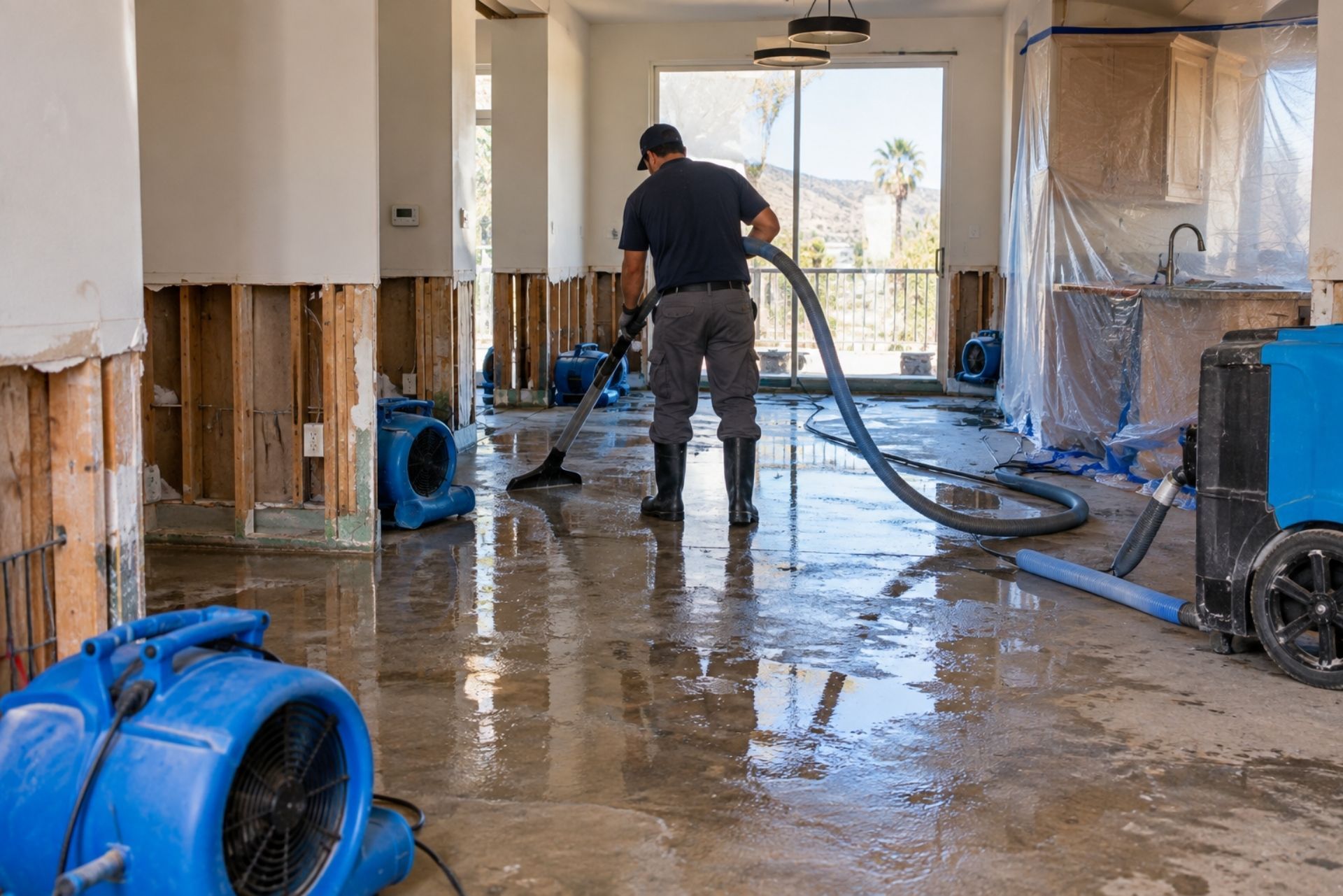
A single burst pipe in a Fresno rental property can generate $50,000 in damage before your crew even arrives. By the time your team has set up dehumidifiers, torn out drywall, and started drying the structure, you're exposed to liability on half a dozen fronts: pollution from mold spores, damage to a homeowner's irreplaceable belongings, a technician rear-ending someone in a company van, or a missed moisture reading that leads to structural rot six months later. California's regulatory environment makes all of this more complicated, with strict licensing requirements, aggressive mold disclosure laws, and a litigious culture that punishes underinsured contractors.
If you run a water-damage restoration company in California, your
insurance portfolio isn't just a cost of doing business. It's the thing that determines whether a bad week ends your company or just costs you a deductible. The coverage categories that matter most are
pollution liability,
professional liability (errors and omissions),
inland marine for equipment, bailee's coverage for customer property, and
commercial auto for your fleet. Each one addresses a distinct risk, and skipping any of them leaves a gap that a single claim can exploit. This guide breaks down what California
restoration contractors actually need, why generic
commercial policies fall short, and how to handle claims when they inevitably come.
The California Regulatory Landscape for Water Damage Restoration
California treats water-damage restoration as a licensed trade, and the state's climate creates biological hazards that most other states don't regulate as aggressively. Understanding both the licensing framework and the environmental risks is essential before you can build an insurance program that actually protects your business.
State Licensing and CSLB Insurance Requirements
The Contractors State License Board (CSLB) requires restoration contractors to hold a C-61/D-63 license for water-damage restoration work. As of 2026, the CSLB mandates a minimum of $1 million in general liability insurance and a $25,000 contractor's bond. Workers' compensation coverage is required if you have even one employee, with no exceptions.
Here's the part that catches people off guard: the CSLB actively audits insurance compliance, and your insurer is required to notify the board if your policy lapses. A lapse of even a few days can trigger license suspension, which means you can't legally pull permits or sign contracts. Some contractors have lost six-figure jobs because their policy renewal was delayed by a week. Set up auto-renewal and keep a buffer in your business account to cover premiums.
Unique Risks: Mold, Mildew, and Fungi in California Climates
California's climate zones range from humid coastal areas to hot inland valleys, and both create ideal conditions for mold growth after water intrusion. The state's Health and Safety Code sections 26100-26156 impose specific mold assessment and remediation standards that restoration contractors must follow. If your crew disturbs mold during a water-damage job without proper containment, you've potentially created a health hazard and a liability claim.
The real risk is that standard commercial general liability (CGL) policies almost universally exclude mold-related claims. This exclusion applies to both the bodily injury and property damage portions of the policy. A homeowner who develops respiratory symptoms after your crew's work can sue, and your CGL carrier will hand you a denial letter. You need a separate pollution liability policy to cover this exposure, which we'll get into next.

By: Larry Scott
Personal Insurance Agent at Caruso Insurance Services
Mitigating Specialized Risks: Pollution and Professional Liability
Two of the most expensive and most commonly overlooked coverage types for California restoration contractors are pollution liability and professional liability. These aren't optional add-ons. They cover the claims that can bankrupt a mid-size company.
Pollution Liability and Mold Remediation Coverage
A contractor's pollution liability policy (CPL) covers claims arising from the release, dispersal, or worsening of pollutants during your work. For restoration contractors, "pollutants" primarily means mold, mildew, fungi, bacteria, and sewage-related contaminants. A typical CPL policy for a California restoration firm with $2-4 million in annual revenue runs between $8,000 and $18,000 per year for $1 million in coverage, depending on your claims history and the types of jobs you take.
The policy should cover both first-party and third-party claims. First-party coverage pays for cleanup costs when your own operations cause contamination. Third-party coverage pays for bodily injury or property damage claims from homeowners, tenants, or neighboring properties. Make sure your policy includes transportation pollution liability if your crews haul contaminated materials to disposal sites, because a spill en route to the landfill is a separate exposure.
Errors and Omissions: Why Restoration Firms Need Professional Liability
Professional liability, or errors and omissions (E&O) insurance, covers claims that arise from mistakes in your professional judgment rather than physical accidents. A missed moisture reading behind a cabinet, an incorrect drying protocol, or a faulty assessment that leads to secondary damage months later: these are all E&O claims, not general liability claims.
California courts have been increasingly willing to hold restoration contractors to a professional standard of care, particularly when the contractor provides a written moisture assessment or scope of work. If you're using thermal imaging, hygrometers, or psychrometric calculations to guide your work (and you should be), you're holding yourself out as a professional, and you need the insurance to match. E&O policies for restoration firms typically cost $3,000-$8,000 annually for $1 million in coverage. The deductibles tend to be higher than CGL policies, often $5,000-$10,000, so factor that into your pricing.
Protecting Physical Assets: Equipment and Customer Property
Restoration work involves expensive, portable equipment and direct custody of other people's belongings. Standard property insurance doesn't adequately cover either scenario.
Inland Marine Insurance for High-Value Drying Equipment
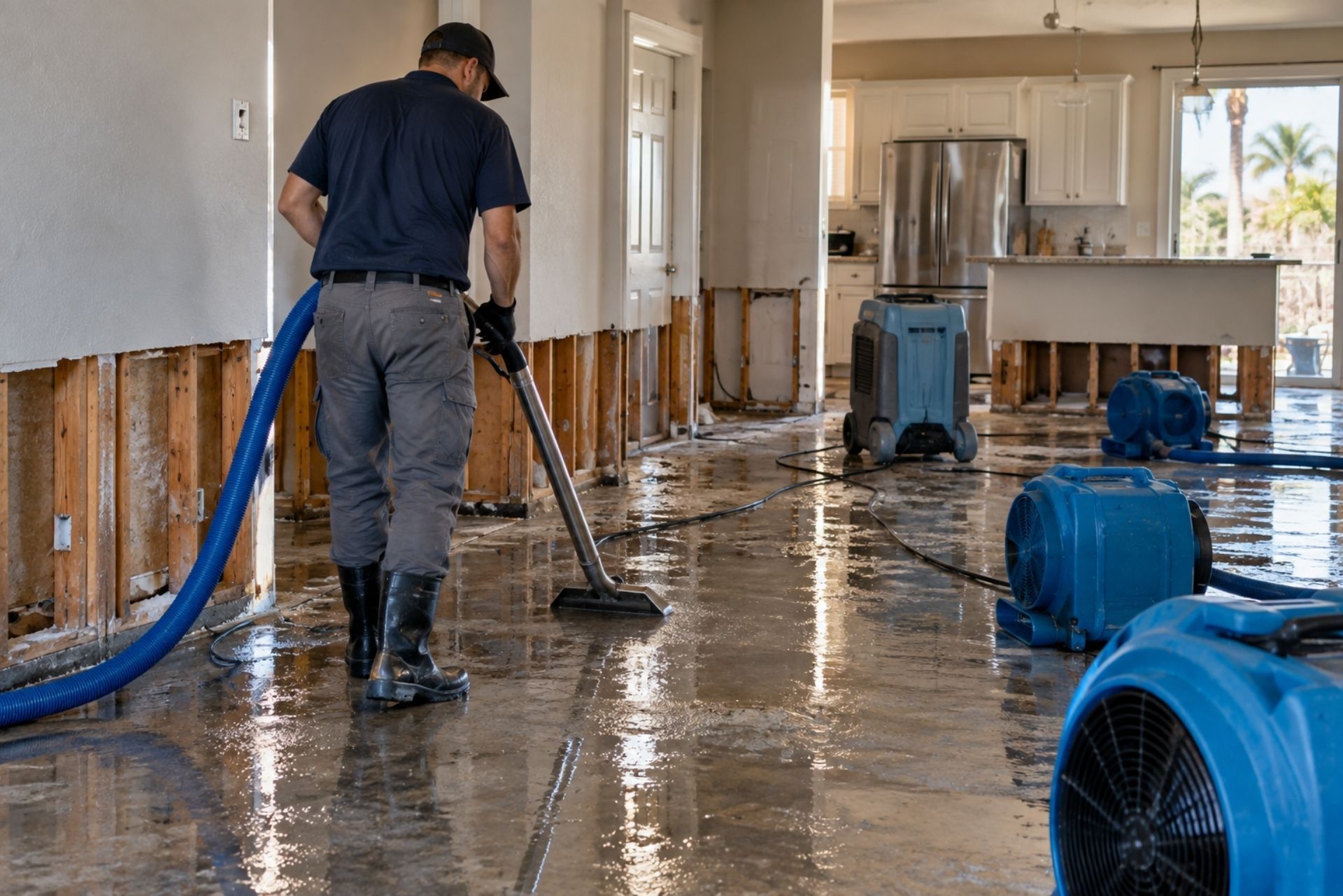
Your dehumidifiers, air movers, air scrubbers, thermal imaging cameras, and moisture meters represent a significant capital investment. A single commercial dehumidifier costs $2,000-$6,000, and most restoration companies own 20 to 50 of them. Inland marine insurance covers equipment that moves between job sites, which is exactly how restoration equipment operates.
A standard commercial property policy covers equipment at your listed business location. The moment a technician loads a $4,500 LGR dehumidifier into a van and drives to a job site, that coverage often evaporates. Inland marine fills this gap, covering theft, damage, and loss wherever the equipment is located. Premiums are typically 1-3% of the total scheduled equipment value annually. If you've got $200,000 in mobile equipment, expect to pay $2,000-$6,000 per year. Keep a current equipment inventory with serial numbers, purchase dates, and replacement costs: this speeds up claims dramatically and prevents disputes over depreciation.
Bailee's Coverage for Client Belongings and Off-Site Storage
When your crew packs out a homeowner's furniture, clothing, electronics, and personal items for cleaning or storage during a restoration job, you become a bailee. That's a legal term meaning you have temporary custody of someone else's property and a duty to care for it. If those items are damaged, lost, or stolen while in your possession, you're liable.
Bailee's coverage (sometimes called "care, custody, and control" coverage) pays for damage to customer property while it's in your care. This is critical for California restoration contractors who operate pack-out and contents cleaning services. Your CGL policy specifically excludes property in your care, custody, or control, so without bailee's coverage, you're paying for damaged customer belongings out of pocket. A $15,000 claim for a ruined antique dresser or water-damaged electronics can wipe out your profit margin on an entire job. Policies typically run $1,500-$4,000 annually depending on the volume of contents work you handle.
Commercial Auto and Fleet Management for Field Technicians
Restoration is a mobile business. Your technicians drive company vehicles loaded with equipment to emergency calls at all hours, often in poor weather conditions. California's minimum auto liability limits of $15,000/$30,000/$5,000 are absurdly low for a commercial operation: a serious accident can easily exceed $500,000 in medical costs alone.
Most insurance advisors recommend $1 million in combined single-limit coverage for restoration fleets. If your company operates five or more vehicles, a commercial auto fleet policy is more cost-effective than insuring each vehicle individually. Premiums vary widely based on driver records, vehicle types, and annual mileage, but expect $3,000-$6,000 per vehicle per year in California's urban markets.
Pay attention to hired and non-owned auto coverage as well. If a technician uses a personal vehicle to pick up supplies or respond to an after-hours emergency, your commercial auto policy won't cover them unless you've added this endorsement. Given that restoration work often involves 2 AM emergency calls where technicians drive their own cars to the shop before taking a company vehicle, this is a real and common exposure.
Filing an insurance claim as a restoration contractor is different from filing as a homeowner. The stakes are higher, the documentation requirements are more demanding, and the potential for disputes with third parties is significant.
Documenting Losses to Streamline Insurance Payouts
The single best thing you can do to protect yourself in a claim is document everything before, during, and after every job. This means timestamped photos of the property upon arrival, moisture readings with calibrated instruments, daily progress logs, and final readings at project completion.
For equipment claims under your inland marine policy, maintain a master inventory spreadsheet with purchase receipts, serial numbers, and current replacement values. Update it quarterly. When a $4,000 dehumidifier is stolen from a job site, the difference between a two-week payout and a three-month fight is whether you can hand your adjuster a serial number and a receipt.
For pollution or E&O claims, your job documentation becomes your defense. If a homeowner alleges you missed moisture behind a wall, your daily moisture logs and thermal images are the evidence that either confirms or refutes the claim. Contractors who skip documentation because they're busy are the ones who lose disputes.
Managing Third-Party Liability Claims and Property Damage Disputes
Third-party claims in restoration work often come from homeowners, their insurance carriers, or neighboring property owners. A common scenario: you're drying a unit in a multi-family building, and the tenant next door claims your equipment caused vibration damage or that mold spread to their unit during your work.
When a claim comes in, notify your insurer immediately. California law requires prompt notice, and late reporting can give your carrier grounds to deny coverage. Don't admit fault, don't offer to pay out of pocket, and don't sign anything from the claimant's attorney. Your insurer's claims team handles this, and that's exactly what you're paying premiums for. One thing worth tracking: every claim you file gets recorded in the Comprehensive Loss Underwriting Exchange (CLUE) database, and future insurers will review this history when quoting your renewals. Frequent small claims can hurt you more than a single large one, so consider whether claims under $5,000 are worth filing or better absorbed as a business expense.
Strategic Coverage Selection for Long-Term Business Sustainability
Building the right insurance program for a California restoration contractor isn't about buying the cheapest policy in each category. It's about constructing a portfolio where the coverages work together without gaps or redundancies. A well-structured program for a mid-size firm doing $3 million in annual revenue might cost $45,000-$75,000 per year across all lines: CGL, pollution liability, E&O, inland marine, bailee's, commercial auto, workers' comp, and an umbrella policy.
Work with a broker who specializes in contractor insurance or, better yet, restoration-specific insurance. Generalist agents often miss the pollution and bailee's exposures because they don't understand the industry. Ask your broker to run a coverage gap analysis annually, especially as you add services like mold remediation, contents cleaning, or fire restoration.
The contractors who survive long-term in California's restoration market aren't necessarily the ones with the lowest overhead. They're the ones who can absorb a bad claim without losing their license, their bonding capacity, or their ability to get insured at reasonable rates. Treat your insurance program as infrastructure, invest in documentation and loss prevention, and review your coverages every year as your business evolves. That discipline is what separates a company that lasts 20 years from one that folds after its first serious lawsuit.
ABOUT THE AUTHOR:
LARRY SCOTT
Hello! My name is Larry Scott. I have been in the insurance industry for 21+ years, with a background in Personal, Commercial, and Bonding. I support Caruso Insurance’s goal of providing convenient and competitive insurance coverage for our clients by focusing on each client’s individual needs. I am dedicated to continuing education and staying up to date with technology in the forever changing insurance world. I am a family man and enjoy any time I get to spend with my kids. I love cooking and drinking wine.
Contact Us

Service that stays with you.
Our team helps simplify insurance decisions for families and businesses. We focus on clear explanations, fast responses, and dependable service. You can count on us for help with coverage questions, updates, and long-term support.
Coverage that keeps you secure
Reliable Protection for Everyday Life
Home insurance helps protect your house, personal belongings, and liability risks. We explain coverage options clearly so you know what your policy includes.
Auto insurance provides protection for accidents, liability, and vehicle damage. We help you compare options so you can choose coverage that fits your driving needs.
Motorcycle insurance provides coverage for riders and their bikes. We help you select options that match how and where you ride.
RV insurance supports protection for motorhomes and recreational vehicles. Coverage applies during travel and while parked.
Coverage Built for Contractors and Trades
Support that keeps your work moving.

General Liability Insurance
General liability insurance helps protect contractors from injury and property damage claims. It supports jobsite requirements and contracts.

Workers Compensation
Workers compensation insurance helps protect employees injured while working. It also supports compliance with state requirements.

Commercial Auto Insurance
Commercial auto insurance provides coverage for work vehicles used on jobsites. It helps protect drivers and company vehicles.
Contractor Insurance
Contractor insurance supports trades and service professionals across Southern California. It helps protect tools, equipment, and daily operations.

Cyber Liability Insurance
Cyber liability insurance helps protect business data and customer information. It supports recovery from digital incidents.

Commercial Property Insurance
Commercial property insurance helps protect offices, shops, and equipment. It supports recovery after covered damage.
Coverage Built for Specialized Work
Support for high-risk and service-driven industries.


Simple Steps Supported by Steady Guidance
A Clear Path to Coverage
Trusted by Clients Across Southern California
Clear service backed by real experiences.
Answers to Common Questions.
Clear explanations to guide your decisions.
How do I know which insurance policy is right for me?
We compare coverage options from multiple carriers to help you see differences in protection and price. You can review clear details and ask questions so you understand what each policy covers. Our team guides you step by step so you feel sure about your decision.
What factors affect my auto insurance premium?
Auto insurance premiums are influenced by your driving history, age, location, vehicle type, and coverage choices. A clean driving record and good safety features can help lower costs. We review these factors with you and help find coverage that fits your budget and needs.
Does homeowners insurance cover all types of damage?
Standard homeowners insurance protects your structure, personal belongings, liability, and additional living expenses in many cases. However, it usually does not include flood or earthquake damage without separate policies. We help you decide if extra coverage is right for your home and location.
Can I update my policy or get certificates online?
Yes. You can submit requests for policy changes and certificates through our online service form at any time. Our team processes those requests quickly and confirms updates once complete so you have the documents you need.
Do I need separate insurance for business risks like EPLI or E&O?
Yes. General liability and workers compensation cover many business risks but do not protect against all exposures. For example, Employment Practices Liability Insurance (EPLI) covers claims like wrongful termination or discrimination, and Errors & Omissions (E&O) covers claims based on mistakes in professional services. We help you identify which extra policies your business may need.
What happens if I need to file a claim?
If you need to file a claim, we guide you through the process and help you contact the insurance carrier. We explain what information you should provide, answer your questions, and stay available while the carrier reviews your claim. This support helps you move forward with confidence.
Contact Us