
California's aggressive push toward building electrification has turned heat-pump installation into one of the fastest-growing trades in the state. With cities from San Jose to Los Angeles phasing out natural gas in new construction and the state offering generous rebates through programs like TECH Clean California, contractors who specialize in heat-pump systems are booking months in advance. But rapid growth brings rapid exposure. A single refrigerant leak, a botched ductless mini-split install, or a workers' comp claim can wipe out a year's profit overnight. If you're a heat-pump contractor operating in California, your insurance portfolio isn't just a checkbox for getting licensed: it's the financial backbone of your business.
Legal Requirements for California HVAC and Heat-Pump Licenses
California regulates HVAC contractors through the Contractors State License Board (CSLB), and heat-pump work generally falls under the C-20 (Warm-Air Heating, Ventilating and Air-Conditioning) classification. Before you even think about insurance shopping, you need to understand what the state requires just to hold that license.
CSLB Contractor Bond Requirements
Every licensed contractor in California must carry a $25,000 contractor license bond. This bond protects consumers if a contractor violates the law or breaches a contract, but it is not insurance: it won't cover property damage, injuries, or lawsuits. Think of it as a state-mandated guarantee of your professional conduct. If a claim is paid against your bond, you owe the surety company that money back.
Some contractors also need a $15,000 qualifying individual bond if the person qualifying for the license isn't a direct owner. And if you've had disciplinary action from the CSLB, you may be required to post a disciplinary bond on top of everything else. These costs add up, and they're non-negotiable.
Workers' Compensation Mandates for C-20 Licensees
California law requires workers' compensation coverage for any contractor with employees: no exceptions. Even a single part-time helper triggers the requirement. Sole proprietors with no employees can file an exemption with the CSLB, but here's the catch: many general contractors and property managers won't hire you as a sub without a workers' comp certificate, regardless of your exemption status.
Workers' comp premiums for HVAC and heat-pump installers typically run between $5 and $12 per $100 of payroll, depending on your experience modification rate (EMR) and claims history. A clean record can save you thousands annually, while even one serious claim can spike your EMR above 1.0 and keep premiums elevated for three years.

By: Patrick Caruso
President of Caruso Insurance Services
Essential Insurance Coverages for Heat-Pump Specialists
Beyond the state-mandated minimums, heat-pump contractors in California need a layered insurance strategy that matches the specific risks of the trade. A general contractor's off-the-shelf policy won't cut it.
General Liability for Property Damage and Bodily Injury
Commercial general liability (CGL) is the foundation. It covers third-party bodily injury and property damage arising from your operations. If a technician accidentally damages a customer's flooring while installing a heat-pump condenser, or if a homeowner trips over equipment left in a hallway, CGL responds.
Most California heat-pump contractors carry $1 million per occurrence and $2 million aggregate, which satisfies the requirements of most GCs and commercial property managers. Expect annual premiums in the range of $1,200 to $3,500 for a small to mid-size operation, though this varies based on revenue and crew size.
Professional Liability and Errors & Omissions
Here's where many HVAC contractors leave themselves exposed. Professional liability, sometimes called errors and omissions (E&O), covers claims arising from faulty design recommendations, incorrect system sizing, or improper load calculations. If you spec a 3-ton heat pump for a home that actually needs a 5-ton unit and the homeowner sues because their system can't keep up during a Sacramento summer, CGL won't cover that: it's a professional judgment error, not an accident.
E&O policies for HVAC contractors typically cost between $800 and $2,000 annually and are increasingly important as heat-pump technology grows more complex, especially with variable-speed inverter systems and integrated smart controls.
Inland Marine Insurance for Tools and Equipment
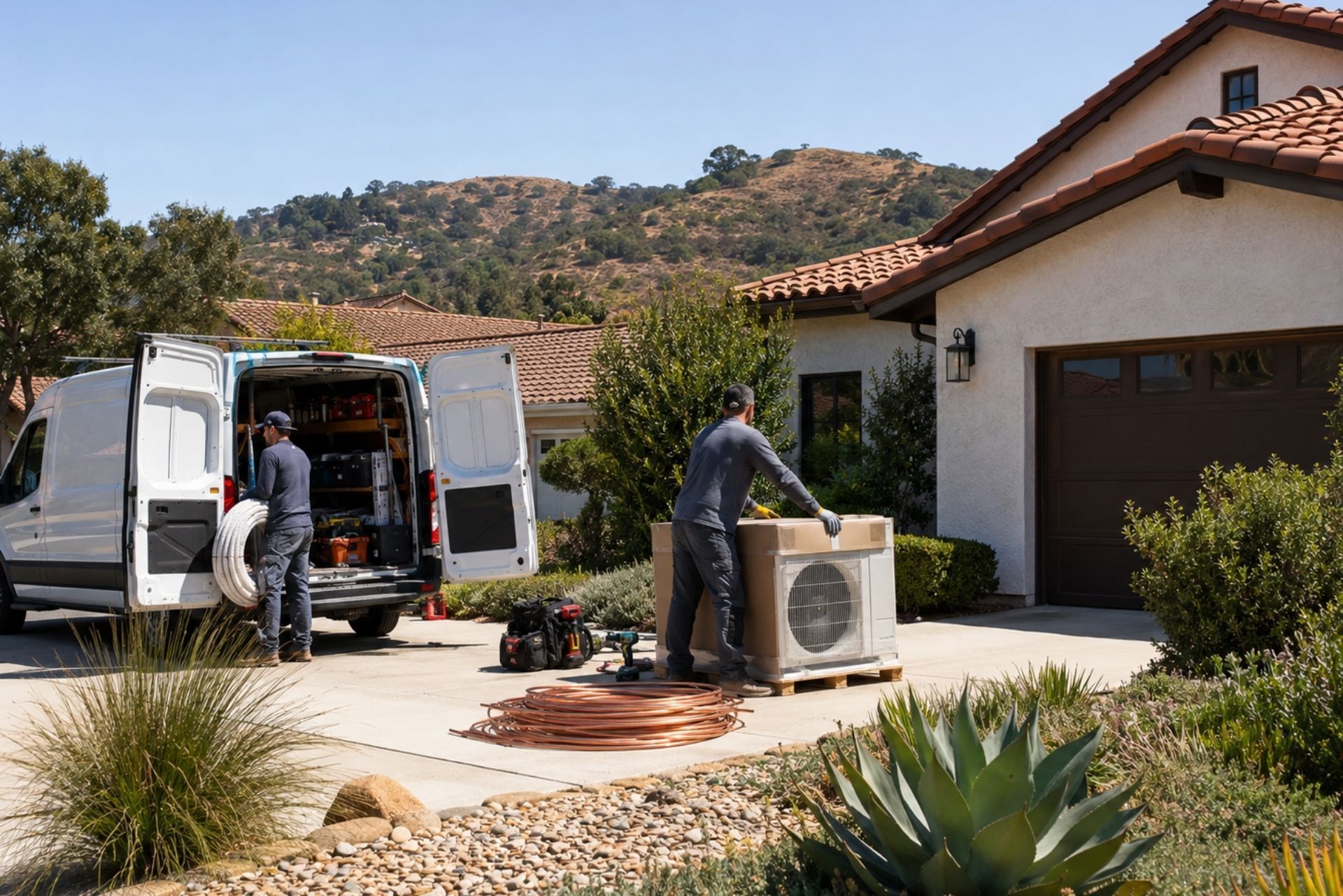
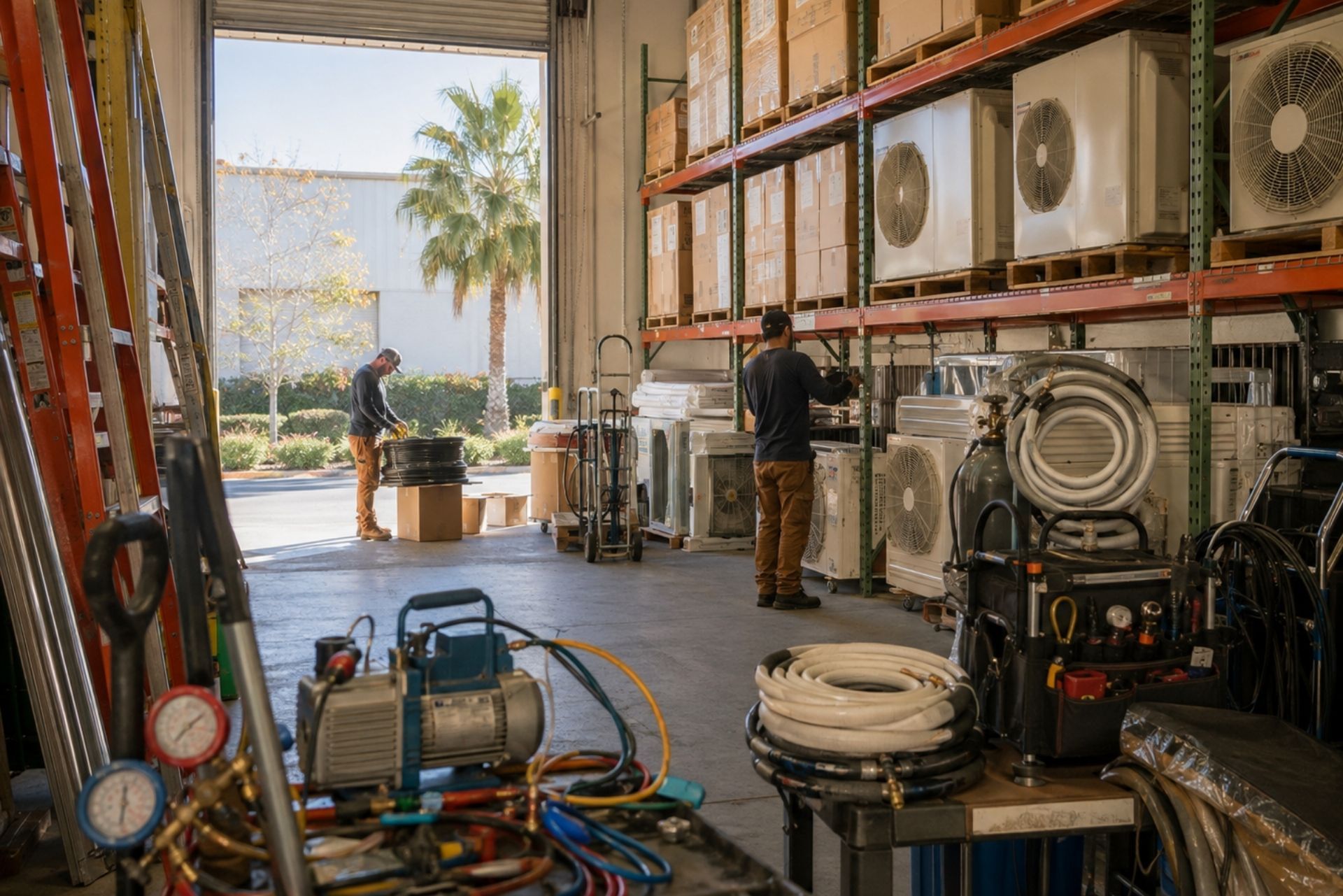
Your van full of gauges, vacuum pumps, brazing kits, and refrigerant recovery machines represents $15,000 to $50,000 in mobile assets. Standard commercial property insurance only covers equipment at your listed business location. Inland marine insurance protects tools and equipment in transit, at job sites, and in storage.
Premiums are usually modest: around $300 to $1,000 annually depending on the total value insured. Given how often tools walk off job sites or get stolen from work trucks, this coverage pays for itself quickly.
Managing California-Specific Risks and Environmental Hazards
California presents a unique risk profile that contractors in other states simply don't face. Your insurance strategy for heat-pump contracting in California needs to account for environmental regulations, natural disasters, and pollution exposure.
Pollution Liability for Refrigerant Handling
Heat-pump systems use refrigerants that are regulated under both federal EPA rules and California's own Air Resources Board (CARB) standards. A refrigerant release during installation or service can trigger cleanup costs, regulatory fines, and third-party health claims. Standard CGL policies almost universally exclude pollution events through the "absolute pollution exclusion" clause.
A standalone pollution liability policy, sometimes called a contractor's pollution liability (CPL) policy, fills this gap. Annual premiums range from $1,500 to $4,000 for small contractors, but the alternative: facing a $37,500 per-day EPA fine for a reportable refrigerant release: makes the math obvious. If you're handling R-410A, R-32, or any of the newer low-GWP refrigerants, this coverage is essential.
Wildfire and Seismic Risk Considerations
If you're working in wildfire-prone areas like the WUI (Wildland-Urban Interface) zones across Southern California, the Sierra foothills, or parts of Sonoma and Napa counties, your liability exposure increases. An outdoor condenser installation that inadvertently creates a fire risk, or work that damages a structure's fire-resistant envelope, could generate claims that interact with wildfire losses.
Earthquake risk matters too. If a heat-pump system you installed fails during seismic activity because of improper mounting or inadequate bracing, you could face claims. California's seismic bracing requirements for mechanical equipment (per CBC Chapter 16) are strict, and failing to follow them creates both code violations and insurance coverage disputes. Document your compliance with photos and inspection reports on every job.
Insurance premiums for California heat-pump contractors aren't pulled from a hat. Underwriters evaluate specific variables, and understanding them gives you real control over what you pay.
Business Scale and Annual Gross Receipts
Gross revenue is the primary rating basis for general liability policies. A contractor doing $250,000 in annual revenue will pay significantly less than one doing $1.5 million, simply because higher revenue correlates with more jobs, more exposure, and more potential claims. Most insurers set minimum premiums around $800 to $1,200 for CGL, even for brand-new operations.
Payroll drives workers' comp premiums. If you're running a lean crew of three installers with a combined payroll of $240,000, your workers' comp premium at a rate of $8 per $100 would be roughly $19,200 annually. That's a real number that affects your bidding and margins. Factor it into every project estimate.
Claims History and Safety Record Impacts
Your loss history follows you. Insurers pull your records from databases like the CLUE (Comprehensive Loss Underwriting Exchange) report, which tracks claims for up to seven years. Two or three claims in a five-year window can push you from standard market carriers into surplus lines, where premiums jump 30% to 60%.
A clean safety record, on the other hand, reduces your EMR below 1.0 and qualifies you for preferred rates. Practical steps that actually move the needle include formal safety training programs (OSHA 10-hour certifications for all field staff), documented toolbox talks, and annual equipment inspections. Some insurers offer 5% to 15% premium credits for contractors who maintain written safety programs.
Strategies for Securing Competitive Quotes and Renewals
Getting the right coverage at a fair price requires more than calling one agent. The California insurance market has its own quirks, and knowing how to work within it saves real money.
Bundling Policies via Business Owner's Policies (BOP)
A Business Owner's Policy bundles general liability, commercial property, and often business interruption coverage into a single package at a discount of 10% to 20% compared to buying each policy separately. For heat-pump contractors with a shop or office location, a BOP simplifies administration and reduces total cost.
Not everything fits into a BOP, though. Workers' comp, commercial auto, pollution liability, and inland marine are typically written separately. The goal is to bundle what you can, then layer specialty coverages on top. Work with a broker who understands contractor insurance rather than a generalist agent: the difference in coverage quality and pricing is substantial.
Navigating California's Surplus Lines Market
California's admitted insurance market has tightened considerably since 2023, with several major carriers pulling back from the state due to wildfire losses and regulatory disputes over rate adequacy. If you've been declined by standard carriers, or if your risk profile includes wildfire-zone work, surplus lines carriers are your next option.
Surplus lines insurers aren't regulated by the California Department of Insurance in the same way admitted carriers are, which means they can set their own rates. Premiums are higher, and policies may come with broader exclusions. You'll also pay a 3% surplus lines tax on top of your premium. The trade-off is that surplus lines carriers will write risks that admitted carriers won't touch.
Work with a surplus lines broker who specializes in construction and HVAC trades. They'll know which carriers are actively writing heat-pump contractor policies and which ones are just collecting quotes without binding. Ask for loss runs from your current carrier at least 60 days before renewal to give your broker time to shop effectively.
Protecting Your Heat-Pump Business for the Long Run
Insurance for heat-pump contractors in California isn't a set-it-and-forget-it expense. It's a living part of your business that needs annual review as your revenue grows, your crew expands, and the regulatory environment shifts. The contractors who fare best treat their insurance broker as a business partner, not a vendor: sharing financials, discussing new service lines, and proactively managing claims.
Start by auditing your current coverage against the categories outlined above. If you're missing pollution liability or E&O, those gaps could cost you far more than the premiums. Get at least three quotes at every renewal, pull your own CLUE report to verify its accuracy, and invest in the safety documentation that earns premium credits. The California heat-pump market is booming, and the contractors who protect themselves properly are the ones who'll still be around to enjoy it.
ABOUT THE AUTHOR:
PATRICK CARUSO
I’m Patrick Caruso, founder of Caruso Insurance, and I have spent more than 25 years helping families, contractors, and small businesses across Southern California make confident insurance decisions. I focus on explaining coverage in clear terms, comparing multiple carriers, and supporting clients with steady communication so they feel secure with each step. My goal is to provide dependable guidance, simple answers, and a smooth process for anyone who needs personal or business insurance.
Contact Us

Service that stays with you.
Our team helps simplify insurance decisions for families and businesses. We focus on clear explanations, fast responses, and dependable service. You can count on us for help with coverage questions, updates, and long-term support.
Coverage that keeps you secure
Reliable Protection for Everyday Life
Home insurance helps protect your house, personal belongings, and liability risks. We explain coverage options clearly so you know what your policy includes.
Auto insurance provides protection for accidents, liability, and vehicle damage. We help you compare options so you can choose coverage that fits your driving needs.
Motorcycle insurance provides coverage for riders and their bikes. We help you select options that match how and where you ride.
RV insurance supports protection for motorhomes and recreational vehicles. Coverage applies during travel and while parked.
Coverage Built for Contractors and Trades
Support that keeps your work moving.

General Liability Insurance
General liability insurance helps protect contractors from injury and property damage claims. It supports jobsite requirements and contracts.

Workers Compensation
Workers compensation insurance helps protect employees injured while working. It also supports compliance with state requirements.

Commercial Auto Insurance
Commercial auto insurance provides coverage for work vehicles used on jobsites. It helps protect drivers and company vehicles.
Contractor Insurance
Contractor insurance supports trades and service professionals across Southern California. It helps protect tools, equipment, and daily operations.

Cyber Liability Insurance
Cyber liability insurance helps protect business data and customer information. It supports recovery from digital incidents.

Commercial Property Insurance
Commercial property insurance helps protect offices, shops, and equipment. It supports recovery after covered damage.
Coverage Built for Specialized Work
Support for high-risk and service-driven industries.

Simple Steps Supported by Steady Guidance
A Clear Path to Coverage
Trusted by Clients Across Southern California
Clear service backed by real experiences.
Answers to Common Questions.
Clear explanations to guide your decisions.
How do I know which insurance policy is right for me?
We compare coverage options from multiple carriers to help you see differences in protection and price. You can review clear details and ask questions so you understand what each policy covers. Our team guides you step by step so you feel sure about your decision.
What factors affect my auto insurance premium?
Auto insurance premiums are influenced by your driving history, age, location, vehicle type, and coverage choices. A clean driving record and good safety features can help lower costs. We review these factors with you and help find coverage that fits your budget and needs.
Does homeowners insurance cover all types of damage?
Standard homeowners insurance protects your structure, personal belongings, liability, and additional living expenses in many cases. However, it usually does not include flood or earthquake damage without separate policies. We help you decide if extra coverage is right for your home and location.
Can I update my policy or get certificates online?
Yes. You can submit requests for policy changes and certificates through our online service form at any time. Our team processes those requests quickly and confirms updates once complete so you have the documents you need.
Do I need separate insurance for business risks like EPLI or E&O?
Yes. General liability and workers compensation cover many business risks but do not protect against all exposures. For example, Employment Practices Liability Insurance (EPLI) covers claims like wrongful termination or discrimination, and Errors & Omissions (E&O) covers claims based on mistakes in professional services. We help you identify which extra policies your business may need.
What happens if I need to file a claim?
If you need to file a claim, we guide you through the process and help you contact the insurance carrier. We explain what information you should provide, answer your questions, and stay available while the carrier reviews your claim. This support helps you move forward with confidence.
Contact Us