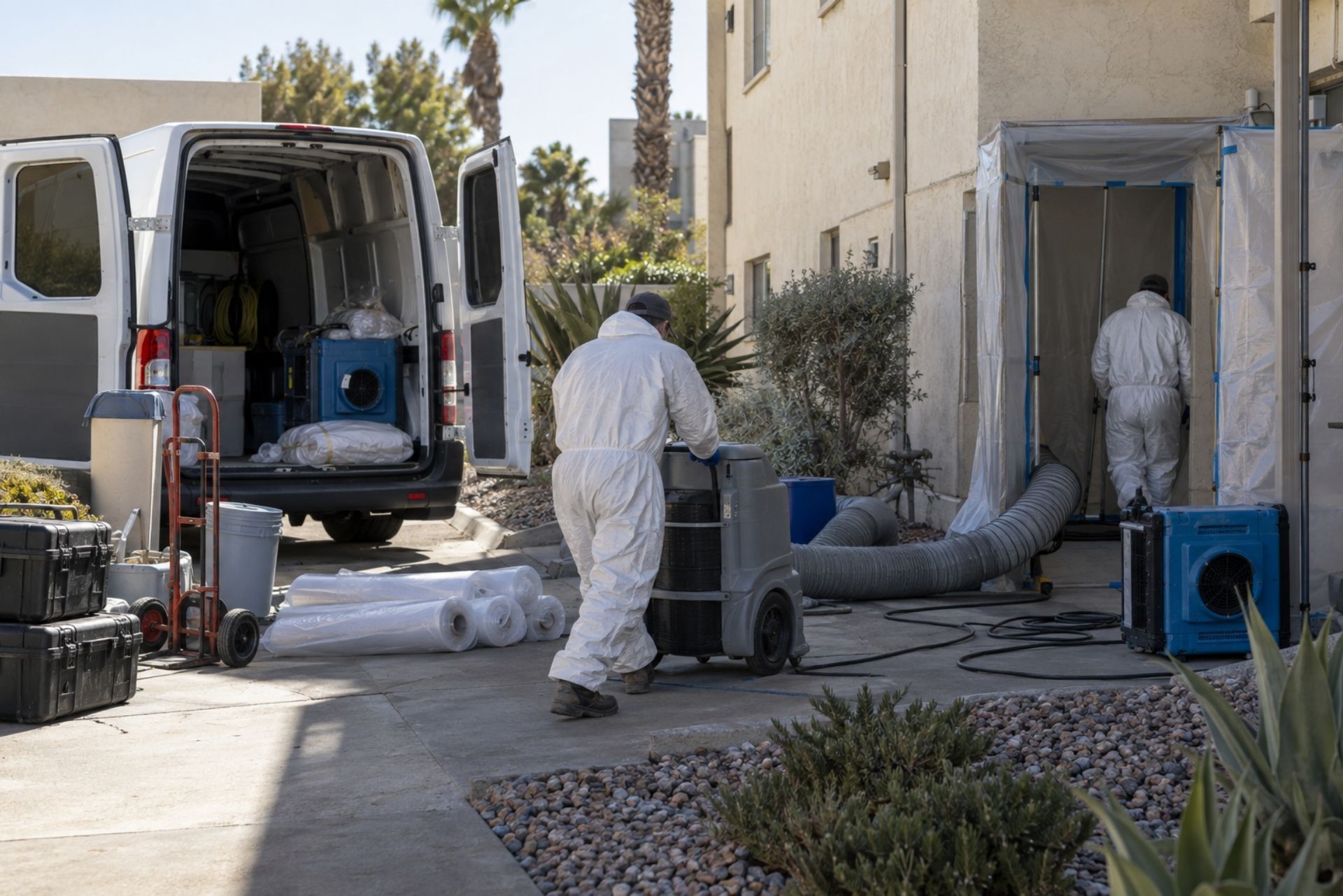
Asbestos removal is one of the most insurance-intensive trades in California. A single fiber release incident can trigger environmental cleanup costs in the hundreds of thousands, and latent disease claims from workers exposed decades ago continue to generate lawsuits. If you're an abatement contractor operating in this state, your insurance program isn't just a box to check: it's the difference between staying in business and losing everything to a single claim. Getting the right mix of
pollution liability, professional coverage, workers' compensation, and understanding your policy exclusions is essential for California
abatement contractors. This guide breaks down each component so you can build a program that actually protects you.
The California Regulatory Landscape for Asbestos Abatement
California regulates asbestos removal more aggressively than almost any other state. The combination of Cal/OSHA enforcement, CSLB licensing requirements, and South Coast AQMD air quality rules creates a compliance environment where a single misstep can result in stop-work orders, fines exceeding $25,000 per violation, and license suspension. Understanding this regulatory framework is the first step toward understanding what your insurance needs to cover, because regulators and insurers are watching many of the same things.
Cal/OSHA Safety Standards and Certification Requirements
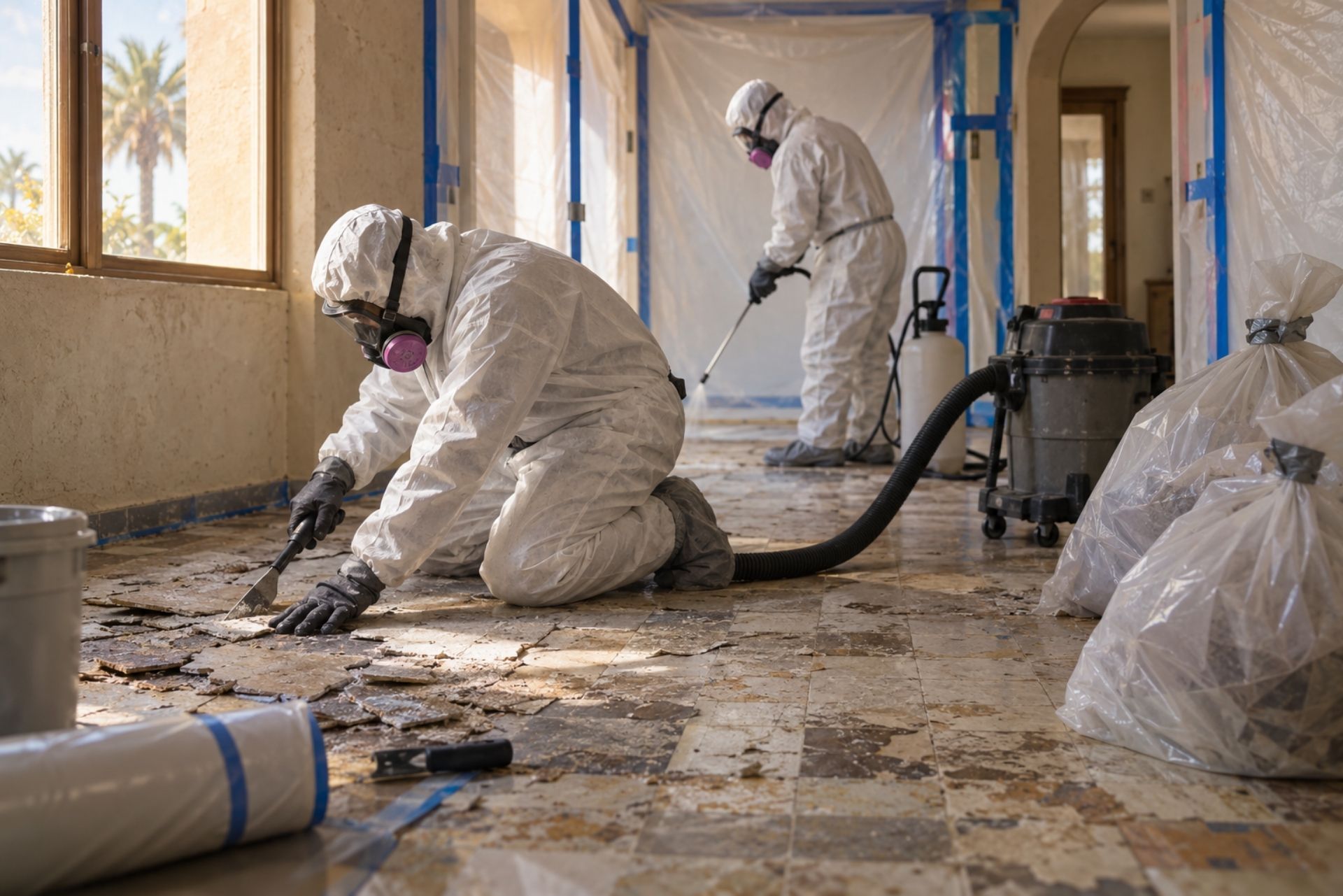
Cal/OSHA's asbestos standards under Title 8, Section 1529 go beyond federal OSHA requirements. Every worker on an abatement project must hold current certification through an EPA-accredited training provider, and supervisors need additional competent-person training. Cal/OSHA mandates specific engineering controls: negative air pressure enclosures, HEPA filtration, decontamination units, and continuous air monitoring during removal operations.
Here's what matters for insurance: Cal/OSHA violations don't just bring fines. They create a paper trail that underwriters review when pricing your policies. A serious violation on your Cal/OSHA record can increase your premiums by 15-30%, and repeat violations may make you uninsurable with standard carriers. Some insurers now request Cal/OSHA inspection histories as part of the application process, treating your compliance record as a direct underwriting factor.
Contractors State License Board (CSLB) Bonding and Insurance Mandates
The CSLB requires asbestos abatement contractors to hold a C-22 (Asbestos Abatement) license, which comes with its own insurance and bonding requirements. You need a $15,000 contractor's bond, a $100,000 qualifying individual bond, and proof of workers' compensation coverage before the CSLB will issue or renew your license.
What the CSLB doesn't require is pollution liability or
professional liability coverage. That gap is significant. Many contractors assume their CSLB-mandated insurance is sufficient, but those minimums won't cover a fiber release incident or a claim alleging faulty abatement design. The CSLB requirements are a floor, not a ceiling, and building owners increasingly demand coverage well above those minimums before awarding contracts.

By: Larry Scott
Personal Insurance Agent at Caruso Insurance Services
Essential Liability Coverage: Pollution and Professional
Standard commercial general liability (CGL) policies exclude pollution events and professional services. For asbestos contractors, those exclusions eliminate coverage for the two most likely categories of catastrophic claims. You need dedicated policies for both.
Contractors Pollution Liability (CPL) for Asbestos Release
A contractors pollution liability policy is the single most important coverage an abatement contractor carries. CPL covers third-party bodily injury and property damage resulting from pollution conditions caused by your operations: fiber releases during removal, contaminated debris transport incidents, and cross-contamination of adjacent occupied spaces.
Good CPL policies for asbestos work typically include:
- Third-party bodily injury from fiber exposure during or after your operations
- Cleanup costs for uncontrolled releases, including emergency response
- Transportation pollution liability for hauling regulated waste to disposal sites
- Defense costs for regulatory actions by AQMD, DTSC, or EPA
- Completed operations coverage for claims arising after project completion
Policy limits for California abatement contractors generally start at $1 million per occurrence with $2 million aggregate, though larger commercial and public projects often require $5 million or more. Annual premiums for a mid-size abatement firm typically run between $15,000 and $45,000 depending on revenue, claims history, and project types.
Errors and Omissions: Professional Liability for Consultants and Supervisors
If your firm provides abatement design, project monitoring, air sampling, or clearance testing alongside removal work, you need professional liability (E&O) coverage. A claim alleging that your abatement plan was deficient, that your air monitoring missed elevated fiber counts, or that your clearance testing was negligent falls outside both your CGL and CPL policies.
This coverage gap catches a lot of firms off guard. A contractor who designs the containment strategy and then executes the removal is wearing two hats, and each hat needs its own insurance. E&O policies for environmental consultants typically carry limits of $1 million to $5 million, with premiums ranging from $5,000 to $20,000 annually for firms under $3 million in revenue.
Occurrence vs. Claims-Made Policy Forms
This distinction matters enormously in asbestos work because of the long latency period between exposure and disease. An occurrence-based policy covers incidents that happen during the policy period, regardless of when the claim is filed. A claims-made policy covers claims filed during the policy period, regardless of when the incident occurred, but only back to a specified retroactive date.
Most CPL and E&O policies for environmental contractors are written on a claims-made basis. That means if you switch carriers or let your policy lapse, you lose coverage for past work unless you purchase an extended reporting period (commonly called a "tail"). Tail coverage can cost 100-200% of your final annual premium, but skipping it leaves you exposed to claims from every project you've ever completed. For asbestos work, where mesothelioma claims can surface 20-40 years after exposure, this isn't theoretical: it's a real and recurring problem.
Workers' Compensation and Long-Term Health Risks
Workers' compensation is mandatory in California for any employer, but asbestos abatement contractors face unique challenges. The combination of high-risk classification codes, expensive experience modifiers, and the potential for occupational disease claims decades after exposure makes workers' comp one of the largest line items in an abatement contractor's insurance budget.
Managing High-Risk Classifications and Experience Modifiers
California workers' comp rates are set by classification code, and asbestos abatement falls under some of the most expensive codes in the system. Class code 5474 (painting) or specialty hazardous waste codes can carry base rates exceeding $15 per $100 of payroll. Your experience modification rate (EMR or X-Mod) then adjusts that base rate up or down based on your three-year claims history.
An EMR of 1.0 is average. A contractor with strong safety practices and few claims might achieve a 0.75, effectively getting a 25% discount. A contractor with a bad claims year could see their EMR jump to 1.4 or higher, adding tens of thousands of dollars to annual premiums. For a firm with $1.5 million in annual payroll, the difference between a 0.80 and a 1.30 EMR can be $75,000 or more per year.
The practical takeaway: every workplace injury directly affects your bottom line for three years. Investing in rigorous safety programs, proper PPE, and medical monitoring isn't just ethical: it's a direct financial calculation.
Coverage for Occupational Disease and Latent Illness Claims
California workers' compensation covers occupational diseases, including asbestosis, mesothelioma, and lung cancer linked to workplace asbestos exposure. These claims are uniquely expensive because they involve long-term medical treatment, permanent disability, and death benefits. A single mesothelioma claim can exceed $1 million in total costs.
The challenge for contractors is that these claims may not surface until years or decades after the exposure occurred. California's workers' comp system assigns liability to the employer at the time of exposure, which means your current carrier could face claims from work performed years ago. Maintaining continuous coverage with well-rated carriers and keeping meticulous employment and exposure records is critical. If you can demonstrate that a claimant worked for you during a specific period and your carrier at that time is identifiable, the claim follows the correct policy rather than landing on your current program.
Critical Policy Exclusions and Coverage Gaps
Understanding what your policies don't cover is just as important as understanding what they do. Most coverage disputes in asbestos-related claims arise from exclusions that the contractor either didn't know about or assumed wouldn't apply.
The Asbestos Exclusion in Standard General Liability Policies
Nearly every standard CGL policy sold in California contains an absolute asbestos exclusion. This exclusion eliminates coverage for any bodily injury, property damage, or personal injury arising out of asbestos in any form. It doesn't matter whether you caused the release or were merely working near it: if asbestos is involved, your CGL policy walks away.
This is why dedicated CPL coverage exists. But even some CPL policies contain sub-limits or exclusions for specific asbestos scenarios, such as claims arising from non-project sites or from products you installed rather than removed. Read your CPL policy's asbestos endorsements carefully, and have your broker walk you through every exclusion. A $2 million CPL policy with a $250,000 sub-limit for asbestos claims isn't really a $2 million policy for an abatement contractor.
Contractual Liability and Indemnity Limitations
Many abatement contracts require you to indemnify the property owner, general contractor, or project manager for claims arising from your work. Your CGL policy's contractual liability coverage is supposed to back up those indemnity obligations, but the asbestos exclusion often eliminates that backstop entirely.
This creates a dangerous gap: you've contractually agreed to hold another party harmless, but your insurance won't fund that obligation. If a fiber release during your work triggers claims against the building owner, you could be personally liable for their defense and settlement costs. The fix is ensuring your CPL policy includes contractual liability coverage and that the policy's definition of "insured contract" aligns with the indemnity language in your project agreements. Have your attorney and your broker review major contracts together before you sign.
The best insurance program is one you rarely need to use. Strong risk management practices reduce your claims frequency, lower your premiums, and make you more attractive to the A-rated carriers that offer the broadest coverage terms.
Documentation for Cal/OSHA Compliance and Air Monitoring
Thorough documentation serves double duty: it demonstrates Cal/OSHA compliance during inspections and provides your insurer with evidence of proper procedures if a claim arises. At minimum, maintain organized records of project notifications to AQMD, pre-abatement and clearance air monitoring results, daily project logs with photos, worker certification and medical surveillance records, and waste manifests from generator to disposal facility.
Several carriers now offer premium credits of 5-10% for contractors who maintain digital documentation systems with timestamped photos and GPS-tagged project records. These systems make it harder for claimants to fabricate exposure scenarios and easier for your insurer to mount a defense.
Selecting A-Rated Carriers Specializing in Environmental Risks
Not all insurance carriers understand asbestos abatement risk. A general commercial insurer may offer a low premium but include restrictive exclusions or sub-limits that gut your coverage when you need it. Look for carriers rated A- or better by AM Best that specialize in environmental and pollution risks. Names like Berkley Environmental, Crum & Forster, and Great American's Environmental Division have dedicated underwriting teams that understand abatement operations.
Working with a broker who specializes in environmental contractor insurance is equally important. A generalist broker may not catch exclusions that a specialist would flag immediately. Ask prospective brokers how many abatement contractors they currently insure in California and whether they can provide references.
Building a Program That Actually Works
Insurance for California asbestos abatement contractors isn't something you can set up once and forget. Regulatory requirements shift, project scopes change, and your claims history directly impacts what coverage you can access and what it costs. Review your program annually with your broker, update your documentation systems, and treat every safety investment as a premium reduction strategy. The contractors who survive in this industry long-term are the ones who treat their insurance program as a core business function rather than an afterthought. If you haven't had your coverage reviewed by a specialist broker in the past 12 months, that's your next step.
ABOUT THE AUTHOR:
LARRY SCOTT
Hello! My name is Larry Scott. I have been in the insurance industry for 21+ years, with a background in Personal, Commercial, and Bonding. I support Caruso Insurance’s goal of providing convenient and competitive insurance coverage for our clients by focusing on each client’s individual needs. I am dedicated to continuing education and staying up to date with technology in the forever changing insurance world. I am a family man and enjoy any time I get to spend with my kids. I love cooking and drinking wine.
Contact Us

Service that stays with you.
Our team helps simplify insurance decisions for families and businesses. We focus on clear explanations, fast responses, and dependable service. You can count on us for help with coverage questions, updates, and long-term support.
Coverage that keeps you secure
Reliable Protection for Everyday Life
Home insurance helps protect your house, personal belongings, and liability risks. We explain coverage options clearly so you know what your policy includes.
Auto insurance provides protection for accidents, liability, and vehicle damage. We help you compare options so you can choose coverage that fits your driving needs.
Motorcycle insurance provides coverage for riders and their bikes. We help you select options that match how and where you ride.
RV insurance supports protection for motorhomes and recreational vehicles. Coverage applies during travel and while parked.
Coverage Built for Contractors and Trades
Support that keeps your work moving.

General Liability Insurance
General liability insurance helps protect contractors from injury and property damage claims. It supports jobsite requirements and contracts.

Workers Compensation
Workers compensation insurance helps protect employees injured while working. It also supports compliance with state requirements.

Commercial Auto Insurance
Commercial auto insurance provides coverage for work vehicles used on jobsites. It helps protect drivers and company vehicles.
Contractor Insurance
Contractor insurance supports trades and service professionals across Southern California. It helps protect tools, equipment, and daily operations.

Cyber Liability Insurance
Cyber liability insurance helps protect business data and customer information. It supports recovery from digital incidents.

Commercial Property Insurance
Commercial property insurance helps protect offices, shops, and equipment. It supports recovery after covered damage.
Coverage Built for Specialized Work
Support for high-risk and service-driven industries.


Simple Steps Supported by Steady Guidance
A Clear Path to Coverage
Trusted by Clients Across Southern California
Clear service backed by real experiences.
Answers to Common Questions.
Clear explanations to guide your decisions.
How do I know which insurance policy is right for me?
We compare coverage options from multiple carriers to help you see differences in protection and price. You can review clear details and ask questions so you understand what each policy covers. Our team guides you step by step so you feel sure about your decision.
What factors affect my auto insurance premium?
Auto insurance premiums are influenced by your driving history, age, location, vehicle type, and coverage choices. A clean driving record and good safety features can help lower costs. We review these factors with you and help find coverage that fits your budget and needs.
Does homeowners insurance cover all types of damage?
Standard homeowners insurance protects your structure, personal belongings, liability, and additional living expenses in many cases. However, it usually does not include flood or earthquake damage without separate policies. We help you decide if extra coverage is right for your home and location.
Can I update my policy or get certificates online?
Yes. You can submit requests for policy changes and certificates through our online service form at any time. Our team processes those requests quickly and confirms updates once complete so you have the documents you need.
Do I need separate insurance for business risks like EPLI or E&O?
Yes. General liability and workers compensation cover many business risks but do not protect against all exposures. For example, Employment Practices Liability Insurance (EPLI) covers claims like wrongful termination or discrimination, and Errors & Omissions (E&O) covers claims based on mistakes in professional services. We help you identify which extra policies your business may need.
What happens if I need to file a claim?
If you need to file a claim, we guide you through the process and help you contact the insurance carrier. We explain what information you should provide, answer your questions, and stay available while the carrier reviews your claim. This support helps you move forward with confidence.
Contact Us