
California's booming demand for ductless HVAC systems has created real opportunity for mini-split installers, but it's also created real exposure. Between the state's aggressive building codes, litigious culture, and unique environmental risks, carrying the wrong insurance - or not enough of it - can end a small contracting business overnight. If you install mini-split systems in California, your insurance setup deserves as much attention as your refrigerant certifications.
Here's what you actually need to know about protecting your business, your crew, and your bottom line.
Essential Insurance Requirements for HVAC Contractors in California
California regulates HVAC contractors more tightly than most states. Before you even think about optional coverages, there are non-negotiable requirements you need to satisfy just to operate legally. Missing any of these can result in license suspension, fines, or worse: personal liability for damages you assumed were covered.
CSLB Licensing and Surety Bond Obligations
The Contractors State License Board requires all HVAC contractors to hold a C-20 (Warm-Air Heating, Ventilating and Air-Conditioning) license. As part of that license, you're required to post a contractor's license bond of $25,000. This bond protects consumers if you fail to meet contractual obligations, but it doesn't protect you. If a claim is paid against your bond, you owe the surety company that money back.
Some contractors confuse surety bonds with insurance. They're fundamentally different. A bond is a guarantee to your customers; insurance is protection for your business. You need both.
If you've had disciplinary actions or operate in certain higher-risk categories, the CSLB may require a bond of qualifying individual or a disciplinary bond on top of the standard $25,000. These obligations increased slightly in recent years, so check your current requirements directly with the CSLB.
General Liability Coverage for Mini-Split Installation Risks
General liability insurance is the foundation of any contractor's risk management. For mini-split installers specifically, this policy covers third-party bodily injury and property damage. Think: a condenser unit falls during installation and damages a client's roof, or a homeowner trips over equipment left in a hallway.
California courts tend to award higher damages than the national average. A standard $1 million per-occurrence / $2 million aggregate policy is the bare minimum most general contractors and property managers will accept before letting you on a jobsite. Many commercial projects require $2 million per-occurrence, so factor that into your policy limits from the start.
Your general liability policy should specifically list mini-split and ductless system installation as a covered activity. Vague "HVAC" classifications sometimes create gaps that insurers exploit during claims.
Mandatory Workers' Compensation for California Employees
If you have even one employee in California, workers' compensation insurance is required by law. No exceptions. The penalties for non-compliance are severe: the state can issue stop-work orders and impose fines up to $100,000 or more for willful violations.
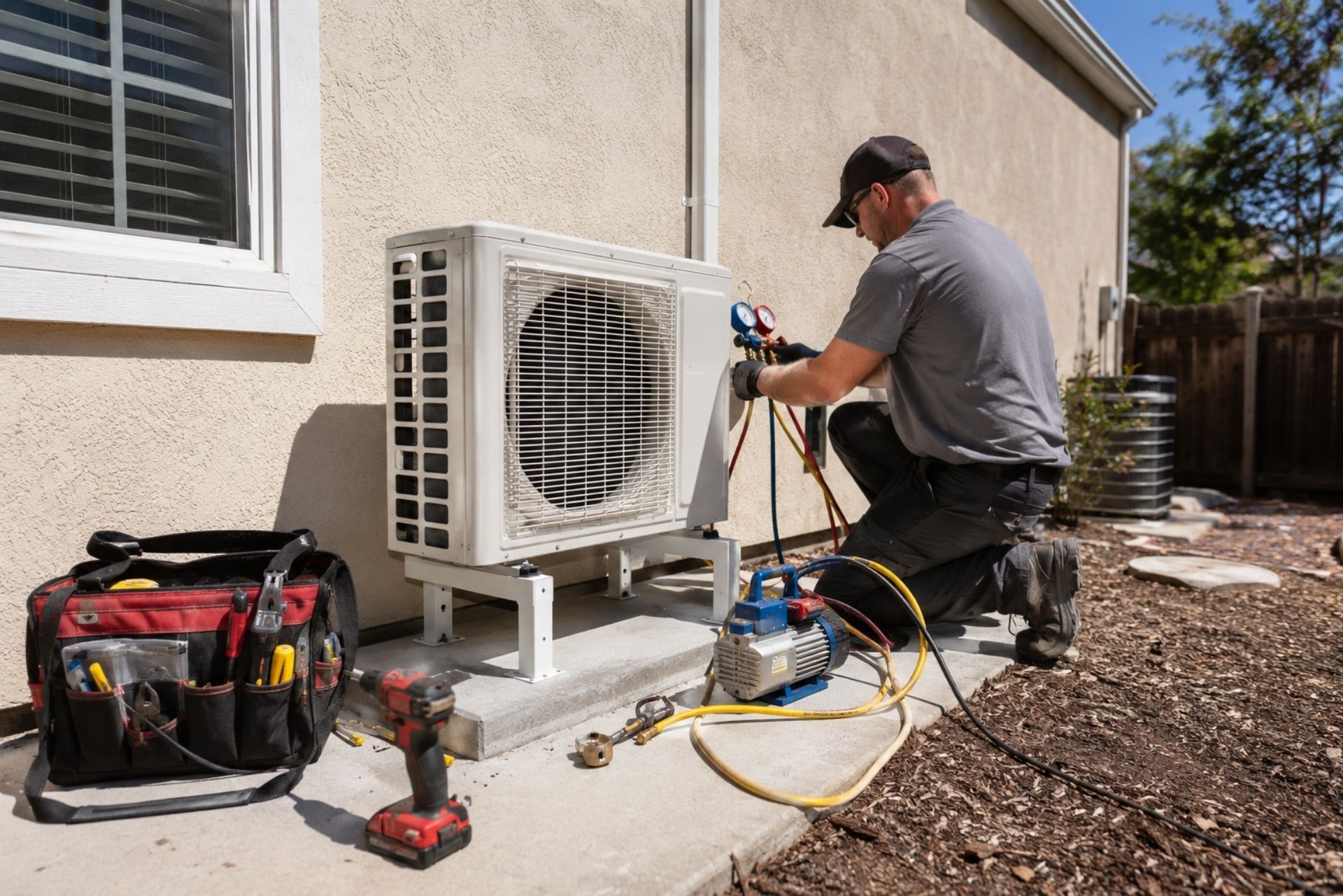
HVAC installation work carries a workers' comp classification code (typically 5537 for heating and air conditioning) with moderate-to-high premium rates because of the physical nature of the job. Installers working on ladders, handling heavy outdoor units, and drilling through walls face genuine injury risks. Your experience modification rate (your company's claims history compared to industry averages) directly affects your premium. A clean safety record over three years can drop your costs significantly.
By: Patrick Caruso
President of Caruso Insurance Services
Specialized Coverage for Mini-Split Systems and Components
Standard general liability leaves gaps that mini-split installers fall into more often than you'd expect. The nature of the work - expensive equipment, precise engineering, and long-term system performance - demands specialized policies.
Inland Marine Insurance for High-Value Equipment and Tools
Mini-split systems aren't cheap. A multi-zone Mitsubishi or Daikin setup can run $5,000 to $15,000 in equipment alone, and you're often transporting multiple systems in a single day. Inland marine insurance covers your tools, equipment, and materials while they're in transit or stored at a jobsite - situations where your general liability and commercial property policies typically won't respond.
If your van gets broken into and $8,000 worth of condensers and line sets disappears, inland marine is what pays for the replacement. Given California's vehicle break-in rates in urban areas like San Francisco, Los Angeles, and Oakland, this isn't theoretical.
Professional Liability and Errors & Omissions for System Sizing
Here's where mini-split work gets tricky. Sizing a ductless system incorrectly - choosing too few BTUs for a space, miscalculating load requirements, or recommending the wrong configuration - can lead to a system that never adequately heats or cools. The homeowner blames you, and they're often right.
Professional liability (also called errors and omissions) covers claims arising from your professional advice and design decisions. General liability won't cover this because there's no physical damage or injury - just a system that doesn't perform as promised. In California, where energy efficiency standards under Title 24 are strict, an improperly sized system can also create code compliance issues that compound the original problem.
E&O policies for HVAC contractors typically run $1,200 to $3,500 annually depending on your revenue and claims history. That's a fraction of what a single lawsuit over a botched system design could cost.
Completed Operations Coverage for Post-Installation Issues
Your general liability policy includes a completed operations component, but you need to understand exactly what it covers and for how long. Completed operations responds when something you installed causes damage after you've left the jobsite. A refrigerant line connection fails six months later and leaks onto hardwood floors. A condensate drain wasn't properly routed and causes mold growth inside a wall cavity.
California's statute of limitations for construction defect claims can extend up to 10 years for latent defects under certain conditions. That means a mini-split you installed in 2026 could generate a claim in 2036. Make sure your completed operations coverage remains active for the long haul, and never let it lapse just because a project is "done."
Mitigating California-Specific Environmental and Property Risks
California presents environmental and logistical challenges that don't exist in most other states. Your insurance program needs to account for these realities specifically.
Pollution Liability for Refrigerant Handling and Disposal
Mini-split systems use refrigerants like R-410A and increasingly R-32, both of which are regulated substances. An accidental release during installation, maintenance, or decommissioning can trigger EPA enforcement actions and state-level penalties through the California Air Resources Board. Standard general liability policies almost universally exclude pollution-related claims.
A pollution liability policy fills this gap. It covers cleanup costs, third-party claims, and regulatory defense expenses if a refrigerant release occurs. Given that California's environmental enforcement is among the most aggressive in the country, operating without this coverage is a significant gamble. Annual premiums for small HVAC contractors typically range from $800 to $2,500, depending on the volume of refrigerant you handle.
If you're also decommissioning older systems containing R-22, the risk profile increases. Proper documentation of your refrigerant recovery procedures can help keep premiums down and demonstrate compliance during audits.
Commercial Auto Insurance for Navigating Dense Urban Zones
Your work trucks and vans are on California roads every day, often loaded with expensive equipment and navigating congested metro areas. California requires minimum auto liability limits of $15,000/$30,000/$5,000, but those minimums are laughably inadequate for a commercial vehicle. A single at-fault accident in Los Angeles traffic could easily generate claims exceeding $100,000.
Most insurance professionals recommend at least $500,000 in combined single-limit coverage for
commercial vehicles, with $1 million being the standard for contractors who work on commercial properties. Don't forget to add hired and non-owned auto coverage if employees ever use personal vehicles for work errands - picking up parts, for example.
Insurance costs for California mini-split installers vary dramatically based on factors within and outside your control. Understanding what drives your premiums helps you make smarter decisions about where to invest in risk reduction.
Regional Risk Profiles and Local Building Codes
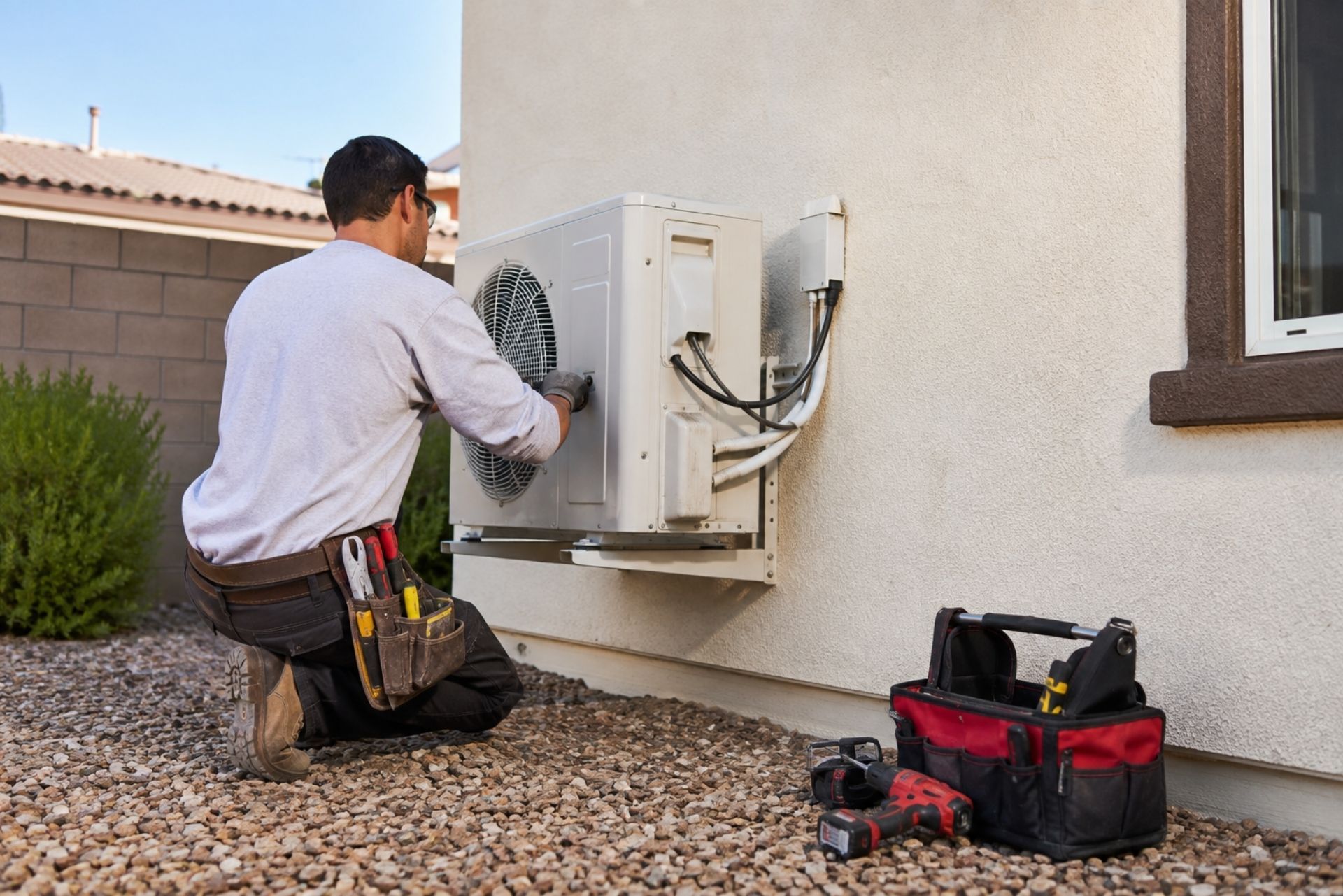
Your business address and primary service area directly affect your rates. An installer based in rural Shasta County will pay less than one operating in downtown San Francisco, where property values are higher, traffic density increases auto risk, and litigation frequency is greater.
Local building code requirements also play a role. Jurisdictions with stricter inspection regimes (many Bay Area cities, for instance) actually reduce certain risks because installations are more likely to be caught and corrected before causing damage. Some insurers recognize this and adjust premiums accordingly. If you operate in a jurisdiction with rigorous permit and inspection processes, mention this to your insurance agent - it can work in your favor.
Wildfire zones add another layer. If you're installing mini-splits in WUI (Wildland-Urban Interface) areas, some carriers may add surcharges or require additional documentation about the properties you service.
Claims History and Safety Training Programs
Your CLUE (Comprehensive Loss Underwriting Exchange) report follows your business like a credit score follows an individual. Every claim you file is recorded, and insurers check this database when quoting your policies. Two or three claims within a five-year window can push your premiums up by 30-50% or make some carriers decline to write your policy altogether.
Investing in documented safety training pays real dividends here. OSHA 10 or OSHA 30 certifications for your crew, manufacturer-specific installation training from brands like Fujitsu or LG, and regular toolbox talks all demonstrate to underwriters that you take risk seriously. Some carriers offer premium discounts of 5-15% for contractors with formal safety programs. Keep records of every training session: dates, attendees, topics covered.
Annual inspections of your equipment, vehicles, and job procedures also help. Photograph and document everything. If a claim does arise, this documentation can be the difference between a quick resolution and a drawn-out dispute.
Strategies for Selecting the Right Insurance Provider
Not all insurance carriers understand the HVAC trade, and fewer still understand the specific risks of ductless system installation in California. Here's how to find the right fit:
- Look for carriers or brokers who specialize in contractor insurance, ideally with specific HVAC experience. Ask them to explain the difference between occurrence-based and claims-made policies, and how each applies to completed operations.
- Get quotes from at least three providers. Compare not just premiums but deductibles, exclusions, and policy limits. A cheaper policy with a $10,000 deductible and narrow coverage isn't actually saving you money.
- Ask about package policies (sometimes called a Business Owner's Policy or BOP) that bundle general liability, commercial property, and inland marine coverage. These bundles often cost less than purchasing each policy separately.
- Verify that the carrier is admitted in California and has a strong financial rating (A.M. Best rating of A- or better). An insurer that can't pay claims is worse than no insurer at all.
- Review your coverage annually. As your revenue grows, your crew expands, or you move into commercial work, your insurance needs change. A policy that fit your business two years ago might leave dangerous gaps today.
The right insurance program for a California mini-split installer isn't just a collection of policies: it's a financial safety net that lets you take on bigger projects, satisfy general contractor requirements, and sleep at night knowing one bad day won't bankrupt your company. Spend the time to get it right, and revisit it every year. The contractors who treat insurance as a strategic investment, rather than an annoying expense, are the ones still in business a decade from now.
ABOUT THE AUTHOR:
PATRICK CARUSO
I’m Patrick Caruso, founder of Caruso Insurance, and I have spent more than 25 years helping families, contractors, and small businesses across Southern California make confident insurance decisions. I focus on explaining coverage in clear terms, comparing multiple carriers, and supporting clients with steady communication so they feel secure with each step. My goal is to provide dependable guidance, simple answers, and a smooth process for anyone who needs personal or business insurance.
Contact Us

Service that stays with you.
Our team helps simplify insurance decisions for families and businesses. We focus on clear explanations, fast responses, and dependable service. You can count on us for help with coverage questions, updates, and long-term support.
Coverage that keeps you secure
Reliable Protection for Everyday Life
Home insurance helps protect your house, personal belongings, and liability risks. We explain coverage options clearly so you know what your policy includes.
Auto insurance provides protection for accidents, liability, and vehicle damage. We help you compare options so you can choose coverage that fits your driving needs.
Motorcycle insurance provides coverage for riders and their bikes. We help you select options that match how and where you ride.
RV insurance supports protection for motorhomes and recreational vehicles. Coverage applies during travel and while parked.
Coverage Built for Contractors and Trades
Support that keeps your work moving.

General Liability Insurance
General liability insurance helps protect contractors from injury and property damage claims. It supports jobsite requirements and contracts.

Workers Compensation
Workers compensation insurance helps protect employees injured while working. It also supports compliance with state requirements.

Commercial Auto Insurance
Commercial auto insurance provides coverage for work vehicles used on jobsites. It helps protect drivers and company vehicles.
Contractor Insurance
Contractor insurance supports trades and service professionals across Southern California. It helps protect tools, equipment, and daily operations.

Cyber Liability Insurance
Cyber liability insurance helps protect business data and customer information. It supports recovery from digital incidents.

Commercial Property Insurance
Commercial property insurance helps protect offices, shops, and equipment. It supports recovery after covered damage.
Coverage Built for Specialized Work
Support for high-risk and service-driven industries.

Simple Steps Supported by Steady Guidance
A Clear Path to Coverage
Trusted by Clients Across Southern California
Clear service backed by real experiences.
Answers to Common Questions.
Clear explanations to guide your decisions.
How do I know which insurance policy is right for me?
We compare coverage options from multiple carriers to help you see differences in protection and price. You can review clear details and ask questions so you understand what each policy covers. Our team guides you step by step so you feel sure about your decision.
What factors affect my auto insurance premium?
Auto insurance premiums are influenced by your driving history, age, location, vehicle type, and coverage choices. A clean driving record and good safety features can help lower costs. We review these factors with you and help find coverage that fits your budget and needs.
Does homeowners insurance cover all types of damage?
Standard homeowners insurance protects your structure, personal belongings, liability, and additional living expenses in many cases. However, it usually does not include flood or earthquake damage without separate policies. We help you decide if extra coverage is right for your home and location.
Can I update my policy or get certificates online?
Yes. You can submit requests for policy changes and certificates through our online service form at any time. Our team processes those requests quickly and confirms updates once complete so you have the documents you need.
Do I need separate insurance for business risks like EPLI or E&O?
Yes. General liability and workers compensation cover many business risks but do not protect against all exposures. For example, Employment Practices Liability Insurance (EPLI) covers claims like wrongful termination or discrimination, and Errors & Omissions (E&O) covers claims based on mistakes in professional services. We help you identify which extra policies your business may need.
What happens if I need to file a claim?
If you need to file a claim, we guide you through the process and help you contact the insurance carrier. We explain what information you should provide, answer your questions, and stay available while the carrier reviews your claim. This support helps you move forward with confidence.
Contact Us