California's mold-remediation industry operates in one of the most litigious states in the country, and the insurance requirements reflect that reality. A single botched job can generate six-figure claims from property damage, cross-contamination, or alleged health effects on building occupants. Yet many contractors carry policies that would deny coverage the moment "mold" or "fungi" appears in a claim filing. The gap between what contractors think they're covered for and what their policies actually say is enormous, and it costs businesses their livelihoods every year. Understanding the full insurance picture for mold-remediation work in California, from pollution liability and professional coverage to fungi exclusions and workers' comp, isn't optional. It's the difference between surviving a claim and closing your doors. This guide breaks down each component so you know exactly where the gaps hide and how to fill them before a loss event forces the question.
Essential Insurance Framework for California Mold Contractors
Mold-remediation contractors face a unique risk profile that straddles traditional construction liability and environmental hazard work. California's regulatory environment adds another layer: the state's consumer protection laws, strict indoor air quality standards, and plaintiff-friendly courts mean that claims tend to be larger and more frequent here than in most other states. Building an insurance program that actually protects your business requires understanding how different policy types interact and where standard coverage breaks down.
The Intersection of General Liability and Environmental Risks
A standard commercial general liability (CGL) policy covers bodily injury and property damage caused by your operations. If a technician accidentally breaks a water line during containment setup, CGL handles that. But mold work introduces environmental exposures that CGL policies were never designed to address.
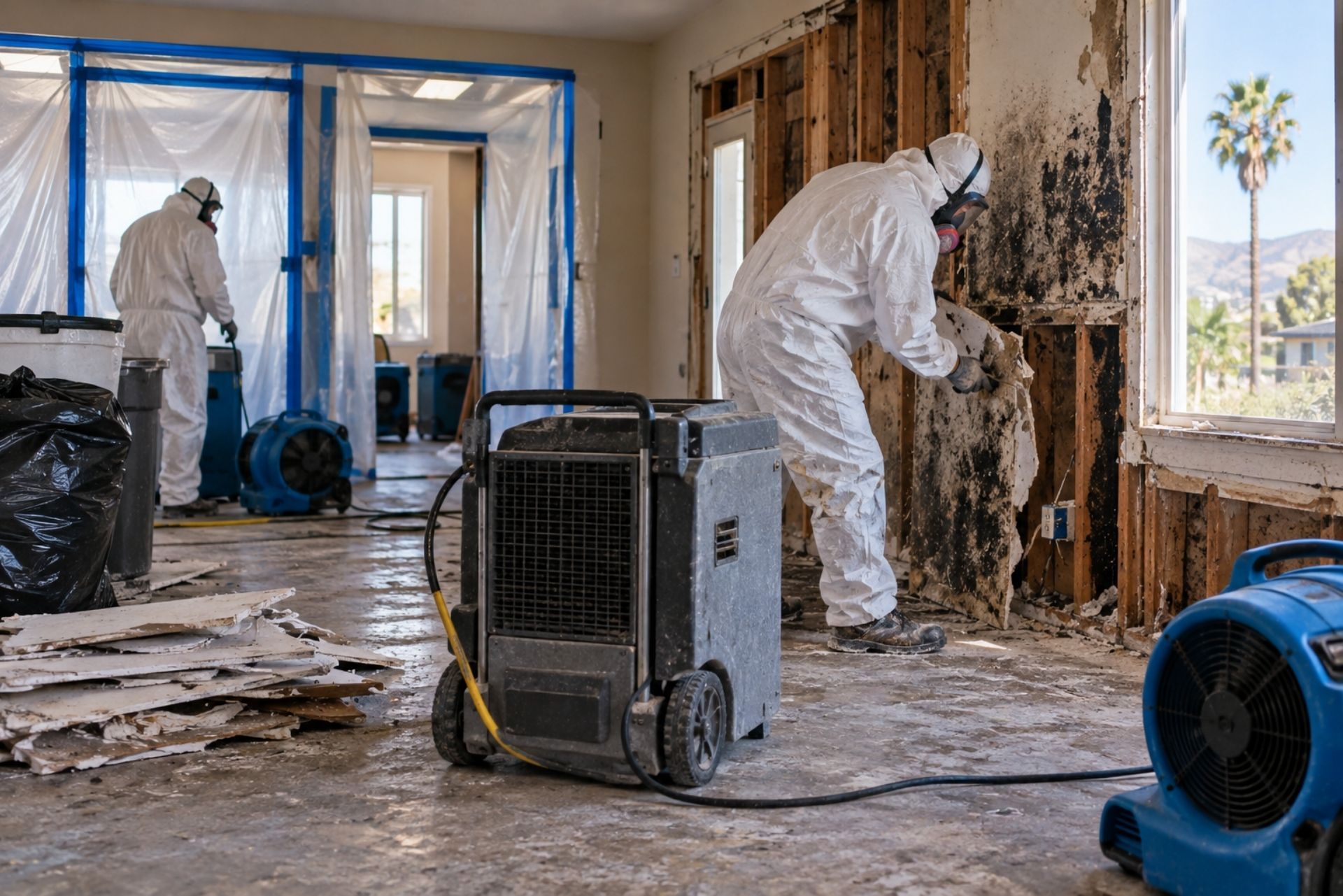
Mold spore dispersal during remediation can contaminate adjacent units, HVAC systems, or entire floors of a commercial building. A homeowner who develops respiratory symptoms months after your crew finishes a job may file a bodily injury claim tied to alleged incomplete remediation. These scenarios involve pollutant release and professional judgment, two categories that CGL policies routinely exclude.
The critical mistake many contractors make is assuming their CGL policy's "products-completed operations" coverage will protect them after a job wraps up. In practice, the pollution and fungi exclusions embedded in those policies gut the coverage precisely when you need it most.
Why Standard CGL Policies Often Fail Remediation Firms
The ISO CGL form includes an absolute pollution exclusion (CG 21 49 or similar) that eliminates coverage for bodily injury or property damage arising from the release of pollutants. Mold spores qualify as pollutants under most policy definitions. This means your CGL insurer can deny a claim the moment the word "mold" appears in the complaint, even if the underlying cause was a simple operational mistake.
California courts have interpreted pollution exclusions broadly in many cases, though there have been exceptions where the "total pollution exclusion" was found ambiguous. You cannot count on a court saving you. The practical reality is that if your only coverage is a CGL policy, you're essentially uninsured for the core risks of your trade. Contractors who recognize this early invest in
specialized coverage. Those who don't find out the hard way during their first
serious claim.

By: Larry Scott
Personal Insurance Agent at Caruso Insurance Services
Pollution and Professional Liability: The Core Components
The two policies that actually matter for mold-remediation contractors are contractors pollution liability (CPL) and professional liability, sometimes called errors and omissions (E&O). These aren't luxuries or nice-to-haves. They're the foundation of any legitimate insurance program for this work.
Contractors Pollution Liability (CPL) for Mold Spore Dispersal
CPL policies are designed specifically for contractors who work with or around pollutants. For mold-remediation firms, CPL covers third-party bodily injury and property damage caused by the release of mold spores, mycotoxins, or bacteria during your operations. This includes both on-site incidents and off-site migration, such as when spores travel through ductwork into neighboring spaces.
A good CPL policy for California mold contractors should include coverage for:
- Third-party bodily injury from spore exposure during and after remediation
- Property damage to areas beyond the designated work zone
- Transportation pollution liability (if you're hauling contaminated materials)
- Emergency response costs for unplanned spore releases
- Defense costs, ideally outside the policy limits
Premiums for CPL policies in California typically run between $3,000 and $15,000 annually for small to mid-size firms, depending on revenue, claims history, and the scope of work. Carriers like Beacon Hill, Great American, and Crum & Forster write these policies, though the market shifts regularly. Expect underwriters to ask detailed questions about your containment protocols, air monitoring practices, and employee training records.
Errors and Omissions (E&O) for Testing and Consultation
If your firm performs mold assessments, air quality testing, protocol writing, or post-remediation verification, you need professional liability coverage. E&O protects against claims alleging that your professional advice, testing results, or remediation protocols were negligent or incorrect.
A common scenario: you perform a post-remediation clearance test, issue a passing report, and the client later discovers mold regrowth in the same area. The client's attorney argues your testing methodology was flawed or that you missed obvious signs of remaining contamination. That's a professional liability claim, and your CGL and CPL policies won't touch it.
California's standard of care for mold assessors is informed by IICRC S520 guidelines and Cal/OSHA regulations. Falling short of these standards in your professional work product creates direct E&O exposure.
Combined Policy Forms and Specialized Endorsements
Several carriers now offer combined CPL/professional liability policies tailored to environmental contractors. These bundled forms simplify your insurance program and often eliminate gaps that occur when separate policies have conflicting definitions or coverage triggers.
Key endorsements to request include completed operations coverage (essential since mold claims often surface months or years after the job), defense outside limits, and a broad definition of "pollution conditions" that explicitly includes fungi, bacteria, and microbial matter. Some policies also offer crisis management coverage for situations where a high-profile mold discovery generates media attention or regulatory scrutiny. Given California's active enforcement environment, that's not a theoretical concern.
Fungi exclusions are the single biggest coverage trap for mold contractors. These exclusions exist in nearly every standard commercial insurance policy, and they can void coverage across your entire program if you're not careful.
Identifying Absolute Fungi Exclusions in California Policies
The standard fungi or bacteria exclusion (ISO form CG 21 73 or equivalent) removes coverage for bodily injury, property damage, and defense costs arising out of fungi or bacteria. "Fungi" is typically defined to include all types of mold, mildew, mushrooms, and related organisms, along with any spores, mycotoxins, or byproducts they produce.
This exclusion appears in CGL policies, commercial property policies, and even some umbrella/excess liability forms. It's often absolute, meaning there's no exception for sudden or accidental events. If fungi are involved in the claim at all, coverage disappears. The exclusion is especially dangerous because it can override other coverage grants within the same policy. Even if your CGL policy has a products-completed operations extension, the fungi exclusion typically takes priority.
Buy-Back Endorsements for Microbial Coverage
Some carriers offer fungi "buy-back" endorsements that restore limited coverage for mold-related claims within a CGL or property policy. These endorsements typically provide a sub-limit, often $25,000 to $100,000, with a separate aggregate. That's better than nothing, but it's nowhere near sufficient for a firm whose primary business involves mold.
Buy-back endorsements serve a specific purpose: they provide a small cushion for incidental mold exposure on jobs where mold isn't the primary scope of work. For dedicated mold-remediation contractors, they're a supplement, not a solution. Your CPL and professional liability policies carry the real weight. Make sure your broker reviews every policy in your program for fungi exclusions and documents exactly where mold-related coverage exists and where it doesn't.
California Workers' Compensation and Safety Requirements
Workers' compensation is mandatory in California for any business with employees, and mold-remediation work creates specific health exposures that affect both compliance obligations and premium costs.
Health Risks and Respiratory Protection Compliance
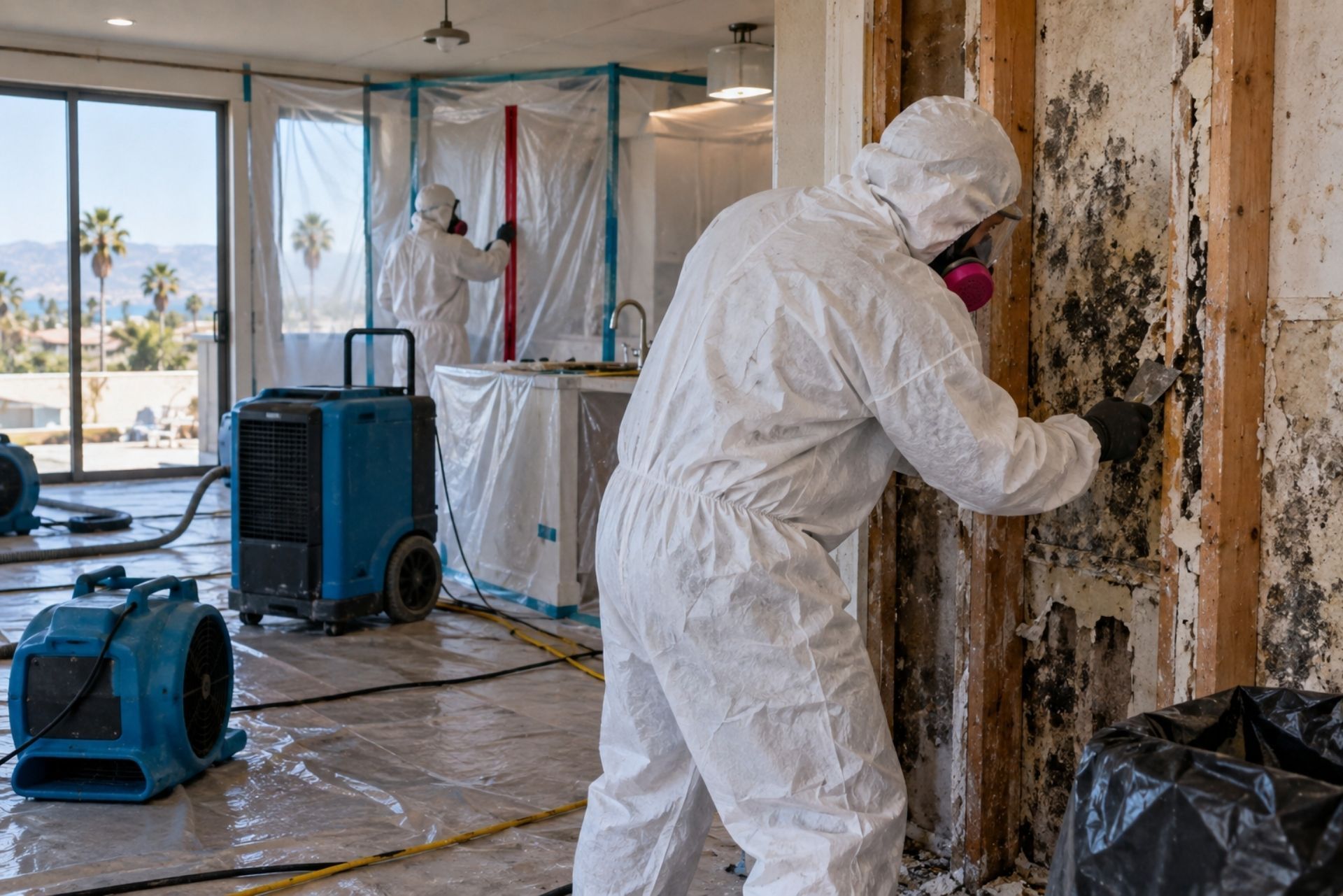
Remediation technicians face daily exposure to Aspergillus, Stachybotrys, Penicillium, and other potentially hazardous mold species. Prolonged exposure without proper respiratory protection can cause chronic respiratory conditions, hypersensitivity pneumonitis, and other occupational illnesses that generate workers' comp claims years after the initial exposure.
Cal/OSHA requires employers to implement a written respiratory protection program compliant with Title 8, Section 5144. This includes medical evaluations for employees required to wear respirators, fit testing, training, and proper equipment selection. NIOSH-approved N-95 respirators are the minimum for most remediation work, with half-face or full-face respirators with P-100 filters required for heavier contamination.
Failure to comply doesn't just create OSHA penalties. It also weakens your defense against workers' comp claims and can trigger experience modification rate increases that raise your premiums for years.
Classification Codes and Premium Factors for Remediation
California workers' comp premiums are based on classification codes assigned by the Workers' Compensation Insurance Rating Bureau (WCIRB). Mold-remediation contractors are often classified under codes like 5474 (painting) or 5437 (carpentry), but the more accurate classification for environmental remediation work may fall under hazardous waste or abatement codes, which carry higher base rates.
Your experience modification rate (EMR or X-Mod) is the other major premium driver. An EMR above 1.0 means your claims history is worse than average for your classification, and premiums increase accordingly. A single serious respiratory illness claim can push your EMR above 1.0 for three years. Investing in proper PPE, air monitoring, and medical surveillance programs isn't just good safety practice: it directly controls your insurance costs.
Claims Management and Risk Mitigation Strategies
How you handle claims, and how you prevent them, determines whether your insurance program actually works when tested.
Common Causes of Remediation Claims and Litigation
The most frequent claims against mold-remediation contractors in California fall into a few predictable categories. Cross-contamination of unaffected areas during remediation tops the list, usually resulting from inadequate containment or negative air pressure failures. Incomplete remediation, where mold returns within weeks or months, generates both property damage and professional liability claims. Third-party bodily injury claims from building occupants alleging health effects round out the top three.
Litigation costs in California are steep. Defense alone can run $50,000 to $200,000 for a contested mold claim, even before any settlement or judgment. Carriers track your claims through industry databases like the CLUE (Comprehensive Loss Underwriting Exchange) report, and a pattern of claims can make your firm difficult to insure at any price.
Documentation Best Practices to Defend Against Negligence
The single best thing you can do to protect yourself against claims is document everything. Before, during, and after every job. This means:
- Pre-remediation photos and moisture readings with timestamps
- Written remediation protocols signed by the client or their representative
- Daily work logs noting containment setup, air scrubber placement, and any deviations from protocol
- Air sampling results from both during and after remediation
- Post-remediation clearance reports with lab chain-of-custody documentation
- Client sign-off on completed work
If a claim hits three years after a job, your documentation is your defense. Without it, you're relying on memory against a plaintiff's attorney with a compelling story. California's statute of limitations for property damage and personal injury claims gives plaintiffs significant time to file, so your records need to be organized and accessible long after the job closes.
Regulatory Compliance and Licensing Standards
California doesn't currently require a specific mold-remediation license, but that doesn't mean the work is unregulated. Contractors performing remediation typically need a C-22 (Asbestos Abatement) or B (General Building) license from the Contractors State License Board, depending on the scope of work. Senate Bill 655, which has been discussed in various forms over recent legislative sessions, continues to push toward formal licensing and certification requirements for mold professionals.
The California Department of Public Health provides guidelines for mold assessment and remediation, and local jurisdictions like Los Angeles County and the Bay Area often impose additional requirements. IICRC S520 remains the industry's primary standard of care, and deviating from it creates both regulatory and liability exposure.
Keeping your insurance program aligned with California's regulatory environment is an ongoing process. Work with a broker who specializes in environmental contractor insurance, not a generalist who handles your auto and property policies on the side. Review your coverage annually, update your protocols to match current standards, and treat your documentation practices as seriously as you treat containment setup. Your insurance is only as strong as the risk management program behind it, and in California's legal environment, that distinction matters more than anywhere else in the country.
ABOUT THE AUTHOR:
LARRY SCOTT
Hello! My name is Larry Scott. I have been in the insurance industry for 21+ years, with a background in Personal, Commercial, and Bonding. I support Caruso Insurance’s goal of providing convenient and competitive insurance coverage for our clients by focusing on each client’s individual needs. I am dedicated to continuing education and staying up to date with technology in the forever changing insurance world. I am a family man and enjoy any time I get to spend with my kids. I love cooking and drinking wine.
Contact Us

Service that stays with you.
Our team helps simplify insurance decisions for families and businesses. We focus on clear explanations, fast responses, and dependable service. You can count on us for help with coverage questions, updates, and long-term support.
Coverage that keeps you secure
Reliable Protection for Everyday Life
Home insurance helps protect your house, personal belongings, and liability risks. We explain coverage options clearly so you know what your policy includes.
Auto insurance provides protection for accidents, liability, and vehicle damage. We help you compare options so you can choose coverage that fits your driving needs.
Motorcycle insurance provides coverage for riders and their bikes. We help you select options that match how and where you ride.
RV insurance supports protection for motorhomes and recreational vehicles. Coverage applies during travel and while parked.
Coverage Built for Contractors and Trades
Support that keeps your work moving.

General Liability Insurance
General liability insurance helps protect contractors from injury and property damage claims. It supports jobsite requirements and contracts.

Workers Compensation
Workers compensation insurance helps protect employees injured while working. It also supports compliance with state requirements.

Commercial Auto Insurance
Commercial auto insurance provides coverage for work vehicles used on jobsites. It helps protect drivers and company vehicles.
Contractor Insurance
Contractor insurance supports trades and service professionals across Southern California. It helps protect tools, equipment, and daily operations.

Cyber Liability Insurance
Cyber liability insurance helps protect business data and customer information. It supports recovery from digital incidents.

Commercial Property Insurance
Commercial property insurance helps protect offices, shops, and equipment. It supports recovery after covered damage.
Coverage Built for Specialized Work
Support for high-risk and service-driven industries.


Simple Steps Supported by Steady Guidance
A Clear Path to Coverage
Trusted by Clients Across Southern California
Clear service backed by real experiences.
Answers to Common Questions.
Clear explanations to guide your decisions.
How do I know which insurance policy is right for me?
We compare coverage options from multiple carriers to help you see differences in protection and price. You can review clear details and ask questions so you understand what each policy covers. Our team guides you step by step so you feel sure about your decision.
What factors affect my auto insurance premium?
Auto insurance premiums are influenced by your driving history, age, location, vehicle type, and coverage choices. A clean driving record and good safety features can help lower costs. We review these factors with you and help find coverage that fits your budget and needs.
Does homeowners insurance cover all types of damage?
Standard homeowners insurance protects your structure, personal belongings, liability, and additional living expenses in many cases. However, it usually does not include flood or earthquake damage without separate policies. We help you decide if extra coverage is right for your home and location.
Can I update my policy or get certificates online?
Yes. You can submit requests for policy changes and certificates through our online service form at any time. Our team processes those requests quickly and confirms updates once complete so you have the documents you need.
Do I need separate insurance for business risks like EPLI or E&O?
Yes. General liability and workers compensation cover many business risks but do not protect against all exposures. For example, Employment Practices Liability Insurance (EPLI) covers claims like wrongful termination or discrimination, and Errors & Omissions (E&O) covers claims based on mistakes in professional services. We help you identify which extra policies your business may need.
What happens if I need to file a claim?
If you need to file a claim, we guide you through the process and help you contact the insurance carrier. We explain what information you should provide, answer your questions, and stay available while the carrier reviews your claim. This support helps you move forward with confidence.
Contact Us