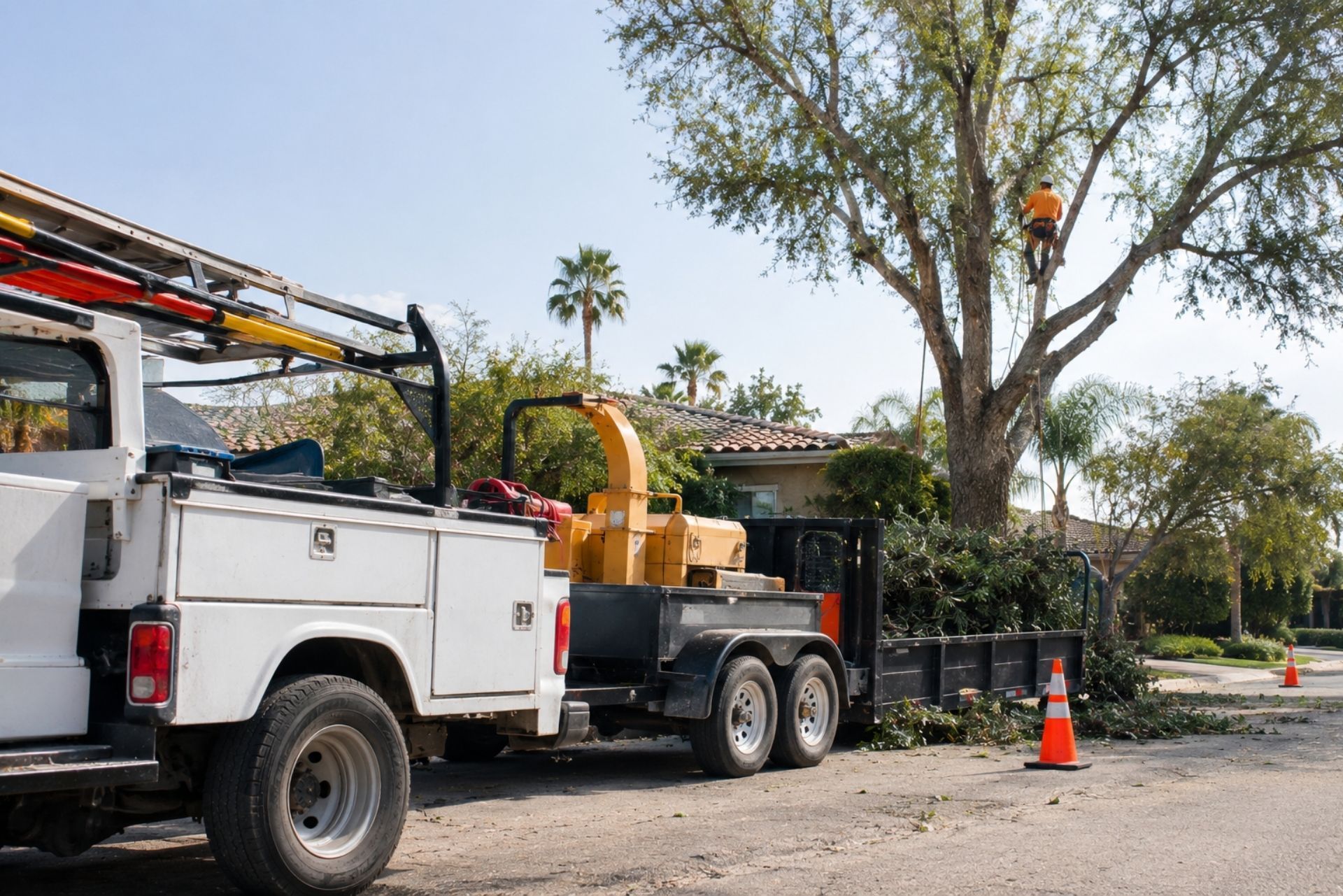
Running a tree care business in California means operating in one of the most liability-heavy environments in the country. A single misjudged cut can send a 60-foot oak through a client's roof, a climber can fall from a canopy and suffer life-altering injuries, and a bucket truck can clip a parked car on a narrow residential street. The financial exposure is enormous, and California's regulatory framework adds layers of complexity that don't exist in most other states. Whether you're a solo arborist or running a crew of twenty, understanding tree-service insurance in California - from felling liability and climbing injury coverage to equipment protection,
commercial auto, workers' comp, and the exclusions that can leave you exposed - is not optional. It's the difference between surviving a bad day and losing everything you've built. The stakes are particularly high here because
California homeowners and their attorneys are aggressive about pursuing claims, and the state's
contractor licensing board (CSLB) has its own insurance requirements for C-61/D-49 tree service licensees.
Premiums can run anywhere from $8,000 to $40,000 annually depending on your crew size, revenue, and the types of jobs you take. That's a real cost, but it's a fraction of what a single uninsured incident would run you. This guide breaks down each coverage type, what it actually protects, and where the
gaps hide.
The Landscape of Tree-Service Liability in California
Tree care operations generate liability risk at nearly every stage of a job. From the initial consultation where an arborist recommends removal versus preservation, to the moment a trunk section hits the ground, to the cleanup and stump grinding afterward, each phase carries distinct exposure. California's legal environment amplifies this: the state follows a pure comparative negligence standard, meaning you can be found partially at fault and still owe damages proportional to your share. Pair that with property values that regularly exceed $800,000 in suburban markets and $1.5 million-plus in coastal areas, and a single property damage claim can be devastating.
General Liability for Felling and Property Damage
General liability (GL) is the foundation of any tree service insurance program. It covers third-party bodily injury and property damage arising from your operations. The most common claims involve trees or limbs falling onto structures, fences, vehicles, or neighboring properties during removal. A typical GL policy for a California tree service carries $1 million per occurrence and $2 million aggregate limits, though many commercial and municipal clients require higher limits via umbrella policies.
Here's what catches people off guard: your GL policy's "completed operations" coverage matters just as much as your active operations coverage. If you trim a tree in March and a weakened branch falls in July, that completed operations provision is what responds to the claim. Make sure your policy includes it, and confirm it extends at least two years past the job date. Premiums for GL alone typically run $3,000 to $12,000 annually, depending on your gross revenue and claims history. Carriers like ACORD-rated specialty insurers and programs through the Tree Care Industry Association (TCIA) often offer more competitive rates than generalist commercial insurers because they understand the risk profile.
Professional Liability for Arborist Consultations
If you provide written assessments, tree risk evaluations, or consulting services, you need professional liability (errors and omissions) coverage. This is separate from your GL policy and covers claims arising from your professional advice rather than your physical work. A homeowner who relies on your report that a tree is healthy, only to have it fail and damage their home six months later, could sue you for negligent assessment.
This coverage is especially relevant for ISA-certified arborists who provide reports for municipalities, developers, or homeowners associations. Limits of $500,000 to $1 million are standard, and annual premiums usually fall between $1,200 and $3,500. Many tree service operators skip this coverage because they see themselves as "doers, not consultants," but if you've ever put a recommendation in writing or signed a tree health report, you have professional liability exposure.

By: Larry Scott
Personal Insurance Agent at Caruso Insurance Services
Protecting the Workforce: Workers' Compensation and Climbing Safety
Tree work consistently ranks among the most dangerous occupations in the United States. The Bureau of Labor Statistics reports a fatality rate for tree trimmers and pruners that is roughly 10 times the national average across all industries. In California, where worker protections are among the strongest in the nation, this reality translates into strict insurance requirements and high premiums.
California Statutory Requirements for Tree Trimmers
California law requires workers' compensation insurance for every employer with one or more employees, with no exceptions for small operations. The CSLB verifies workers' comp coverage as a condition of maintaining your C-61/D-49 license, and operating without it can result in license suspension, stop-work orders, and criminal penalties including up to 60 days in jail under Labor Code Section 3700.5.
The workers' comp classification code for tree trimming (NCCI code 0106 or California-specific equivalent) carries one of the highest base rates in the system. In 2026, expect to pay between $15 and $25 per $100 of payroll, depending on your experience modification rate (EMR). For a crew generating $300,000 in annual payroll, that translates to $45,000 to $75,000 in workers' comp premiums alone. Your EMR is recalculated annually based on your three-year claims history, so every injury directly impacts your future costs.
Coverage for High-Altitude Climbing Injuries
Falls from height are the leading cause of serious injury and death in tree care. Workers' comp covers medical expenses, lost wages, and disability benefits regardless of fault, but the real financial exposure extends beyond the policy itself. Cal/OSHA actively investigates tree care accidents and can impose penalties of $25,000 or more per serious violation, and those fines are not covered by insurance.
Investing in documented safety programs pays off in multiple ways. Carriers increasingly offer premium credits of 5% to 15% for companies that maintain written safety plans, conduct regular tailgate meetings, and require TCIA or OSHA-compliant training for all climbers. Keep records of every training session, equipment inspection, and safety meeting. If a claim does occur, this documentation is your best defense against both inflated workers' comp costs and Cal/OSHA penalties.
Commercial Auto and Fleet Management for Tree Care
Tree service vehicles are not ordinary commercial trucks. They're heavy, oddly shaped, often towing equipment, and frequently parked in residential neighborhoods where tight streets and low-hanging wires create constant hazards. Standard commercial auto policies need modification to properly cover a tree care fleet.
Insuring Bucket Trucks, Chippers, and Specialized Rigs
Bucket trucks, grapple loaders, and chipper trucks require scheduled auto coverage with agreed-upon values rather than actual cash value (ACV) provisions. A 2022 Altec AT37G bucket truck might be worth $85,000, but an ACV policy could depreciate it to $55,000 after a total loss. The difference comes out of your pocket unless you've negotiated stated value or replacement cost coverage.
Chippers present a unique issue: they're often towed and may fall into a gray area between auto coverage and equipment coverage. Confirm with your carrier whether your chipper is covered as a trailer under your auto policy, as a scheduled item under inland marine, or both. Gaps here are common and expensive to discover after a loss.
Hired and Non-Owned Auto Coverage
If any employee ever uses their personal vehicle for work purposes, even driving to pick up parts, you need hired and non-owned auto (HNOA) coverage. This protects your business when an employee causes an accident in a vehicle you don't own. The cost is minimal, usually $300 to $800 annually, but the absence of it can expose your business to six-figure liability.
Rental vehicles also fall under this umbrella. During peak storm season, many California tree services rent additional trucks to handle emergency work. HNOA coverage ensures those rentals are protected without purchasing separate policies each time.
Inland Marine and Equipment Insurance
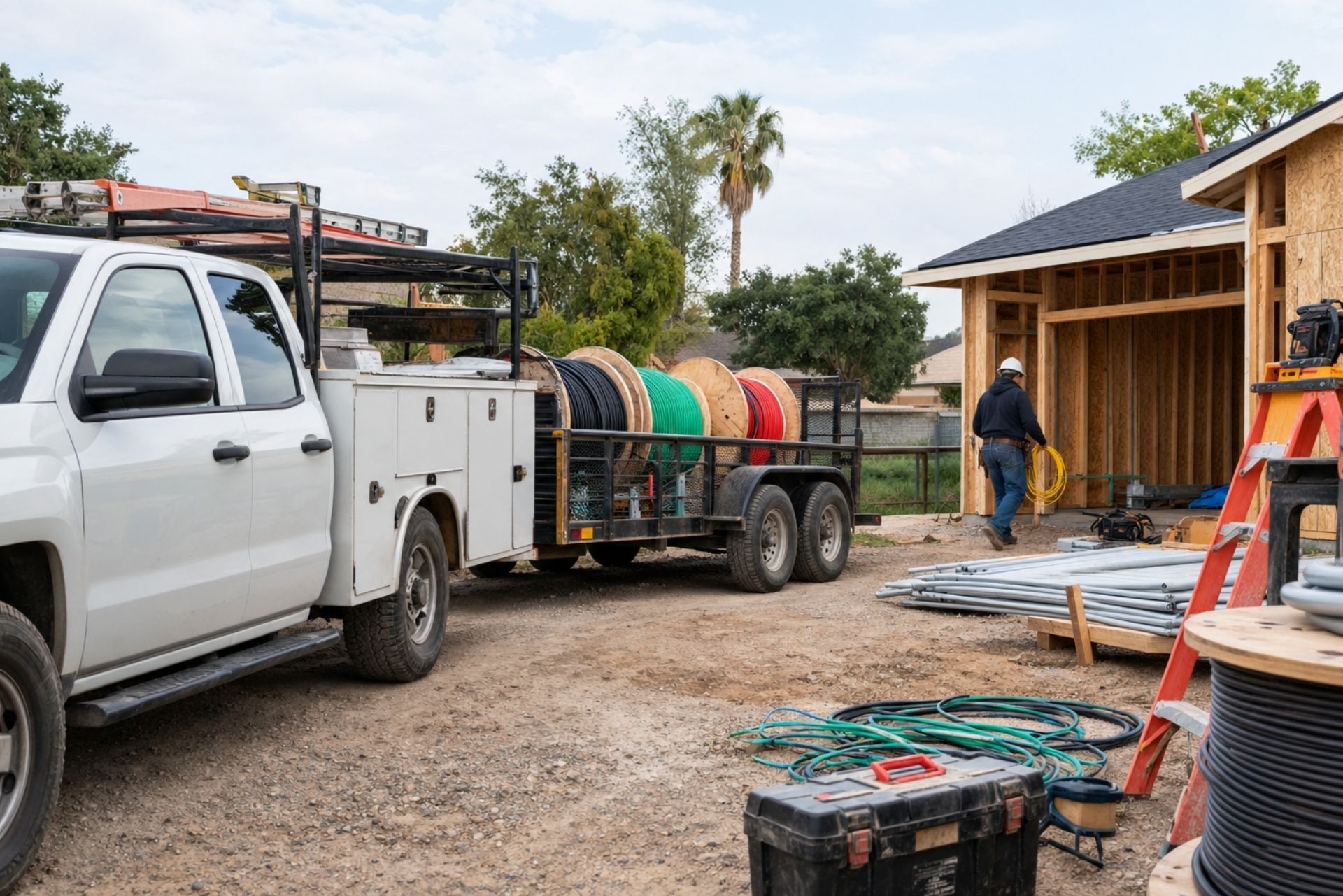
Tree care equipment represents a significant capital investment that's constantly moving between job sites, making it vulnerable to theft, damage, and loss in ways that a standard property policy won't cover.
Protection for Chainsaws, Ropes, and Hand Tools
Inland marine insurance covers tools and equipment in transit or stored at job sites. A professional-grade chainsaw runs $800 to $2,000, climbing ropes and saddles cost $500 to $1,500 per set, and a fully equipped crew truck might carry $15,000 to $25,000 in hand tools and rigging gear. Theft from job sites and truck beds is disturbingly common.
Most inland marine policies offer blanket coverage with a per-item limit and a total schedule limit. A typical setup might provide $50,000 in total coverage with a $5,000 per-item cap and a $500 deductible. Make sure you maintain an updated inventory with serial numbers and photos: carriers will require this documentation for any claim.
Heavy Machinery and Rental Equipment Reimbursement
Stump grinders, cranes, and large chippers often exceed the per-item limits on a standard inland marine policy and need to be individually scheduled. If you rent equipment, confirm whether the rental company's insurance is primary or whether your policy needs to respond first. Many rental agreements include damage waivers that cost 10% to 15% of the rental fee, but your own inland marine policy may already provide equivalent coverage at a lower effective cost.
This is where California tree service insurance gets tricky. Every policy contains exclusions, and the ones buried in tree care policies are specifically designed to limit carrier exposure on the highest-risk activities. Knowing these exclusions before you need to file a claim is critical.
Height Restrictions and Aerial Lift Limitations
Some general liability and workers' comp policies include height exclusions or limitations, particularly policies written by non-specialty carriers. A common restriction caps coverage at 50 or 75 feet, which is a problem when you're regularly working 80-foot eucalyptus or 100-foot redwoods. Always verify that your policy has no height restrictions, or if it does, that the limits match the actual scope of your work.
Aerial lift operations may also trigger separate exclusions. Some policies exclude claims arising from the operation of boom-equipped vehicles above a certain height or require specific operator certifications as a coverage condition. If your crew operates a 60-foot bucket truck, confirm that the policy covers aerial lift operations without restrictive sub-limits.
The Herbicide and Pesticide Application Exclusion
Most GL policies contain a pollution exclusion that encompasses herbicide and pesticide application. If your tree service offers stump treatment with herbicides or pest management services, your standard GL policy almost certainly will not cover claims arising from chemical drift, groundwater contamination, or allergic reactions. You'll need a separate pollution liability policy or a specific endorsement. California's Department of Pesticide Regulation also requires separate licensing for commercial pesticide application, and operating without both the license and the insurance is a fast track to enforcement action.
Underground Utility and Damage to Foundations
Stump grinding and root removal frequently bring crews into contact with underground utilities: gas lines, water mains, fiber optic cables, and irrigation systems. Many GL policies exclude or sub-limit coverage for damage to underground utilities unless you've obtained utility locates (calling 811) before work begins. Some policies make the 811 call a coverage condition, meaning failure to locate utilities before digging voids your coverage entirely.
Foundation damage from root removal is another area where exclusions lurk. If removing a tree's root system destabilizes an adjacent foundation, the resulting structural damage claim can easily exceed $100,000. Check whether your policy covers "care, custody, and control" situations and whether there's a sub-limit for structural damage.
Getting the right insurance for a California tree care operation is not a one-and-done exercise. Your coverage needs to evolve as your business grows, your crew changes, and your service mix shifts. Work with a broker who specializes in tree care or contractor insurance, not a generalist who handles restaurants and retail shops. Specialty brokers have access to programs through organizations like TCIA and the National Arborist Association that consistently deliver better coverage terms and lower premiums than the open market.
Review your policies annually, and do it before renewal, not after. Bring your updated equipment inventory, your current payroll figures, your EMR worksheet, and a summary of any new services you've added. If you've invested in safety training, new certifications, or upgraded equipment, make sure your broker presents that information to underwriters. A clean claims history combined with documented safety practices can reduce your total insurance spend by 15% to 25% over a three-year period.
California's CSLB, Cal/OSHA, and Department of Insurance all maintain active enforcement programs, and your clients are increasingly requiring certificates of insurance with specific coverage confirmations before allowing you on their property. Keeping your insurance program current, comprehensive, and compliant isn't just about protecting against catastrophic loss: it's about staying in business and winning the jobs that less-prepared competitors can't.
ABOUT THE AUTHOR:
LARRY SCOTT
Hello! My name is Larry Scott. I have been in the insurance industry for 21+ years, with a background in Personal, Commercial, and Bonding. I support Caruso Insurance’s goal of providing convenient and competitive insurance coverage for our clients by focusing on each client’s individual needs. I am dedicated to continuing education and staying up to date with technology in the forever changing insurance world. I am a family man and enjoy any time I get to spend with my kids. I love cooking and drinking wine.
Contact Us

Service that stays with you.
Our team helps simplify insurance decisions for families and businesses. We focus on clear explanations, fast responses, and dependable service. You can count on us for help with coverage questions, updates, and long-term support.
Coverage that keeps you secure
Reliable Protection for Everyday Life
Home insurance helps protect your house, personal belongings, and liability risks. We explain coverage options clearly so you know what your policy includes.
Auto insurance provides protection for accidents, liability, and vehicle damage. We help you compare options so you can choose coverage that fits your driving needs.
Motorcycle insurance provides coverage for riders and their bikes. We help you select options that match how and where you ride.
RV insurance supports protection for motorhomes and recreational vehicles. Coverage applies during travel and while parked.
Coverage Built for Contractors and Trades
Support that keeps your work moving.

General Liability Insurance
General liability insurance helps protect contractors from injury and property damage claims. It supports jobsite requirements and contracts.

Workers Compensation
Workers compensation insurance helps protect employees injured while working. It also supports compliance with state requirements.
Commercial Auto Insurance
Commercial auto insurance provides coverage for work vehicles used on jobsites. It helps protect drivers and company vehicles.
Contractor Insurance
Contractor insurance supports trades and service professionals across Southern California. It helps protect tools, equipment, and daily operations.

Cyber Liability Insurance
Cyber liability insurance helps protect business data and customer information. It supports recovery from digital incidents.

Commercial Property Insurance
Commercial property insurance helps protect offices, shops, and equipment. It supports recovery after covered damage.
Coverage Built for Specialized Work
Support for high-risk and service-driven industries.
Simple Steps Supported by Steady Guidance
A Clear Path to Coverage
Trusted by Clients Across Southern California
Clear service backed by real experiences.
Answers to Common Questions.
Clear explanations to guide your decisions.
How do I know which insurance policy is right for me?
We compare coverage options from multiple carriers to help you see differences in protection and price. You can review clear details and ask questions so you understand what each policy covers. Our team guides you step by step so you feel sure about your decision.
What factors affect my auto insurance premium?
Auto insurance premiums are influenced by your driving history, age, location, vehicle type, and coverage choices. A clean driving record and good safety features can help lower costs. We review these factors with you and help find coverage that fits your budget and needs.
Does homeowners insurance cover all types of damage?
Standard homeowners insurance protects your structure, personal belongings, liability, and additional living expenses in many cases. However, it usually does not include flood or earthquake damage without separate policies. We help you decide if extra coverage is right for your home and location.
Can I update my policy or get certificates online?
Yes. You can submit requests for policy changes and certificates through our online service form at any time. Our team processes those requests quickly and confirms updates once complete so you have the documents you need.
Do I need separate insurance for business risks like EPLI or E&O?
Yes. General liability and workers compensation cover many business risks but do not protect against all exposures. For example, Employment Practices Liability Insurance (EPLI) covers claims like wrongful termination or discrimination, and Errors & Omissions (E&O) covers claims based on mistakes in professional services. We help you identify which extra policies your business may need.
What happens if I need to file a claim?
If you need to file a claim, we guide you through the process and help you contact the insurance carrier. We explain what information you should provide, answer your questions, and stay available while the carrier reviews your claim. This support helps you move forward with confidence.
Contact Us