
California insulation work looks low-risk from the outside. You're installing batts, blowing cellulose, or spraying foam, not framing a second story. But underwriters see a trade that combines flammable materials, attic heat, occasional torch work, chemical exposure, and long-tail defect claims. That combination is why so many insulation contractors get surprised by their quotes, their exclusions, or a general contractor's rejected certificate.
This guide covers insurance for insulation contractors in California, including general liability, fire and hot work exposure, completed operations, workers' compensation, and certificates. The goal is simple: by the end, you should know which policies you need and which exclusions can sink you. You should also know what to ask your broker before you sign anything.
One note before starting: rates and requirements change. Treat the dollar figures below as illustrations, not quotes. Confirm current licensing rules directly with the Contractors State License Board (CSLB).
Essential Insurance Foundations for California Insulation Contractors
Most insulation contractors in California hold a C-2 (Insulation and Acoustical) license. Some work under a B general license on remodels. Either way, your insurance program usually rests on four core pieces:
- Commercial general liability (CGL): Covers third-party bodily injury and property damage from your operations and finished work.
- Workers' compensation: Required by state law the moment you have even one employee.
- Commercial auto: Covers rigs, trailers, and spray foam trucks. Personal auto policies typically exclude business use of this kind.
- Contractor's license bond: Required by CSLB to keep your license active. A bond protects consumers, not you, so it does not replace insurance.
Beyond those four, many insulation firms add inland marine coverage for equipment. A spray foam proportioner rig can easily represent $60,000 to $150,000 of gear sitting in a trailer, and a standard CGL policy won't pay if it's stolen or burned. An umbrella or excess policy is the other common addition, because many general contractors and commercial projects now require $2 million to $5 million in total limits.
If you operate as an LLC, CSLB has its own liability insurance requirements for LLC licensees. Check the current minimums with the board before renewal, because falling short can suspend your license.
By: Peter Plew
Commercial Insurance Agent at Caruso Insurance Services
General liability is where insulation contractors face the most underwriting scrutiny. Carriers aren't only worried about someone tripping over a hose. They're worried about fire, and California gives them plenty of reason.
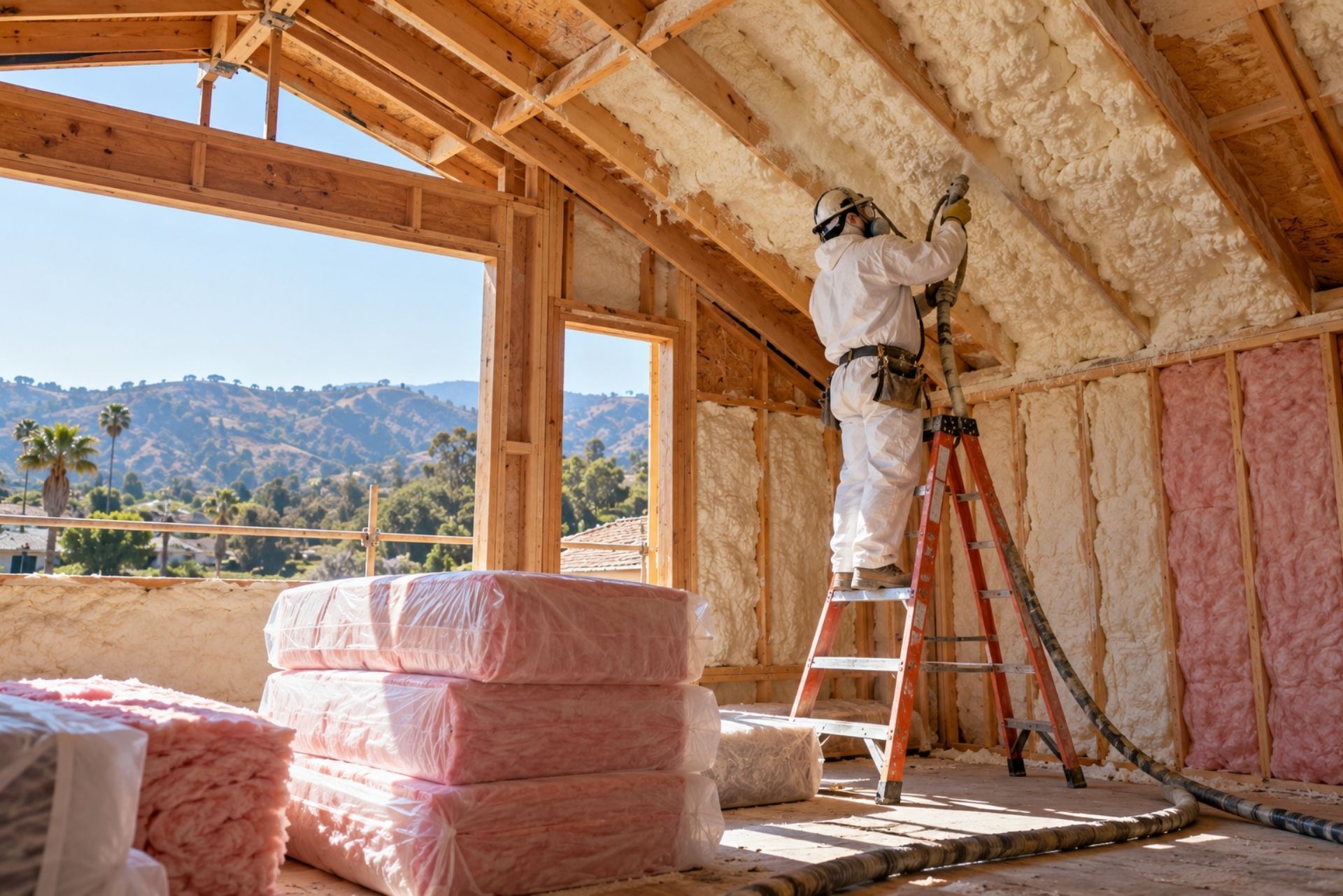
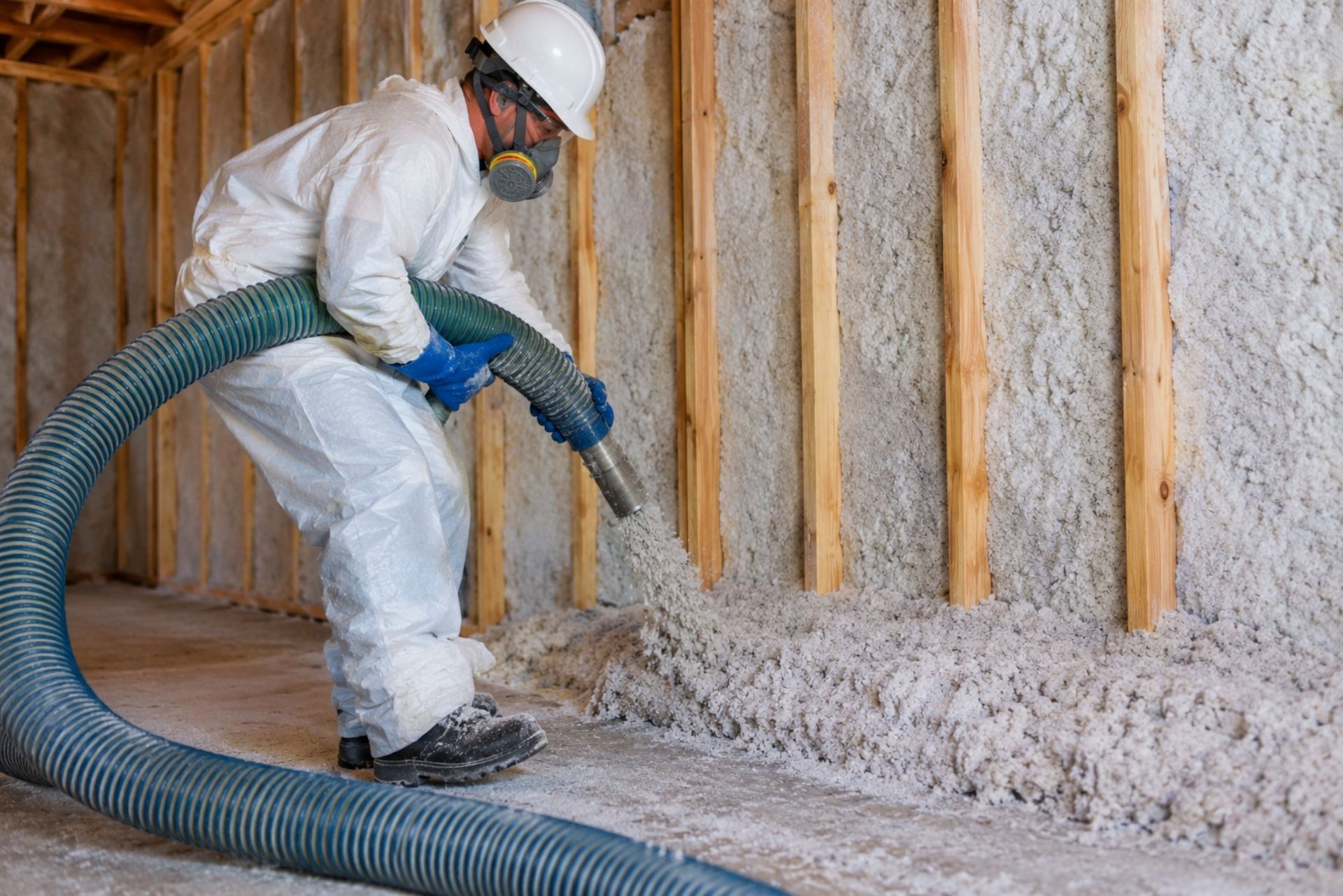
Insulation work often happens in attics and crawlspaces, around recessed lights, chimneys, flues, and old knob-and-tube wiring. A cellulose installer who packs material against a non-IC-rated can light, or covers a chimney without proper clearance, can create a fire risk that only shows up months later. Spray polyurethane foam adds its own hazards: the material is combustible before it's covered with a thermal barrier, and improperly applied foam can generate heat during curing.
When a house burns, the claim isn't small. A single residential fire loss can run $400,000 to over $1 million, especially in coastal and Bay Area markets. That's why a $1 million per-occurrence CGL limit is the floor, not the goal, for most insulation firms.
Read the exclusions page before you read the price. Some low-cost policies for insulation contractors quietly exclude spray foam operations, EIFS, or work on residential tract homes. A $3,500 annual savings means nothing if the exclusion removes the exact work that generates most of your revenue.
Managing Hot Work and Open Flame Hazards
Hot work includes welding, cutting, brazing, torch-applied materials, and any activity that throws sparks or uses open flame. Insulation crews don't do it every day, but it shows up more than people expect. Cutting metal ductwork, sealing penetrations near torch-down roofing, or working alongside other trades doing soldering all count.
Many carriers now attach hot work exclusions or warranties to contractor policies. A warranty is the dangerous version: the policy may require you to follow specific procedures, and failing to do so can void coverage for the loss. Typical requirements include:
- A written hot work permit for each job
- A fire watch for 30 to 60 minutes after work stops
- A charged fire extinguisher within reach
- Removal or shielding of combustibles within a set radius
If your crew skipped the fire watch and a smoldering attic ignites two hours later, a claim adjuster will ask for that permit. Keep signed hot work logs with photos for every job where any flame or spark was involved. That paperwork is cheap, and losing coverage on a fire is not.
Protecting Against Completed Operations Claims
Completed operations coverage responds to injury or damage that happens after you've finished the job and left. For insulation contractors, this is where long-tail risk lives: moisture trapped by improper vapor barriers, foam odor complaints, rot behind walls, or a fire traced back to insulation placed against a heat source.
California's statute of repose for latent construction defects runs up to 10 years from substantial completion. That means a house you insulated in 2026 could produce a claim in 2035. If your policy is written on a claims-made basis, or you drop coverage when you retire or sell, that old work may be uninsured.
Ask your broker three questions. Is the completed operations aggregate separate from the general aggregate? Does the policy contain a residential or tract housing exclusion? And will the carrier provide completed operations additional insured endorsements (such as the CG 20 37) when a GC requires them? Many California homebuilders will not let you on site without that last one.
Workers' Compensation and State-Specific Compliance
California requires every employer to carry workers' compensation insurance or obtain state approval to self-insure. There's no small-business exemption. One part-time helper on a single job triggers the requirement, and operating without coverage is a crime that can bring stop orders, penalties, and personal liability for an injured worker's medical bills.
CSLB also requires licensees with employees to keep a current workers' comp certificate on file. If you have no employees, you file an exemption. Be careful here: if you claim an exemption and then hire a helper, your license can be suspended, and penalties can follow.
Insulation crews face real injury exposure. Attic temperatures in the Central Valley and Inland Empire regularly exceed 130°F in summer, so heat illness is a serious concern. Cal/OSHA's heat illness prevention standard requires water, shade, rest breaks, and a written plan. Falls through ceiling joists, respiratory exposure to isocyanates from spray foam, and repetitive strain round out the list.
Premiums depend on your class codes, payroll, and experience modification factor (mod). A firm with $500,000 in payroll and a 1.25 mod pays 25% more than the base rate. Getting that mod down to 0.90 through fewer and smaller claims could save tens of thousands of dollars a year at that payroll level. Classifying workers correctly matters too, because misclassifying installers as clerical staff will be caught at audit and billed back.
The Critical Role of Certificates of Insurance (COI)
A certificate of insurance is a one-page summary of your coverage. It doesn't change your policy, but it determines whether you get paid, get on site, or get the next bid. General contractors, property managers, and homebuilders track certificates closely. An expired or incorrect certificate can hold up a payment draw for weeks.
Most GC contracts ask for more than a basic certificate. Expect requests for:
- Additional insured status for ongoing and completed operations, usually through CG 20 10 and CG 20 37 endorsements or blanket equivalents
- Primary and non-contributory wording, meaning your policy pays before theirs
- Waiver of subrogation on both general liability and workers' comp
- Specific limits, often $1 million per occurrence and $2 million aggregate, plus umbrella coverage
- 30-day notice of cancellation, though carriers often limit how they honor this
The common mistake is assuming your broker can type anything onto the certificate. A broker can only reflect endorsements your policy actually includes. If a contract demands waiver of subrogation and your policy doesn't have it, the certificate is meaningless and you may be in breach. Send every new contract's insurance section to your broker before you sign, not after you've mobilized.
Specialized Coverage: Pollution and Professional Liability
Standard CGL policies contain a broad pollution exclusion, and insulation contractors run into it more than most trades. Disturbing old vermiculite that contains asbestos, releasing fiberglass dust in an occupied home, or spray foam off-gassing can all be argued as pollution events. Without contractor's pollution liability (CPL), the carrier may deny the claim outright.
CPL policies for small trade contractors often cost far less than owners expect relative to the risk. Consider a simple break-even: if a CPL policy costs $2,500 a year and one remediation claim for contaminated HVAC ductwork costs $75,000, the coverage pays for 30 years of premiums in one loss.
Professional liability, sometimes called errors and omissions, matters if you give design advice. Examples include recommending R-values for Title 24 compliance, running energy audits, or specifying vapor control layers. If a homeowner relies on your recommendation and the result fails inspection or causes damage, a CGL policy may not respond because the claim stems from advice rather than physical work.
Addressing Mold and Spray Foam Sensitivities
Mold claims hit insulation contractors hard. Improper vapor retarders, closed attics in humid coastal zones, or insulation installed over existing leaks can trap moisture. Many CGL policies exclude fungi and bacteria entirely, so look for a CPL policy that adds mold coverage back.
Spray foam brings a separate concern: occupant sensitivity complaints. Homeowners have alleged headaches, respiratory issues, and persistent odor after improper mixing or inadequate re-entry times. Protect yourself by documenting ratios, temperatures, batch numbers, and ventilation times on every job. Give homeowners written re-occupancy instructions and get a signature. When a complaint arrives 18 months later, those records often decide whether a claim gets defended successfully or settled at a loss.
Your premium reflects how risky a carrier thinks you are, and you have more control over that than you may think. Underwriters reward documentation, consistency, and a clean loss history.
Start with a written safety program covering hot work permits, heat illness prevention, respiratory protection, and fall hazards in attics. Keep photo logs of pre-existing conditions before you start, such as damaged wiring, roof leaks, or existing mold. Those photos protect you when a homeowner later blames you for a problem that was already there. An annual review of your equipment, trailers, and spray rigs also helps support lower inland marine and auto rates.
Claims history follows you. Insurers share loss data, and every frequent small claim makes your next renewal harder. Sometimes it's smarter to pay a $1,800 repair out of pocket than to file and watch your premium climb for three years. Do the math: if a claim raises your premium by $1,200 annually for three years, filing costs you $3,600 to recover $1,800.
Shop your program every two to three years using an independent broker who writes contractors. Bundling CGL, auto, umbrella, and inland marine with one carrier can sometimes cut costs 10% to 15%, though specialty coverage like pollution may still be better placed separately.
Ask yourself an honest question: if a house you insulated burned tonight, or a helper collapsed from heat tomorrow, would your current policies respond? If you're not sure, schedule a coverage review with your broker this month. Bring your contracts, your job types, and this guide's checklist. The time to find a gap is before a claim does it for you.
ABOUT THE AUTHOR:
PETER PLEW
Hi my name is Peter Plew and I am a commercial insurance professional. I listen to and strategize with business owners about their visions of the future and assist in getting there as quickly as possible. I help identify unique exposure and risk’s that business owners have and the reasons why they need to be insured against them. My goal is to make sure my clients are always taken care of on a daily basis with any service needs, questions, or concerns they may have. I love to golf and spend time with my family in my spare time.
Contact Us

Service that stays with you.
Our team helps simplify insurance decisions for families and businesses. We focus on clear explanations, fast responses, and dependable service. You can count on us for help with coverage questions, updates, and long-term support.
Coverage that keeps you secure
Reliable Protection for Everyday Life

Home insurance helps protect your house, personal belongings, and liability risks. We explain coverage options clearly so you know what your policy includes.
Auto insurance provides protection for accidents, liability, and vehicle damage. We help you compare options so you can choose coverage that fits your driving needs.
Motorcycle insurance provides coverage for riders and their bikes. We help you select options that match how and where you ride.
RV insurance supports protection for motorhomes and recreational vehicles. Coverage applies during travel and while parked.
Coverage Built for Contractors and Trades
Support that keeps your work moving.

General Liability Insurance
General liability insurance helps protect contractors from injury and property damage claims. It supports jobsite requirements and contracts.

Workers Compensation
Workers compensation insurance helps protect employees injured while working. It also supports compliance with state requirements.

Commercial Auto Insurance
Commercial auto insurance provides coverage for work vehicles used on jobsites. It helps protect drivers and company vehicles.
Contractor Insurance
Contractor insurance supports trades and service professionals across Southern California. It helps protect tools, equipment, and daily operations.

Cyber Liability Insurance
Cyber liability insurance helps protect business data and customer information. It supports recovery from digital incidents.

Commercial Property Insurance
Commercial property insurance helps protect offices, shops, and equipment. It supports recovery after covered damage.
Coverage Built for Specialized Work
Support for high-risk and service-driven industries.


Simple Steps Supported by Steady Guidance
A Clear Path to Coverage
Trusted by Clients Across Southern California
Clear service backed by real experiences.
Answers to Common Questions.
Clear explanations to guide your decisions.
How do I know which insurance policy is right for me?
We compare coverage options from multiple carriers to help you see differences in protection and price. You can review clear details and ask questions so you understand what each policy covers. Our team guides you step by step so you feel sure about your decision.
What factors affect my auto insurance premium?
Auto insurance premiums are influenced by your driving history, age, location, vehicle type, and coverage choices. A clean driving record and good safety features can help lower costs. We review these factors with you and help find coverage that fits your budget and needs.
Does homeowners insurance cover all types of damage?
Standard homeowners insurance protects your structure, personal belongings, liability, and additional living expenses in many cases. However, it usually does not include flood or earthquake damage without separate policies. We help you decide if extra coverage is right for your home and location.
Can I update my policy or get certificates online?
Yes. You can submit requests for policy changes and certificates through our online service form at any time. Our team processes those requests quickly and confirms updates once complete so you have the documents you need.
Do I need separate insurance for business risks like EPLI or E&O?
Yes. General liability and workers compensation cover many business risks but do not protect against all exposures. For example, Employment Practices Liability Insurance (EPLI) covers claims like wrongful termination or discrimination, and Errors & Omissions (E&O) covers claims based on mistakes in professional services. We help you identify which extra policies your business may need.
What happens if I need to file a claim?
If you need to file a claim, we guide you through the process and help you contact the insurance carrier. We explain what information you should provide, answer your questions, and stay available while the carrier reviews your claim. This support helps you move forward with confidence.
Contact Us