California's solar industry keeps growing, but so do the insurance headaches that come with it. Between CSLB licensing requirements, utility interconnection demands, and the sheer physical risk of putting crews on rooftops, solar contractors face a web of coverage obligations that can feel overwhelming. Getting any single piece wrong can mean losing your license, getting shut out of utility programs, or facing a lawsuit with no safety net. This guide breaks down the insurance requirements
California solar contractors actually need to understand:
general liability, workers' compensation,
CSLB bonds, completed operations,
roof damage protection, and the specialized endorsements that separate well-protected companies from vulnerable ones. The regulatory environment shifted again in 2026, with new workers' comp rate increases and financing regulations adding fresh complexity. Whether you're a C-46 solar contractor launching your first crew or an established company expanding into
battery storage, the insurance decisions you make now will shape your financial exposure for years. Knowing the exact coverage thresholds, bond amounts, and policy endorsements isn't optional: it's the price of doing business in this state. Here's what you need to carry, why each piece matters, and how to keep costs from spiraling.
California State Licensing Board (CSLB) Insurance Standards
The CSLB doesn't just issue licenses: it actively polices the solar industry. The board has operationalized a "Multiple Offender Unit" targeting solar companies that rack up consumer complaints, and insurance compliance is one of the first things investigators check. Falling out of compliance, even briefly, triggers automatic license suspension.
Mandatory Workers' Compensation for Solar Installers
Every California contractor with employees must carry workers' compensation insurance. No exceptions, no grace period. If you have even one W-2 employee, you need active coverage before they set foot on a jobsite.
The cost hit in 2026 is real. Effective September 1, 2026, California's advisory pure premium rates increased by 6.6%, setting a new benchmark of $1.65 per $100 of payroll. For solar-related roofing trades classified under Class 5552/5553, the numbers get much steeper. The dual-wage threshold increased to $33.00 per hour, and contractors paying below that rate face a pure premium rate of $20.827 per $100 of payroll. That means a crew of five installers earning $28/hour could cost you dramatically more in workers' comp than the same crew earning $34/hour. Paying above the threshold isn't just good ethics: it's a direct insurance cost reduction.
Contractor License Bond Requirements
Every CSLB-licensed contractor must maintain a contractor license bond. This isn't insurance: it's a guarantee to consumers that you'll follow state contracting laws. If a homeowner files a valid complaint and the CSLB rules against you, the bond pays out. You then owe the bonding company that money back.
Sole proprietors and partnerships also need a qualifying individual bond if the qualifier isn't an owner. For companies with a disciplinary history, the CSLB can require a supplemental bond.
Liability Insurance for LLC-Structured Solar Businesses
LLCs and corporations must carry general liability coverage to maintain their CSLB license. This requirement catches some new contractors off guard: they form an LLC thinking it protects them personally, then discover it triggers a mandatory insurance threshold. Most insurers will write this as part of a broader commercial general liability (CGL) policy.

By: Patrick Caruso
President of Caruso Insurance Services
Core Liability Coverage for California Solar Operations
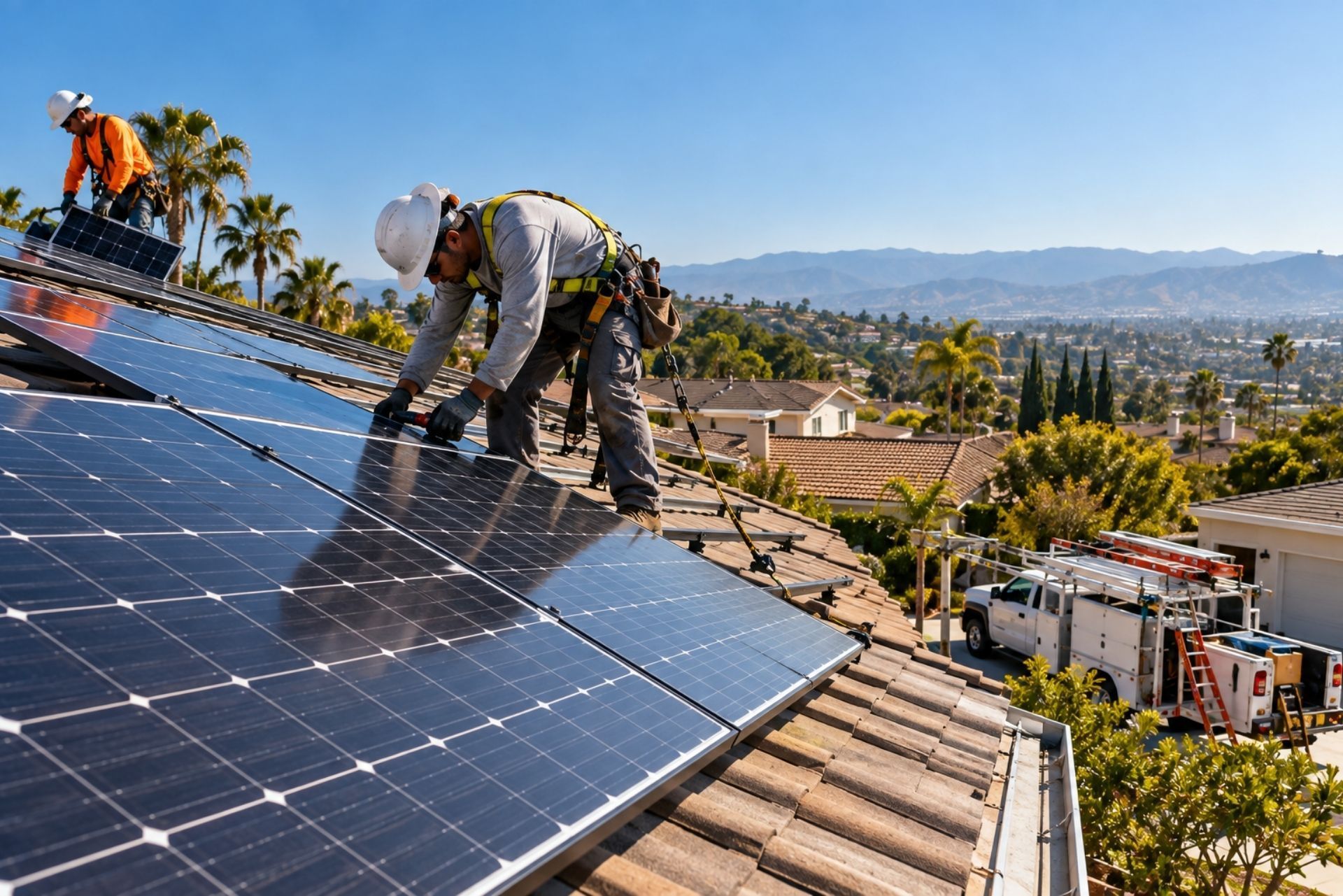
General liability is the foundation, but solar contractors need more than a basic CGL policy. The nature of the work: climbing on roofs, drilling into structures, designing electrical systems: creates overlapping risk categories that require distinct coverage types.
General Liability and Property Damage Protection
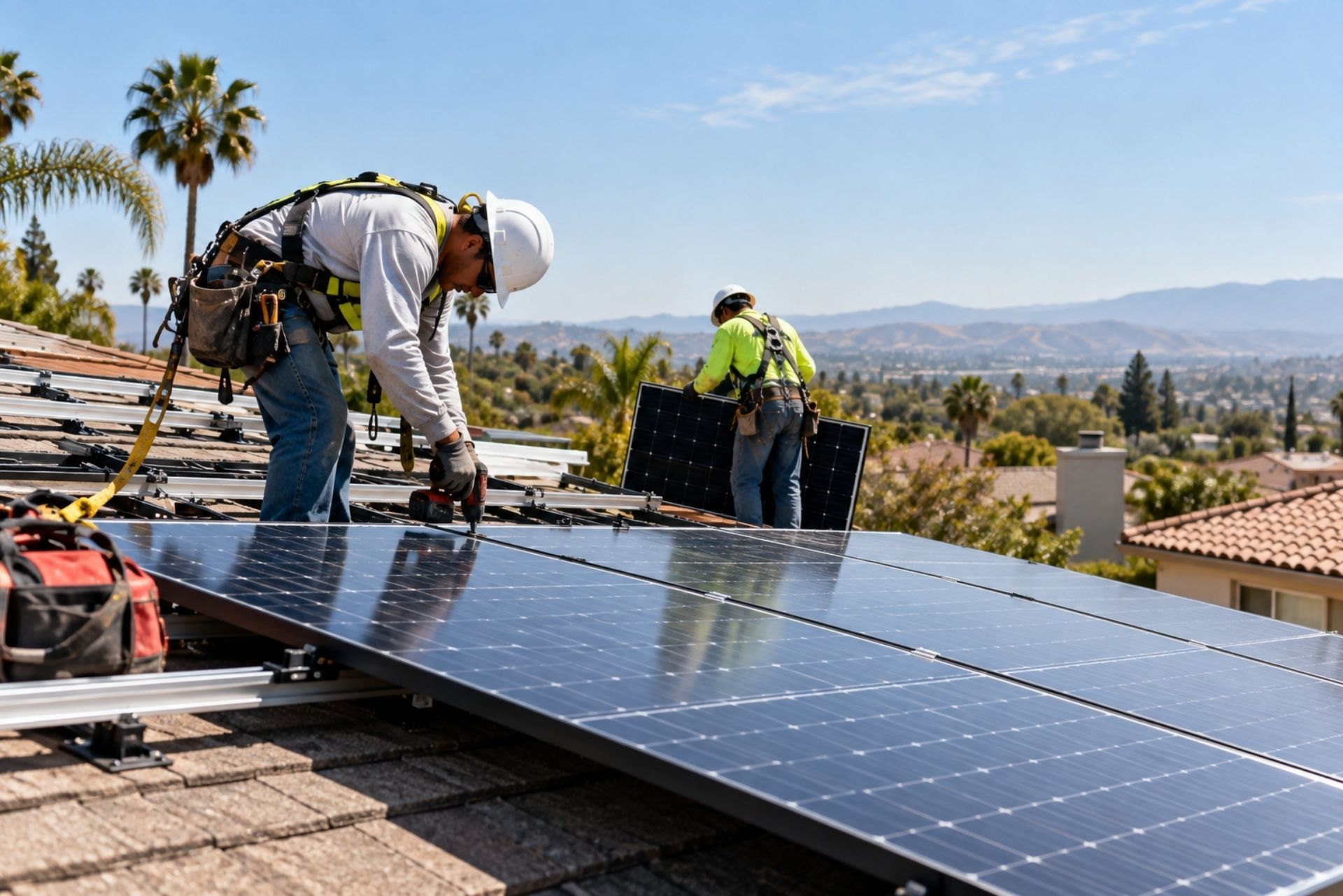
Your CGL policy covers third-party bodily injury and property damage claims. For solar contractors, property damage is the big exposure. A crew drops a panel through a skylight. An installer steps through a weak section of roof decking. A mounting bracket punctures a waterproof membrane, and the homeowner doesn't discover the leak until months later.
Standard CGL policies typically cover these scenarios, but watch for common coverage limitation endorsements that can gut your protection. Residential exclusions, subsidence exclusions, and damage-to-your-work exclusions are all common in cheaper policies. Read the endorsement schedule carefully, or have your broker walk you through every modification.
One critical gap to watch: "Action Over" exclusions prevent coverage when an injured employee sues a property owner or general contractor who then seeks indemnification from the subcontractor. If you do subcontract work for larger solar companies, confirm your CGL doesn't contain this exclusion: it can leave you exposed to six-figure claims.
Professional Liability for Solar Design and Consulting
If your company provides energy savings projections, system designs, or performance guarantees, you need professional liability (errors and omissions) coverage. A standard CGL policy won't cover claims that your system was improperly designed or that your production estimates were inaccurate.
This coverage is now considered essential for contractors who provide their own energy savings projections and system designs. The passage of Senate Bill 784, California's "Truth in Home Improvement Loans Act" effective January 1, 2026, tightened regulations around solar financing disclosures and performance claims. If a homeowner can demonstrate they were sold a system based on inflated savings projections, your E&O policy is what stands between you and a costly lawsuit.
Completed Operations Coverage for System Failures
Completed operations coverage protects you after you've finished a job and left the site. A solar system catches fire six months post-installation due to a wiring defect. A roof leak develops a year later because the flashing wasn't sealed properly. Without completed operations coverage, your CGL policy may deny these claims entirely.
Most standard CGL policies include completed operations, but some carriers exclude it or sublimit it for solar work. Verify that your policy's products-completed operations aggregate is sufficient: $2 million is a common and reasonable floor. Claims in this category tend to be expensive because they often involve both property damage and business interruption for the homeowner.
Specialized Solar Endorsements and Risk Mitigation
As solar installations grow more complex, especially with battery storage integration, contractors need endorsements that go beyond standard construction coverage.
Pollution Liability for Battery Storage and Hazardous Materials
Battery energy storage systems introduce chemical exposure risks that standard CGL policies explicitly exclude. Lithium-ion battery failures can release toxic gases, and cleanup costs from a thermal runaway event can easily exceed $100,000. If your company installs battery storage alongside solar panels, a pollution liability endorsement or standalone policy is essential.
This coverage typically handles both first-party cleanup costs and third-party bodily injury or property damage from pollutant release. Premiums vary significantly based on the volume and type of battery systems you install, but standalone pollution and environmental policies for solar contractors typically range from $2,000 to $8,000 annually (https://solarvisionai.com/commercial-solar-panel-insurance/).
Inland Marine Insurance for Equipment in Transit
Solar panels, inverters, and racking systems are expensive, and they spend a lot of time on trucks, in staging areas, and at jobsites before installation. Standard commercial property policies usually don't cover equipment in transit or stored at temporary locations.
Inland marine insurance fills this gap. It covers your tools, materials, and equipment while they're being transported or stored at a jobsite. For a company running $50,000 to $150,000 in equipment and inventory, inland marine premiums generally fall between $1,500 and $4,500 (https://solarvisionai.com/commercial-solar-panel-insurance/): a fraction of what a single stolen inverter shipment would cost to replace.
Commercial Auto and Fleet Requirements
California Minimum Limits for Commercial Vehicles
California requires minimum commercial auto liability limits for bodily injury and property damage, but these minimums are dangerously low for a solar contractor. A single accident involving a loaded work truck can generate claims well into six figures. Most insurance professionals recommend carrying at least $1 million in combined single-limit (CSL) commercial auto coverage.
Your commercial auto policy should list every vehicle used for business purposes, including personal vehicles regularly used for work tasks. If an installer drives their personal truck to a jobsite and causes an accident, your company could be liable: and a personal auto policy won't cover commercial use.
Hired and Non-Owned Auto Coverage
If your employees ever drive rental vehicles for work or use their personal cars for business errands, you need hired and non-owned auto (HNOA) coverage. This is typically added as an endorsement to your commercial auto policy for a modest premium increase. Without it, you're exposed to liability every time an employee picks up materials in their own car or rents a vehicle for a site visit.
Compliance for Utility Interconnection and Local Permitting
PGE, SCE, and SDGE Insurance Requirements
California's three major investor-owned utilities: PG&E, SCE, and SDG&E: each require proof of insurance before they'll approve interconnection applications. The standard requirement includes general liability coverage, with the utility named as an additional insured on your policy.
Getting named as an additional insured isn't just a paperwork exercise. It means the utility can file claims directly against your policy if your installation causes damage to their equipment or grid infrastructure. Your insurer needs to issue a specific endorsement for each utility, and processing times can add days to your interconnection timeline if you don't plan ahead.
Municipal Permit Bonds and City-Specific Mandates
Beyond utility requirements, individual cities and counties may impose their own insurance or bonding requirements for solar permits. Some jurisdictions require a separate permit bond. Others mandate higher liability limits for work in historic districts or fire-prone areas.
The requirements vary enough that you can't assume what works in Sacramento will fly in San Diego. Check with each jurisdiction's building department before bidding projects in unfamiliar territory. Getting caught without the right coverage mid-project can trigger stop-work orders and permit revocation.
Managing Insurance Costs in the California Market
Insurance costs for California solar contractors have climbed steadily, driven by wildfire risk, rising workers' comp rates, and an increasingly litigious environment. But there are concrete steps to control your premiums.
Paying your installers above the dual-wage threshold of $33.00/hour for roofing-classified work is one of the most direct ways to cut workers' comp costs. The rate difference between below-threshold and above-threshold classifications is dramatic enough that the higher wages can partially pay for themselves through premium savings.
Maintaining a clean claims history matters enormously. Insurers check loss runs going back three to five years, and a pattern of claims: even small ones: can push you into surplus lines markets where premiums double or triple. Document your safety program, conduct regular toolbox talks, and invest in fall protection equipment that exceeds OSHA minimums.
- Bundle your policies with a single carrier or through a specialized construction insurance broker to unlock package discounts
- Raise your deductibles from $1,000 to $2,500 or $5,000 if your cash reserves support it
- Pursue safety certifications like OSHA 30 for your supervisors: many carriers offer premium credits
- Review your classification codes annually to ensure you're not being rated under a higher-risk category than your actual work warrants
The solar insurance market in California is competitive enough that shopping your coverage every two to three years keeps carriers honest. Just don't sacrifice coverage quality for a lower premium: one uncovered claim can wipe out years of savings.
If you're unsure whether your current policies meet CSLB, utility, and municipal requirements, schedule a coverage review with a broker who specializes in contractor insurance. The cost of an hour-long policy audit is negligible compared to the cost of discovering a gap after a loss.
ABOUT THE AUTHOR:
PATRICK CARUSO
I’m Patrick Caruso, founder of Caruso Insurance, and I have spent more than 25 years helping families, contractors, and small businesses across Southern California make confident insurance decisions. I focus on explaining coverage in clear terms, comparing multiple carriers, and supporting clients with steady communication so they feel secure with each step. My goal is to provide dependable guidance, simple answers, and a smooth process for anyone who needs personal or business insurance.
Contact Us

Service that stays with you.
Our team helps simplify insurance decisions for families and businesses. We focus on clear explanations, fast responses, and dependable service. You can count on us for help with coverage questions, updates, and long-term support.
Coverage that keeps you secure
Reliable Protection for Everyday Life
Home insurance helps protect your house, personal belongings, and liability risks. We explain coverage options clearly so you know what your policy includes.
Auto insurance provides protection for accidents, liability, and vehicle damage. We help you compare options so you can choose coverage that fits your driving needs.
Motorcycle insurance provides coverage for riders and their bikes. We help you select options that match how and where you ride.
RV insurance supports protection for motorhomes and recreational vehicles. Coverage applies during travel and while parked.
Coverage Built for Contractors and Trades
Support that keeps your work moving.

General Liability Insurance
General liability insurance helps protect contractors from injury and property damage claims. It supports jobsite requirements and contracts.

Workers Compensation
Workers compensation insurance helps protect employees injured while working. It also supports compliance with state requirements.

Commercial Auto Insurance
Commercial auto insurance provides coverage for work vehicles used on jobsites. It helps protect drivers and company vehicles.
Contractor Insurance
Contractor insurance supports trades and service professionals across Southern California. It helps protect tools, equipment, and daily operations.

Cyber Liability Insurance
Cyber liability insurance helps protect business data and customer information. It supports recovery from digital incidents.

Commercial Property Insurance
Commercial property insurance helps protect offices, shops, and equipment. It supports recovery after covered damage.
Coverage Built for Specialized Work
Support for high-risk and service-driven industries.


Simple Steps Supported by Steady Guidance
A Clear Path to Coverage
Trusted by Clients Across Southern California
Clear service backed by real experiences.
Answers to Common Questions.
Clear explanations to guide your decisions.
How do I know which insurance policy is right for me?
We compare coverage options from multiple carriers to help you see differences in protection and price. You can review clear details and ask questions so you understand what each policy covers. Our team guides you step by step so you feel sure about your decision.
What factors affect my auto insurance premium?
Auto insurance premiums are influenced by your driving history, age, location, vehicle type, and coverage choices. A clean driving record and good safety features can help lower costs. We review these factors with you and help find coverage that fits your budget and needs.
Does homeowners insurance cover all types of damage?
Standard homeowners insurance protects your structure, personal belongings, liability, and additional living expenses in many cases. However, it usually does not include flood or earthquake damage without separate policies. We help you decide if extra coverage is right for your home and location.
Can I update my policy or get certificates online?
Yes. You can submit requests for policy changes and certificates through our online service form at any time. Our team processes those requests quickly and confirms updates once complete so you have the documents you need.
Do I need separate insurance for business risks like EPLI or E&O?
Yes. General liability and workers compensation cover many business risks but do not protect against all exposures. For example, Employment Practices Liability Insurance (EPLI) covers claims like wrongful termination or discrimination, and Errors & Omissions (E&O) covers claims based on mistakes in professional services. We help you identify which extra policies your business may need.
What happens if I need to file a claim?
If you need to file a claim, we guide you through the process and help you contact the insurance carrier. We explain what information you should provide, answer your questions, and stay available while the carrier reviews your claim. This support helps you move forward with confidence.
Contact Us