Running a landscaping business in California means dealing with risks that most other contractors never think about: a crew member sprays herbicide on a windy day and it drifts onto a neighbor's organic garden, a falling limb crushes a client's fence, or a $40,000 skid steer gets stolen off a trailer overnight. These aren't hypotheticals. They're Tuesday. The insurance needs of California landscapers are uniquely complex because the state layers its own licensing mandates, workers' comp requirements, and environmental regulations on top of the usual business risks. Whether you're a solo operator with a truck and a mower or you run crews across multiple counties, understanding the specific types of coverage you need - general liability, tree and property damage protection, equipment insurance, herbicide exposure policies, commercial auto, and workers' compensation - is the difference between surviving a bad day and closing your doors. This guide breaks down each coverage type with California-specific detail so you can make informed decisions about protecting your business.
California regulates landscaping contractors more aggressively than most states, and the insurance requirements reflect that. Before you bid on your first job, you need to understand what the Contractors State License Board (CSLB) expects and how general liability fits into the picture.
CSLB Licensing and Minimum Insurance Mandates
Any landscaping project valued at $500 or more (including labor and materials) requires a C-27 Landscaping Contractor license from the CSLB. To get and keep that license, you must carry a contractor's surety bond of at least $25,000. This bond isn't insurance for you: it protects the public if you fail to meet your contractual obligations or violate licensing laws.
Here's where people get confused: the CSLB bond doesn't cover property damage, bodily injury, or any of the real-world risks your business faces daily. It's a regulatory requirement, not a risk management tool. You'll also need a separate $100,000 contractor's license bond or a cash deposit if you want to advertise as bonded.
If you have employees (and in California, misclassifying workers as independent contractors carries severe penalties), you're required by law to carry workers' compensation insurance. There's no exception for small employers. Even one W-2 employee triggers the mandate. The CSLB can suspend your license if your workers' comp policy lapses.
General Liability: Protecting Against Third-Party Bodily Injury
General liability insurance is the foundation of any landscape contractor's coverage. It pays for third-party bodily injury and property damage claims that arise from your work. A visitor trips over your equipment at a client's property, or your crew accidentally damages a sprinkler system: general liability responds to these situations.
Most California landscapers carry between $1 million and $2 million in general liability coverage. Premiums typically run between $800 and $2,500 annually for small operations, though companies doing tree work or large-scale grading will pay more. Many commercial and municipal clients require you to name them as additional insureds on your policy before they'll sign a contract.
One thing worth understanding: general liability policies have exclusions. Damage caused by pollution (including
chemical overspray) is almost always excluded from standard GL policies. So is damage to your own equipment. You need separate coverage for those risks, which we'll get into below.

By: Larry Scott
Personal Insurance Agent at Caruso Insurance Services
Specialized Property and Tree Care Coverage
The work that makes landscaping profitable - tree removal, hardscape installation, grading - also generates the biggest liability exposure. Standard general liability won't always cover the full scope of what can go wrong.
Professional Liability for Tree Trimming and Property Damage
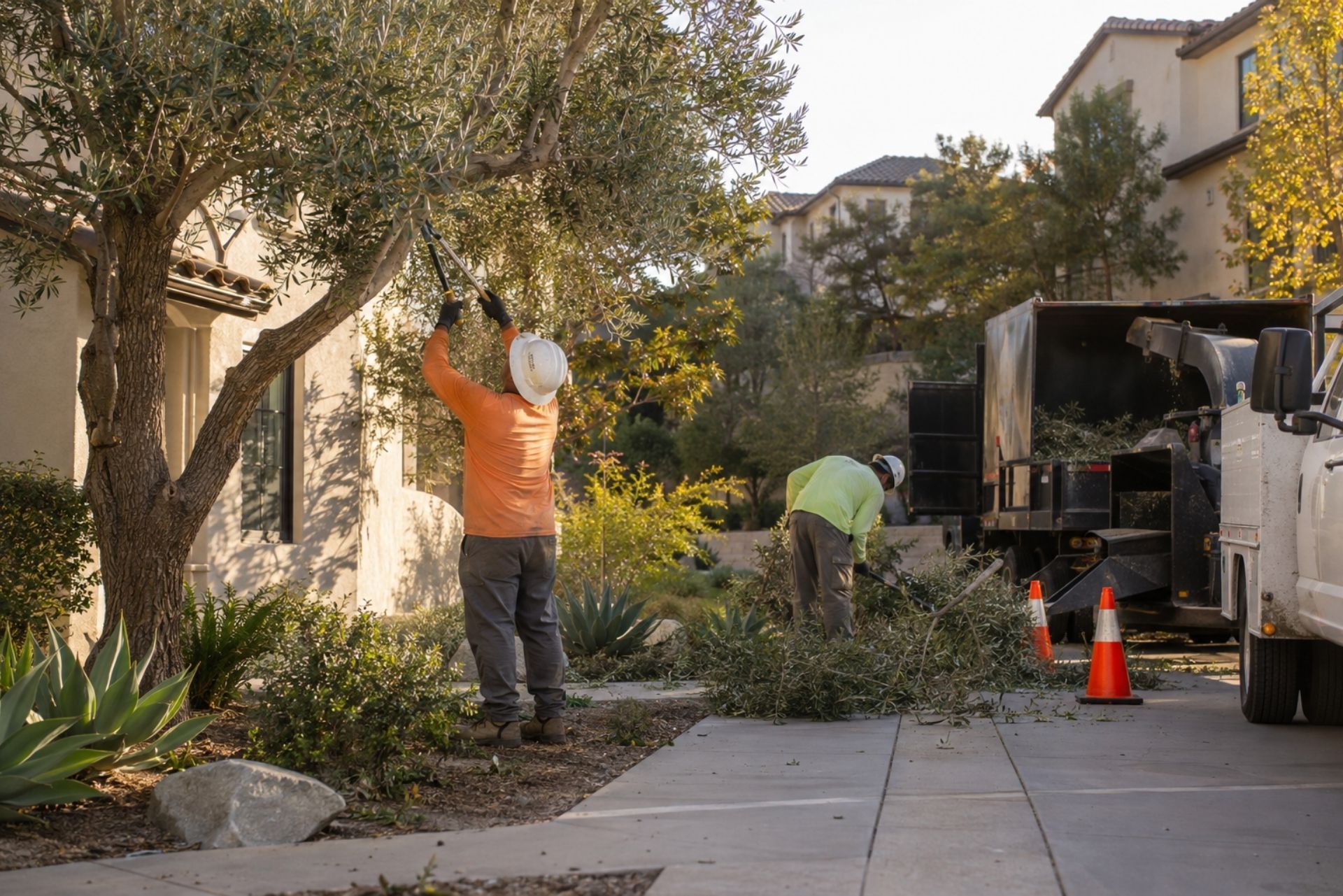
Tree work is where landscaping claims get expensive fast. A limb drops on a car, a root ball pulls up and takes a retaining wall with it, or a tree you recommended removing turns out to have been protected by a local ordinance. These scenarios can generate claims in the $50,000 to $250,000 range without much effort.
Professional liability (sometimes called errors and omissions) covers claims arising from your professional judgment: recommending the wrong species, improperly diagnosing tree disease, or designing a drainage system that fails. This is distinct from general liability, which covers physical accidents. If a client sues you because your design caused their hillside to erode during winter rains, professional liability is the policy that responds.
For tree care specifically, look for policies that explicitly cover completed operations. Some policies only cover damage that happens while your crew is on-site. The real risk often shows up weeks later when a tree you pruned drops a weakened branch during a Santa Ana wind event.
Inland Marine: Securing Mowers, Excavators, and Hand Tools
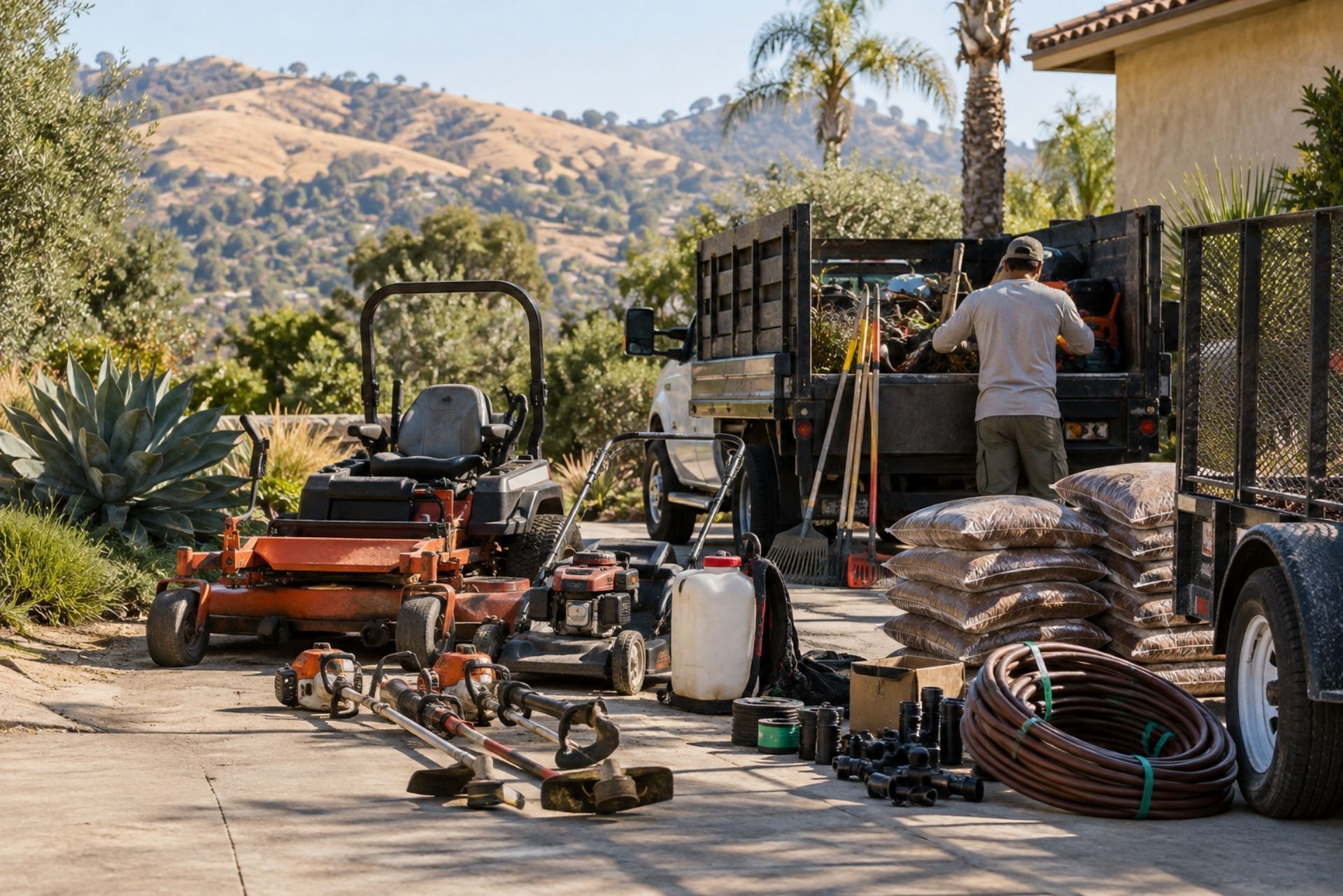
Your equipment is your livelihood, and it's constantly in transit. Inland marine insurance covers tools and equipment while they're being transported, stored at job sites, or sitting in your yard. A standard commercial property policy typically only covers items at a fixed location.
California landscapers should inventory every piece of equipment annually and keep that list updated on their policy. A common mistake: buying a new zero-turn mower for $15,000 and forgetting to add it to the policy. If it's stolen three months later, you're out of luck.
Inland marine premiums are usually calculated as a percentage of total equipment value, often between 1% and 3%. So insuring $100,000 worth of equipment might cost $1,000 to $3,000 per year. Deductibles typically range from $500 to $2,500. For high-theft areas (parts of Los Angeles, the Inland Empire, and the Central Valley see elevated equipment theft rates), expect to pay toward the higher end.
Managing Environmental and Chemical Risks
This is the coverage area that separates California from almost every other state. Between Proposition 65 requirements, Department of Pesticide Regulation oversight, and increasingly aggressive environmental litigation, chemical application is a serious liability zone for landscapers.
Herbicide and Pesticide Application Endorsements
If your crews apply any herbicides, pesticides, or fertilizers, you need a specific endorsement or standalone policy that covers chemical application. Standard general liability policies exclude pollution-related claims, and in California, courts have consistently treated herbicide drift and chemical runoff as pollution events.
A Qualified Applicator License (QAL) or Qualified Applicator Certificate (QAC) from the California Department of Pesticide Regulation is required for commercial pesticide application. But having the license doesn't protect you financially when something goes wrong. You need insurance that explicitly covers the application of chemicals.
Premiums for herbicide and pesticide endorsements vary widely based on the volume and types of chemicals you use. A company doing occasional Roundup applications might pay an additional $500 to $1,200 per year. A firm doing large-scale pre-emergent applications on commercial properties could see endorsement costs of $3,000 or more annually.
Pollution Liability and Chemical Overspray Protection
Pollution liability goes beyond herbicide application. It covers scenarios like fuel spills from your equipment contaminating soil, fertilizer runoff entering a storm drain, or chemical overspray damaging a neighbor's property. In California, where water quality regulations are enforced by regional water boards with real teeth, a pollution event can trigger regulatory fines on top of private liability claims.
A standalone pollution liability policy typically costs between $1,500 and $5,000 annually for a mid-sized landscaping operation. The coverage is worth it. A single chemical overspray claim that kills a neighbor's mature landscaping can easily exceed $30,000 in replacement costs, and that's before legal fees enter the picture.
Document every chemical application meticulously: what was applied, the concentration, weather conditions (especially wind speed), and the applicator's license number. This documentation becomes your first line of defense if a claim arises. Photos taken before and after application can make the difference between a claim that settles quickly and one that drags on for months.
Workforce and Fleet Protection in California
Your people and your vehicles represent both your biggest assets and your biggest exposure areas. California's employment laws and auto insurance requirements add layers of complexity that out-of-state operators often underestimate.
California Workers' Compensation Requirements
California mandates workers' compensation for every employer, regardless of company size. There's no exemption for businesses with fewer than five employees like some states offer. If you have one employee, you need a policy. Penalties for non-compliance include fines of up to $100,000, criminal prosecution, and CSLB license suspension.
Workers' comp premiums in California are calculated using classification codes. Landscaping work (class code 0042) carries a base rate that's higher than office work but lower than roofing. In 2026, expect to pay roughly $4 to $7 per $100 of payroll for general landscaping operations. Tree trimming classifications run higher, sometimes $9 to $14 per $100 of payroll, reflecting the elevated injury risk.
Your Experience Modification Rate (EMR) is the single biggest factor you can control. An EMR below 1.0 means you have fewer claims than average and you'll pay less. Every workplace injury claim pushes that number up, and the effects linger for three years. A company with a 1.3 EMR is paying 30% more than a company with a 1.0 EMR for identical payroll.
Commercial Auto for Transporting Crews and Heavy Equipment
Personal auto insurance won't cover vehicles used for business purposes. If your truck is hauling a trailer full of mowers to a job site and causes an accident, your personal policy will deny the claim. Commercial auto insurance is non-negotiable for any vehicle used in your landscaping operation.
California requires minimum liability limits of $15,000/$30,000/$5,000, but those minimums are dangerously low for a commercial operation. Most insurance professionals recommend at least $1 million in combined single limit coverage. If your truck and trailer total a luxury vehicle and injure the occupants, a $30,000 policy won't come close to covering the damages.
Don't forget hired and non-owned auto coverage if employees ever use their personal vehicles for work tasks, even something as simple as picking up supplies. Without this coverage, you're exposed if an employee causes an accident while running a work errand in their own car.
Insurance costs are a significant line item for California landscapers, but they're not fixed. The choices you make about safety, documentation, and risk management directly affect what you pay.
Safety Protocols to Lower Insurance Costs
Implementing a formal safety program can reduce your workers' comp premiums by 5% to 15% over time through EMR improvements. Start with these concrete steps:
- Conduct weekly tailgate safety meetings and document attendance
- Require PPE for all chemical applications: gloves, eye protection, respirators where appropriate
- Train every crew member on proper equipment operation before they use it unsupervised
- Maintain a written safety manual and update it annually
- Investigate every incident, even near-misses, and document corrective actions
Beyond safety programs, bundling your policies with a single carrier often yields multi-policy discounts of 10% to 20%. An insurer that writes your general liability, commercial auto, and inland marine together has a financial incentive to keep your business and will price accordingly.
Annual policy reviews matter more than most business owners realize. Your operations change: you add equipment, hire employees, take on different types of work. If your policy doesn't reflect your current operations, you're either overpaying for coverage you don't need or underinsured for risks you've taken on. Schedule a review with your agent every year, ideally 60 to 90 days before renewal, so there's time to shop the market if needed.
Your claims history follows you through the CLUE (Comprehensive Loss Underwriting Exchange) database. Insurers check this report when quoting your policies, and a pattern of frequent claims - even small ones - can make you difficult to insure at standard rates. Sometimes it's smarter to handle a $1,500 repair out of pocket rather than file a claim that will affect your premiums for five years.
California landscape contractor insurance isn't something you set up once and forget about. Your coverage needs to evolve as your business grows, as regulations change, and as you take on new types of work. The landscapers who treat insurance as a strategic investment rather than a grudging expense are the ones who survive the inevitable bad day and come out the other side with their business intact. Talk to a broker who specializes in contractor insurance - not a generalist - and build a program that actually matches the risks you face every day on the job.
ABOUT THE AUTHOR:
LARRY SCOTT
Hello! My name is Larry Scott. I have been in the insurance industry for 21+ years, with a background in Personal, Commercial, and Bonding. I support Caruso Insurance’s goal of providing convenient and competitive insurance coverage for our clients by focusing on each client’s individual needs. I am dedicated to continuing education and staying up to date with technology in the forever changing insurance world. I am a family man and enjoy any time I get to spend with my kids. I love cooking and drinking wine.
Contact Us

Service that stays with you.
Our team helps simplify insurance decisions for families and businesses. We focus on clear explanations, fast responses, and dependable service. You can count on us for help with coverage questions, updates, and long-term support.
Coverage that keeps you secure
Reliable Protection for Everyday Life
Home insurance helps protect your house, personal belongings, and liability risks. We explain coverage options clearly so you know what your policy includes.
Auto insurance provides protection for accidents, liability, and vehicle damage. We help you compare options so you can choose coverage that fits your driving needs.
Motorcycle insurance provides coverage for riders and their bikes. We help you select options that match how and where you ride.
RV insurance supports protection for motorhomes and recreational vehicles. Coverage applies during travel and while parked.
Coverage Built for Contractors and Trades
Support that keeps your work moving.

General Liability Insurance
General liability insurance helps protect contractors from injury and property damage claims. It supports jobsite requirements and contracts.

Workers Compensation
Workers compensation insurance helps protect employees injured while working. It also supports compliance with state requirements.

Commercial Auto Insurance
Commercial auto insurance provides coverage for work vehicles used on jobsites. It helps protect drivers and company vehicles.
Contractor Insurance
Contractor insurance supports trades and service professionals across Southern California. It helps protect tools, equipment, and daily operations.

Cyber Liability Insurance
Cyber liability insurance helps protect business data and customer information. It supports recovery from digital incidents.

Commercial Property Insurance
Commercial property insurance helps protect offices, shops, and equipment. It supports recovery after covered damage.
Coverage Built for Specialized Work
Support for high-risk and service-driven industries.


Simple Steps Supported by Steady Guidance
A Clear Path to Coverage
Trusted by Clients Across Southern California
Clear service backed by real experiences.
Answers to Common Questions.
Clear explanations to guide your decisions.
How do I know which insurance policy is right for me?
We compare coverage options from multiple carriers to help you see differences in protection and price. You can review clear details and ask questions so you understand what each policy covers. Our team guides you step by step so you feel sure about your decision.
What factors affect my auto insurance premium?
Auto insurance premiums are influenced by your driving history, age, location, vehicle type, and coverage choices. A clean driving record and good safety features can help lower costs. We review these factors with you and help find coverage that fits your budget and needs.
Does homeowners insurance cover all types of damage?
Standard homeowners insurance protects your structure, personal belongings, liability, and additional living expenses in many cases. However, it usually does not include flood or earthquake damage without separate policies. We help you decide if extra coverage is right for your home and location.
Can I update my policy or get certificates online?
Yes. You can submit requests for policy changes and certificates through our online service form at any time. Our team processes those requests quickly and confirms updates once complete so you have the documents you need.
Do I need separate insurance for business risks like EPLI or E&O?
Yes. General liability and workers compensation cover many business risks but do not protect against all exposures. For example, Employment Practices Liability Insurance (EPLI) covers claims like wrongful termination or discrimination, and Errors & Omissions (E&O) covers claims based on mistakes in professional services. We help you identify which extra policies your business may need.
What happens if I need to file a claim?
If you need to file a claim, we guide you through the process and help you contact the insurance carrier. We explain what information you should provide, answer your questions, and stay available while the carrier reviews your claim. This support helps you move forward with confidence.
Contact Us