See How We're Different
or Call Us: 951-547-6770
Why Your Off-Road Investment Needs Protection
Unregistered dirt bike insurance protects your off-road vehicle even when it’s not street-legal or registered with the DMV. Here’s what you need to know:
Key Coverage Types:
- Fire and theft protection – Covers your bike when stored at home or transported
- Liability coverage – Protects you if you injure someone or damage property while riding
- Collision coverage – Pays for repairs after crashes on trails or private property
- Medical payments – Covers your medical bills after accidents (health insurance often excludes dirt bike injuries)
Legal Requirements:
- Most states don’t require insurance for off-road-only bikes
- Some public lands (BLM, state parks) may require proof of insurance
- Liability coverage is always recommended for financial protection
An unregistered dirt bike is simply one that hasn’t been modified for street use – no headlight, turn signals, or license plate needed. But that doesn’t mean it doesn’t need protection.
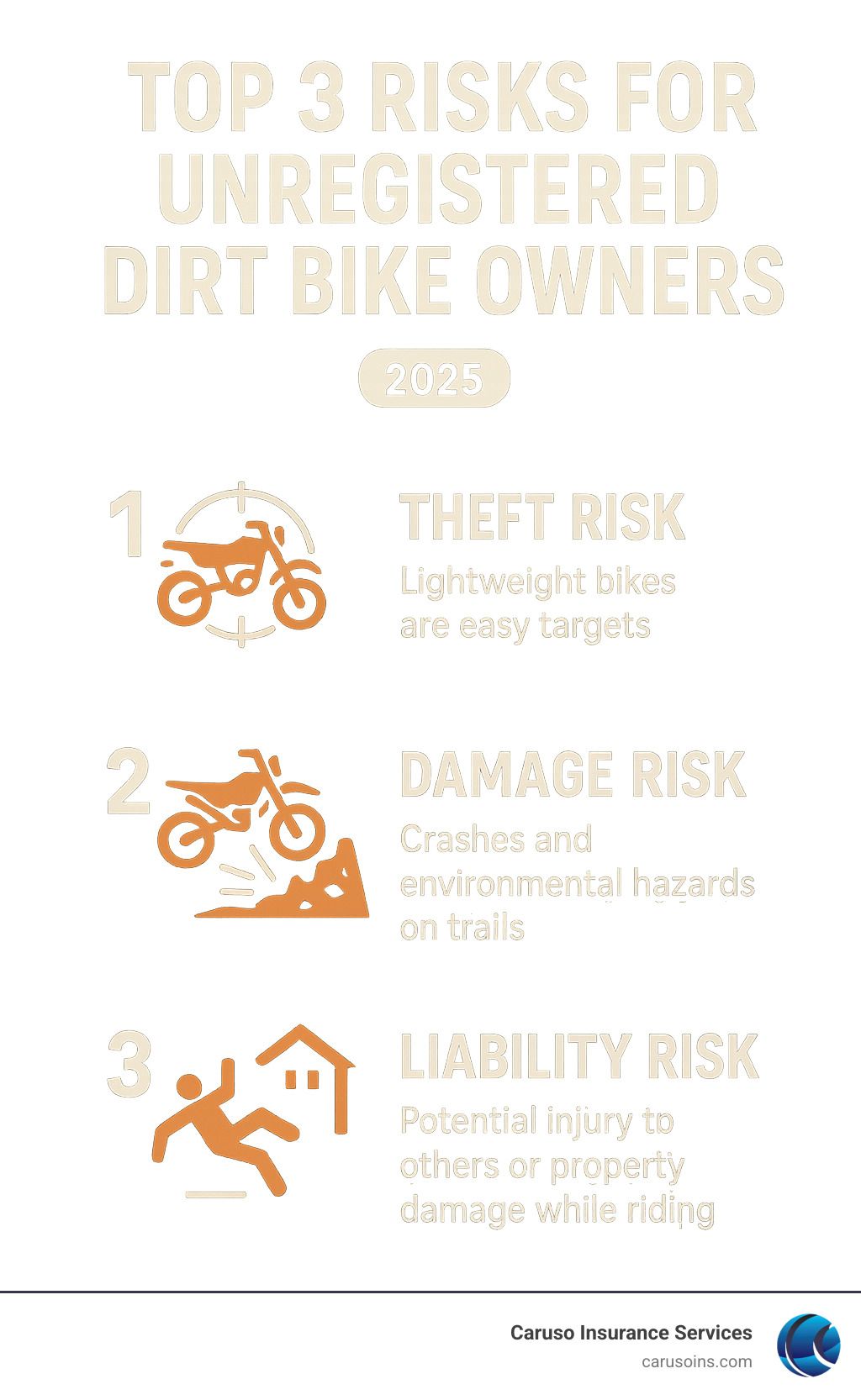
Research shows that dirt bikes are common theft targets because they’re lightweight and often unregistered, making them harder to track. Plus, over 100,000 injuries occur each year from off-highway vehicle accidents according to the Consumer Product Safety Commission.
Whether you ride trails in Colorado’s mountains or desert tracks in Arizona, your investment faces real risks. Theft, damage, and liability claims can cost thousands – far more than most riders expect.
I’m Patrick Caruso, an independent insurance agent who’s helped countless riders in Colorado, Arizona, Florida, Nevada, Texas, Tennessee, and Idaho protect their off-road investments with specialized
unregistered dirt bike insurance
policies. Through my work at Caruso Insurance Services, I’ve seen how the right coverage gives riders peace of mind and financial protection when they need it most.
Is Insurance Legally Required for an Off-Road Bike?
Here’s the question I get almost daily: “Do I really need insurance for my dirt bike?” The honest answer? It depends on where you ride and what risks you’re comfortable taking.
For private property riding, most states don’t legally require unregistered dirt bike insurance. If you’re tearing up trails on your own land or riding with permission on someone else’s property, you’re generally in the clear from a legal standpoint.
But here’s where it gets tricky – and expensive if you’re not prepared.
Public lands are a different story entirely. Many state parks, national forests, and Bureau of Land Management (BLM) areas require proof of liability insurance before you can ride. I’ve seen riders get hit with hefty fines and even have their bikes impounded for showing up without proper coverage. Nobody wants to drive three hours to their favorite trail system only to get turned away at the gate.
The rules vary significantly depending on which state you’re in:
Idaho actually requires minimum liability insurance for off-road use in most situations – it’s one of the strictest states for dirt bike coverage. If you’re riding in Idaho, insurance isn’t optional.
In Colorado and Arizona, you’ll often need an OHV registration sticker, and many designated riding areas require liability coverage as well. The specific requirements can change from one trail system to another, so it’s worth checking before you load up the truck.
Florida takes a unique approach – they don’t require motorcycle insurance for street bikes (just proof of financial responsibility), and off-road requirements are typically limited to specific parks or organized events.
For Nevada, Texas, and Tennessee, the rules generally depend on where you’re riding. Public lands often require coverage, while private property riding usually doesn’t.
But here’s what really keeps me up at night as an insurance agent: personal liability lawsuits. Even on private property, if someone gets hurt on your bike or you accidentally damage a neighbor’s fence, you could face thousands in legal bills and damages. I’ve seen riders get sued for accidents that happened on their own property when friends or family members were injured.
The fines for non-compliance on public lands can range from a few hundred dollars to over $1,000, plus impoundment fees. But a personal injury lawsuit? That could cost you everything.
Understanding Your Unregistered Dirt Bike Insurance Options
Your dirt bike might not need a license plate, but it’s still a valuable piece of equipment that faces real risks every time you ride—or even when it’s sitting in your garage. That’s where specialized unregistered dirt bike insurance comes in, designed specifically for the unique challenges that come with off-road riding.
Here’s something that surprises many riders: your homeowner’s or renter’s insurance probably won’t help much if something happens to your dirt bike. We’ll dive deeper into this later, but the short version is that standard home policies have major gaps when it comes to motorized vehicles. What you really need is a dedicated off-road vehicle insurance policy that understands the specific risks you face as a dirt bike owner.
These specialized policies offer several types of protection that work together to keep you covered:
- Liability Coverage – Your financial shield if you accidentally hurt someone or damage their property
- Comprehensive Coverage – Protection from theft, fire, vandalism, and weather damage
- Collision Coverage – Pays for repairs when you crash or tip over
- Medical Payments Coverage – Covers your medical bills after an accident
- Accessory Coverage – Protects those expensive custom parts and upgrades
- Transport Trailer Coverage – Keeps you covered while hauling your bike to the trails
What Does Unregistered Dirt Bike Insurance Typically Cover?
Let’s break down what these coverage types actually mean for you as a rider, because the devil is definitely in the details.
Comprehensive coverage is your best friend when it comes to protecting your investment from non-crash related damage. This covers theft (and trust me, dirt bikes are prime targets because they’re lightweight and easy to move), fire, vandalism, and even natural disasters like floods or hail storms. I’ve seen too many riders learn the hard way that their “secure” garage or campsite wasn’t as safe as they thought.
Collision coverage steps in when you actually crash your bike. Whether you hit a tree on a tight trail, take a spill on a jump, or just lose control on loose gravel, this coverage pays to repair or replace your bike. Given how expensive even basic repairs can be these days, this protection can save you thousands after a bad day on the trails.
Bodily injury liability and property damage liability work as a team to protect your personal assets if you’re at fault in an accident. Maybe you accidentally injure another rider, or crash through a farmer’s fence while exploring new trails. Without liability coverage, you could face a lawsuit that puts your savings, home, and future earnings at risk. Even on private property, these accidents can and do happen.
Medical payments coverage (also called MedPay) is especially important for dirt bike riders. Here’s why: many health insurance policies exclude coverage for injuries from “high-risk activities,” and dirt biking often falls into this category. MedPay covers your medical expenses regardless of who caused the accident, giving you a crucial safety net when your regular health insurance might leave you hanging.
If you’ve invested in aftermarket parts like custom exhaust systems, upgraded suspension, or specialized graphics, accessory coverage makes sure these modifications are protected too. Standard policies might only cover your bike’s original value, leaving you out of pocket for all those expensive upgrades.
Transport trailer coverage protects your bike while you’re hauling it to riding locations. Whether your bike falls off the trailer, gets stolen during an overnight stop, or gets damaged in a highway accident, this coverage has your back during transport.
Common Exclusions: What Isn’t Covered?
Now for the reality check—even the best unregistered dirt bike insurance policy has limits, and knowing these exclusions upfront can save you from nasty surprises later.
Organized racing events and motocross competitions are typically excluded from standard policies. If you’re serious about racing, you’ll need specialized competition coverage because the risk levels are much higher than recreational riding.
Your policy won’t cover normal wear and tear or mechanical breakdowns. If your engine seizes up from lack of maintenance or your clutch wears out from normal use, that’s on you. Insurance is designed for unexpected accidents, not routine maintenance issues.
Here’s a big one: riding on public roads with an unregistered bike will void your coverage entirely. If your dirt bike isn’t street-legal and you take it on public roads (even just to cross the street), any accident that happens won’t be covered. Insurance policies only protect legal activities.
Finally, if you don’t have collision coverage, any damage from use won’t be covered. You might have fire and theft protection for when your bike is stored, but the moment you start riding without collision coverage, you’re on your own for crash damage.
Understanding these exclusions helps you make smart decisions about your coverage and keeps your expectations realistic if you ever need to file a claim.
Why You Need Coverage Beyond Legal Mandates
Just because your state doesn’t require unregistered dirt bike insurance doesn’t mean you should skip it. Trust me, after years of helping riders across Colorado, Arizona, Florida, Nevada, Texas, Tennessee, and Idaho, I’ve seen too many people learn this lesson the hard way.
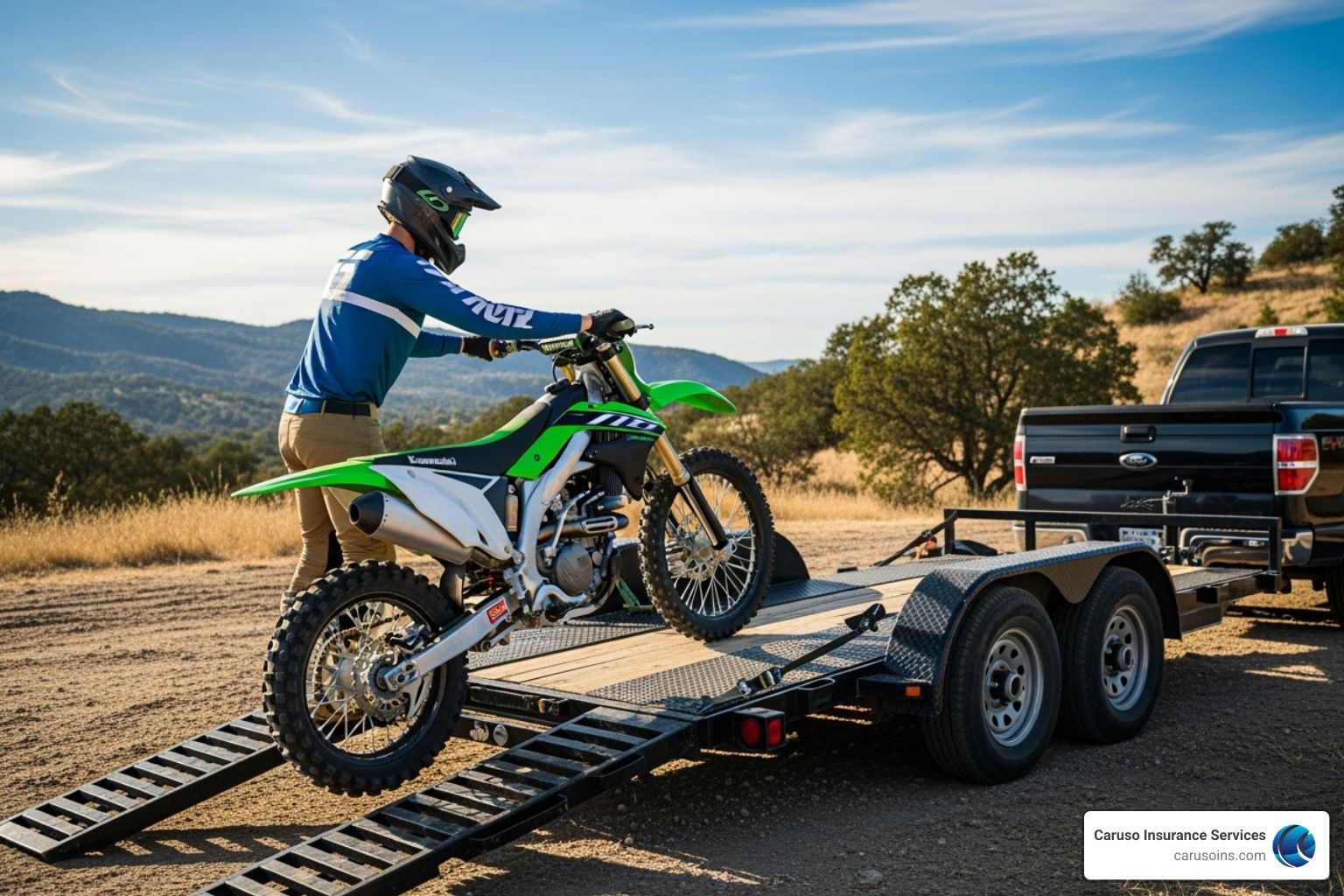
Let’s talk about asset protection first. Your dirt bike isn’t just a toy – it’s a serious investment. New bikes typically run $8,000 to $9,000, and once you add custom parts and modifications, you’re looking at even more. That’s a lot of money to lose if something goes wrong.
I remember one client who thought he’d “roll the dice” without insurance. His $12,000 custom KTM was stolen right out of his locked garage. Without coverage, he was out the entire amount. As he told me later, “I thought I was saving money on premiums, but I ended up losing everything.”
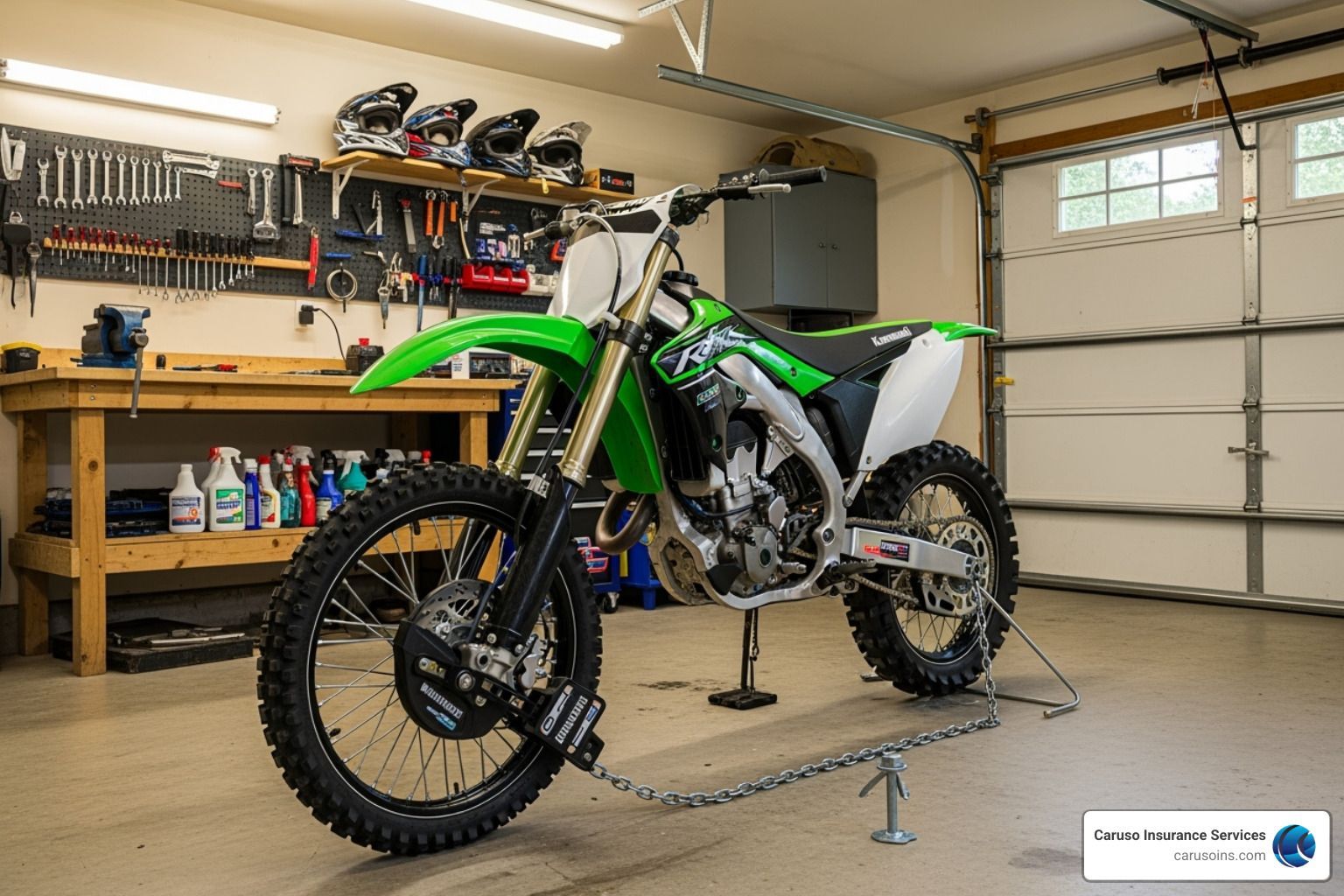
Dirt bikes face incredibly high theft risk because they’re lightweight, portable, and often stored in accessible places like garages or sheds. Thieves love them because they’re easy to load into a truck and, without license plates, harder to track down. Comprehensive coverage means that if your bike disappears, you’re not left empty-handed.
But here’s what really keeps me up at night as an insurance agent – the liability exposure. Accidents happen to even the most experienced riders, and when they do, the financial consequences can be devastating. If you accidentally injure another rider on the trails or damage someone’s property, you could face a lawsuit that threatens everything you’ve worked for.
The Consumer Product Safety Commission reports that over 100,000 injuries occur annually from off-highway vehicle accidents. That’s not meant to scare you away from riding – it’s meant to highlight why financial protection is so critical. Many of these accidents result in serious injuries that lead to expensive medical bills and potential lawsuits.
Injury statistics from the CPSC
Beyond the financial aspects, there’s something invaluable about peace of mind. When you know you’re properly covered, you can focus on enjoying the ride instead of worrying about what might happen. You can tackle that challenging trail or explore new terrain without the nagging fear that one mistake could ruin you financially.
Does Homeowner’s Insurance Cover My Dirt Bike?
This is probably the most common misconception I encounter, and it’s a dangerous one. Most riders assume their homeowner’s or renter’s insurance will protect their dirt bike, especially when it’s stored at home. Unfortunately, that’s rarely the case.
Here’s the reality: homeowner’s policies offer very limited coverage for motorized recreational vehicles, and what little coverage exists usually comes with major restrictions. You might get a small amount of theft protection while your bike is stored on your property – typically capped at $1,000 to $2,000 – but that’s nowhere near enough to replace a modern dirt bike.
Most policies include explicit exclusions for motorized vehicles, even ones that aren’t street-legal. Insurance companies view dirt bikes as specialized equipment that carries unique risks, so they expect you to insure them separately.
The biggest gap is liability coverage while riding. Your homeowner’s policy absolutely will not protect you if you injure someone or damage property while out on the trails. This leaves you completely exposed to potentially massive financial liability – even if the accident happens on your own land.
Think of it this way: your homeowner’s insurance covers risks related to your house and normal household activities. Dirt biking, even as a hobby, falls outside that scope entirely. It’s like expecting your auto insurance to cover your boat – they’re just different types of risks that need different types of protection.
That’s exactly why a dedicated Off-Road Vehicles Insurance policy is crucial. It’s specifically designed to handle the unique risks of dirt biking, providing comprehensive protection whether your bike is parked in your garage or flying over jumps on your favorite trail.
The Cost of Protecting Your Ride
So, you understand the importance of
unregistered dirt bike insurance, but now the big question: how much is this going to cost? It’s a valid concern, and I’m here to break it down for you. The good news is that for the level of protection and peace of mind it offers, dirt bike insurance can be surprisingly affordable, especially compared to the potential costs of an uninsured accident or theft.
How Much Does Unregistered Dirt Bike Insurance Cost?
The cost of unregistered dirt bike insurance varies quite a bit depending on your specific situation, but I can give you some realistic numbers to work with. Based on what I’ve seen helping riders across Colorado, Arizona, Florida, Nevada, Texas, Tennessee, and Idaho, the costs might surprise you.
For basic liability coverage, you’re looking at an average of around $13 per month, which comes out to about $156 per year. In some areas, I’ve found policies as low as $7-$10 per month for basic liability protection. That’s less than what many people spend on coffee in a week!
Now, if you want full coverage – which I strongly recommend and includes comprehensive and collision protection – the average jumps to about $66 per month, or roughly $792 annually. Yes, it’s more expensive than basic liability, but when you consider that a new dirt bike can cost $8,000 or more, that monthly premium suddenly looks pretty reasonable.
Here’s something interesting I’ve noticed: while liability coverage for dirt bikes costs about the same as street motorcycles, full coverage tends to be pricier. This mainly comes down to insurers viewing off-road riding as higher risk, even though dirt bikes are often cheaper to repair than their street-legal cousins.
| Policy Type | Average Monthly Cost | Average Annual Cost |
|---|---|---|
| General Liability | $48 | $580 |
| Workers’ Compensation | $136 | $1,627 |
| Commercial Auto | $173 | $2,075 |
| Business Owner’s Policy (BOP) | $76 | $907 |
| Janitorial Bond | $11 | $126 |
These are averages. I’ve seen individual quotes range from $25-$77 monthly for basic coverage, while full coverage on an expensive bike for a new rider could potentially reach $1,900 annually in high-risk situations.
Factors That Influence Your Premium
Just like with your car insurance, several key factors determine what you’ll pay for your unregistered dirt bike insurance. Understanding these can help you find ways to save money while still getting great protection.
Your bike’s value and engine size play a huge role. A high-performance motocross bike with a big engine will cost more to insure than a smaller trail bike. Makes sense, right? More power usually means more risk, and expensive bikes cost more to replace if they’re stolen or totaled.
Your age and riding experience matter tremendously. I hate to break it to younger riders, but statistics show that male teenagers under 16 have a 70-80% chance of injury in a dirt bike accident. That higher risk translates directly to higher premiums. If you’re an experienced rider with a clean record, you’ll typically pay significantly less.
Where you live affects your rates too. I see different pricing for clients in rural Tennessee versus those in busier parts of Florida or Colorado. Factors like local theft rates, population density, and how common off-road riding is in your area all influence your premium.
Your coverage choices obviously impact cost. Higher liability limits and adding collision coverage will increase your premium, but choosing a higher deductible can bring it back down. It’s all about finding the right balance for your budget and comfort level.
Here’s a money-saving tip: safety course discounts are widely available. Completing an approved dirt bike or motorcycle safety course shows insurers you’re serious about riding safely, and they’ll often reward you with noticeable savings.
Anti-theft devices like GPS trackers or quality locking systems can also earn you discounts. Since theft is such a common problem with dirt bikes, anything that reduces that risk is viewed favorably by insurers.
One of the easiest ways to save is bundling your policies. If you have auto, home, or renters insurance, adding your dirt bike to the mix often qualifies you for multi-policy discounts. At Caruso Insurance Services, I regularly help clients save money by combining their insurance needs into comprehensive packages.
Finally, maintaining a clean claims history will always keep your premiums lower. Frequent claims, especially ones where you’re at fault, will drive up your rates over time.
Frequently Asked Questions about Dirt Bike Insurance
Over the years, I’ve fielded countless questions from riders across Colorado, Arizona, Florida, Nevada, Texas, Tennessee, and Idaho about unregistered dirt bike insurance. Here are the three questions that come up most often, along with straightforward answers that’ll help clear up any confusion.
Can I get insurance for a dirt bike without a title?
Absolutely! This is one of the biggest misconceptions I encounter. Unlike street-legal vehicles that require a traditional DMV title, off-road dirt bikes operate in a different world entirely.
What insurers really need is your bike’s Vehicle Identification Number (VIN). This unique identifier is stamped right into your bike’s frame and tells the whole story – make, model, year, and engine size. It’s like a fingerprint for your machine.
You’ll still need to prove ownership, of course. A bill of sale is usually perfect, or if you bought new, the manufacturer’s statement of origin (MSO) works great. Some riders have old registration documents from when they first bought the bike, and those work too.
The VIN is what allows insurers to properly value your bike and process any claims. For higher-end bikes, some companies might suggest security marking systems to help with recovery if your bike gets stolen, but that’s typically optional.
Does insurance cover my bike if it’s stolen from a trail or campsite?
This hits close to home because I’ve seen too many riders lose their bikes at remote trailheads or overnight camping spots. The good news? If you have comprehensive coverage on your unregistered dirt bike insurance policy, you’re protected no matter where the theft happens.
Comprehensive coverage doesn’t care if your bike disappears from your garage at 2 AM or vanishes from a campsite while you’re sleeping in your tent. Theft is theft, and you’re covered either way.
The key word here is “comprehensive.” Those bare-bones policies that only cover fire and theft while stored at home won’t help you at the trailhead. That’s why I always recommend full comprehensive coverage for active riders who transport their bikes to different riding locations.
If you’re frequently hauling your bike in a trailer to events or camping trips, transport trailer coverage is worth considering as an add-on. It provides extra protection specifically for those times when your bike is loaded up and on the move.
Will my health insurance cover injuries from a dirt bike crash?
This question keeps me up at night because the answer is often “probably not,” and the consequences can be devastating. Most health insurance policies have exclusions for what they call “dangerous activities” or “extreme sports.” Guess what often makes that list? Dirt biking.
I’ve seen riders get hit with $50,000+ medical bills after a serious crash, only to find their health insurance won’t pay because the injury happened on a dirt bike. It’s heartbreaking and completely avoidable.
This is exactly why Medical Payments (MedPay) coverage is so crucial on your dirt bike policy. MedPay doesn’t care how you got hurt or whose fault it was – it simply pays your medical bills up to your policy limit. Think of it as your safety net when your regular health insurance fails you.
The cost is typically very reasonable, especially when you consider that a single emergency room visit after a dirt bike crash can easily run $10,000 or more. For most riders, MedPay is one of those coverages that’s absolutely worth having, even if you never hope to use it.
Conclusion: Get the Right Protection for Your Off-Road Trips
Your dirt bike represents more than just a machine – it’s your ticket to trip, whether you’re conquering mountain trails in Colorado, navigating desert terrain in Arizona, or exploring the diverse landscapes of Florida, Nevada, Texas, Tennessee, and Idaho. But as we’ve seen throughout this guide, that freedom comes with real financial risks that can turn your passion into a costly nightmare.
The truth is, unregistered dirt bike insurance isn’t just about following rules – it’s about protecting what matters to you. Think about it: you’ve invested thousands in your bike, countless hours maintaining it, and created memories that are priceless. Why leave all of that vulnerable to theft, accidents, or liability claims that could wipe out your savings?
The key benefits we’ve covered really come down to three essential protections. Asset protection means your investment is safe whether your bike is stolen from a campsite or damaged in a crash on your favorite trail. Liability coverage shields you from potentially devastating lawsuits if you accidentally injure someone or damage their property – something that can happen even to the most careful riders. And medical coverage ensures you’re not stuck with massive hospital bills that your regular health insurance might refuse to pay.
Perhaps most importantly, the right policy gives you peace of mind. Instead of constantly worrying about “what if,” you can focus on the pure joy of riding. You can take that challenging trail, explore new areas, and push your limits knowing you’re financially protected.
At Caruso Insurance Services, we’ve helped countless riders across Colorado, Arizona, Florida, Nevada, Texas, Tennessee, and Idaho find the perfect balance of coverage and affordability. We understand that every rider is different – the weekend warrior needs different protection than the daily trail rider, and we tailor policies accordingly.
The statistics don’t lie: over 100,000 off-highway vehicle injuries happen each year, and dirt bikes are prime theft targets. But with the right coverage in place, these risks become manageable instead of potentially life-changing.
Don’t wait until it’s too late. The small monthly cost of a good policy pales in comparison to the financial devastation of an uninsured claim. Let us help you get back to what you love most – riding – with the confidence that comes from being properly protected.
Contact us to explore your Off-Road Vehicle Insurance options